
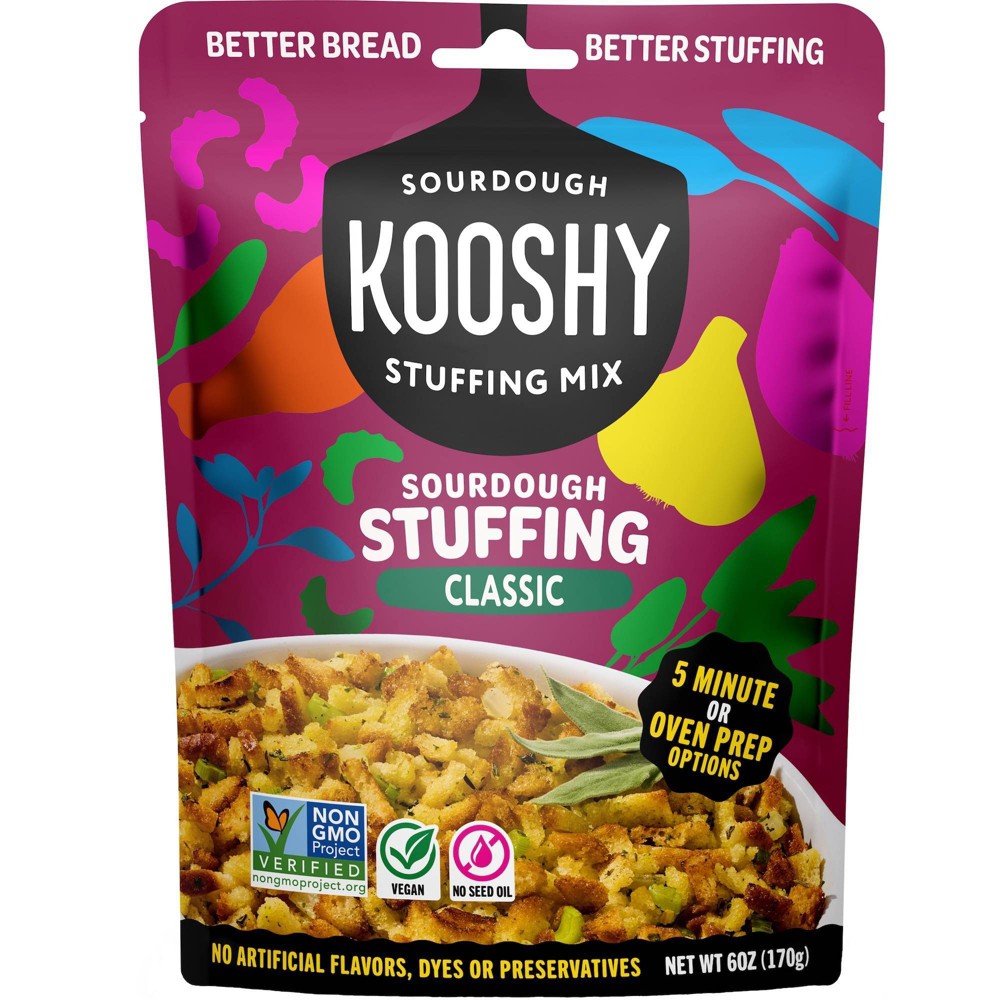

Kooshy Classic Sourdough Stuffing Mix - 6oz
Analysis updated September 2026 · How Scout scores
At a glance
Summary
This stuffing mix contains a variety of beneficial ingredients such as onions, celery, and herbs, which contribute to its nutritional value and flavor. However, the presence of refined cane sugar and its processed nature limit its healthfulness. While it avoids major harmful additives, the processing level and inclusion of refined sugar prevent it from achieving a higher score.
Key ingredients 15
Sea SaltGood
Sea salt is a minimally processed source of sodium and trace minerals. It is often preferred over refined table salt due to its natural mineral content. The use of sea salt can enhance flavor without the need for excessive additives.
Risks
Excessive sodium intake can lead to hypertension and cardiovascular issues.
Benefits
Contains trace minerals that are beneficial for health and supports electrolyte balance.
OnionGood
Onions are a natural source of antioxidants and have anti-inflammatory properties. They contain quercetin, which may help reduce blood pressure and improve heart health. Onions add flavor and nutritional value to dishes.
Benefits
Rich in antioxidants and may support heart health and immune function.
CeleryGood
Celery is low in calories and high in water content, making it a hydrating and nutritious vegetable. It contains antioxidants and fiber, which support digestive health. Celery is often used for its flavor and nutritional benefits.
Benefits
Provides fiber and antioxidants, supporting digestive health and hydration.
Wheat SourdoughGood
Wheat sourdough is made through a fermentation process that can improve digestibility and nutrient absorption. It often has a lower glycemic index compared to regular bread. The fermentation process can also enhance flavor and texture.
Risks
Contains gluten, which may be problematic for those with celiac disease or gluten sensitivity.
Benefits
Fermentation improves digestibility and may enhance nutrient absorption.
Rosemary ExtractGood
Rosemary extract is used for its antioxidant properties and flavor. It can help preserve food by preventing oxidation. Rosemary is also known for its potential anti-inflammatory benefits.
Benefits
Provides antioxidants and may have anti-inflammatory properties.
ParsleyGood
Parsley is a nutrient-rich herb high in vitamins A, C, and K. It is used for its flavor and potential health benefits, including antioxidant properties. Parsley can enhance the nutritional profile of dishes.
Benefits
Rich in vitamins and antioxidants, supporting overall health.
GarlicGood
Garlic is known for its potential health benefits, including cardiovascular support and immune system enhancement. It contains allicin, which has antimicrobial properties. Garlic adds flavor and nutritional value to foods.
Benefits
Supports cardiovascular health and has antimicrobial properties.
ThymeGood
Thyme is an herb with antioxidant and antimicrobial properties. It is used for its flavor and potential health benefits, including respiratory support. Thyme can enhance the flavor and nutritional value of dishes.
Benefits
Provides antioxidants and may support respiratory health.
RosemaryGood
Rosemary is an herb known for its antioxidant and anti-inflammatory properties. It is used for flavor and potential health benefits, including cognitive support. Rosemary can enhance the flavor and nutritional profile of foods.
Benefits
Rich in antioxidants and may support cognitive health.
SageGood
Sage is an herb with antioxidant and anti-inflammatory properties. It is used for its flavor and potential health benefits, including cognitive support. Sage can enhance the flavor and nutritional profile of dishes.
Benefits
Provides antioxidants and may support cognitive health.
TurmericGood
Turmeric is a spice known for its anti-inflammatory and antioxidant properties, largely due to curcumin. It is used for flavor and potential health benefits, including joint support. Turmeric can enhance the nutritional profile of foods.
Benefits
Rich in curcumin, which may support joint health and reduce inflammation.
YeastNeutral
Yeast is a microorganism used in baking to leaven bread, contributing to texture and flavor. It is a natural ingredient that plays a crucial role in bread-making. Yeast itself does not provide significant nutritional benefits.
Benefits
Essential for leavening bread and enhancing texture and flavor.
Wheat FlourBad
Refined grain flour stripped of bran and germ.
Risks
May contribute to blood sugar spikes and is a common allergen for those with gluten sensitivity or celiac disease.
Benefits
Provides essential carbohydrates for energy, though lacks the fiber and nutrients found in whole grains.
Cane SugarBad
Cane sugar is a refined sweetener that can contribute to increased calorie intake and blood sugar levels. It lacks the nutritional benefits found in less processed sweeteners like honey or maple syrup. Overconsumption of refined sugars is linked to various health issues.
Risks
High intake can lead to obesity, diabetes, and dental problems.
Benefits
Provides quick energy but lacks significant nutritional benefits.
Yeast ExtractBad
Concentrated glutamate source — MSG-adjacent flavor enhancer.
Risks
May contribute to high sodium intake if consumed in large quantities.
Benefits
Contains B vitamins and enhances flavor in foods.
Processing
Processed Foods
Get the full breakdown in the Scout appTake Scout shopping
Scan any product to see lab results, healthy alternatives, and your personalized analysis.
Download on theApp Store GET IT ONGoogle PlayAmazon pricing & content
Amazon price as of . Product prices and availability are accurate as of the date/time indicated and are subject to change. Any price and availability information displayed on Amazon.com at the time of purchase will apply to the purchase of this product.
CERTAIN CONTENT THAT APPEARS ON THIS SITE COMES FROM AMAZON. THIS CONTENT IS PROVIDED “AS IS” AND IS SUBJECT TO CHANGE OR REMOVAL AT ANY TIME.