

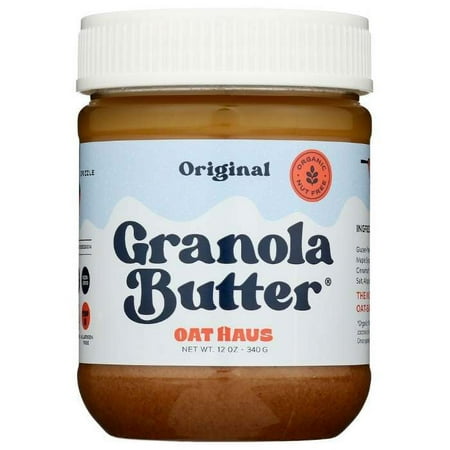


Oat Haus Cookie Dough Granola Butter
Analysis updated August 2026 · How Scout scores
At a glance
Summary
This granola butter contains beneficial ingredients like gluten-free oats, olive oil, and coconut oil, which provide fiber and healthy fats. However, it is classified as ultra-processed due to the presence of natural flavors and mono, di-glycerides, which are indicative of higher processing levels. The inclusion of these additives and the overall processing level limit its healthiness despite some nutritious components.
Key ingredients 12
Olive oilVery Good
Olive oil is a high-quality monounsaturated fat with anti-inflammatory properties. It contains antioxidants that support heart health. Cold-pressed extraction preserves beneficial compounds.
Benefits
Rich in monounsaturated fats that support heart health and provide anti-inflammatory properties.
Gluten-free oatsGood
Whole grain oats are a good source of fiber and essential nutrients. They help in maintaining healthy cholesterol levels and provide sustained energy. Being gluten-free makes them suitable for those with gluten sensitivities.
Benefits
Rich in beta-glucan fiber which supports heart health and aids in digestion.
Maple syrupGood
Beneficial ingredient — whole-food or functional value in this product class.
Risks
Excessive consumption can lead to increased blood sugar levels.
Benefits
Contains small amounts of minerals like manganese and zinc.
Coconut oilGood
Coconut oil is a source of medium-chain triglycerides (MCTs) which are easily metabolized for energy. It has antimicrobial properties and may support metabolic health. Its saturated fat content is higher, but MCTs are considered beneficial.
Risks
High in saturated fats, which should be consumed in moderation.
Benefits
Provides quick energy and may support metabolic health due to MCTs.
Cocoa butterGood
Natural traditional fat pressed from cacao.
Risks
High in saturated fats, which should be consumed in moderation.
Benefits
Contains stearic acid, which may have a neutral effect on cholesterol levels.
Vanilla extractGood
Beneficial ingredient — whole-food or functional value in this product class.
Benefits
Provides flavor and contains some antioxidants.
Rosemary extractGood
Rosemary extract is a natural antioxidant used to preserve freshness. It may have anti-inflammatory and antimicrobial properties. Its use in food products can enhance shelf life naturally.
Benefits
Acts as a natural preservative and may provide health benefits due to its antioxidant properties.
Chocolate chipsNeutral
Chocolate chips provide flavor and some antioxidants from cocoa. They are a source of added sugars and fats, which should be consumed in moderation. The quality of chocolate can vary, affecting its health impact.
Risks
Contains added sugars and fats which can contribute to calorie intake.
Benefits
Contains antioxidants from cocoa which may have health benefits.
Chocolate liquorNeutral
Chocolate liquor is a pure form of cocoa mass, providing rich flavor and antioxidants. It is a base for chocolate products and contains both cocoa solids and cocoa butter. Its health impact depends on the overall sugar and fat content in the product.
Risks
High in calories and fats, which should be consumed in moderation.
Benefits
Rich in antioxidants which may support heart health.
SaltNeutral
Salt is used for flavor enhancement and preservation. It is essential for various bodily functions but should be consumed in moderation. Excessive intake can lead to health issues like hypertension.
Risks
High sodium intake can contribute to hypertension and cardiovascular issues.
Benefits
Essential for maintaining fluid balance and nerve function.
Natural flavorsBad
Natural flavors are a catch-all term for flavoring agents derived from natural sources. They can be highly processed and lack transparency in their composition. Their use can mask the quality of the underlying ingredients.
Risks
Lack of transparency can lead to potential allergen exposure or sensitivity reactions.
Mono, di-glyceridesBad
Mono and di-glycerides are emulsifiers used to improve texture and shelf life. They are derived from fats and can contain trans fats if not properly processed. Their presence indicates a higher level of processing.
Risks
May contain trans fats which are linked to cardiovascular issues.
Processing
Ultra-Processed Foods
Get the full breakdown in the Scout appTake Scout shopping
Scan any product to see lab results, healthy alternatives, and your personalized analysis.
Download on theApp Store GET IT ONGoogle PlayAmazon pricing & content
Amazon price as of . Product prices and availability are accurate as of the date/time indicated and are subject to change. Any price and availability information displayed on Amazon.com at the time of purchase will apply to the purchase of this product.
CERTAIN CONTENT THAT APPEARS ON THIS SITE COMES FROM AMAZON. THIS CONTENT IS PROVIDED “AS IS” AND IS SUBJECT TO CHANGE OR REMOVAL AT ANY TIME.