
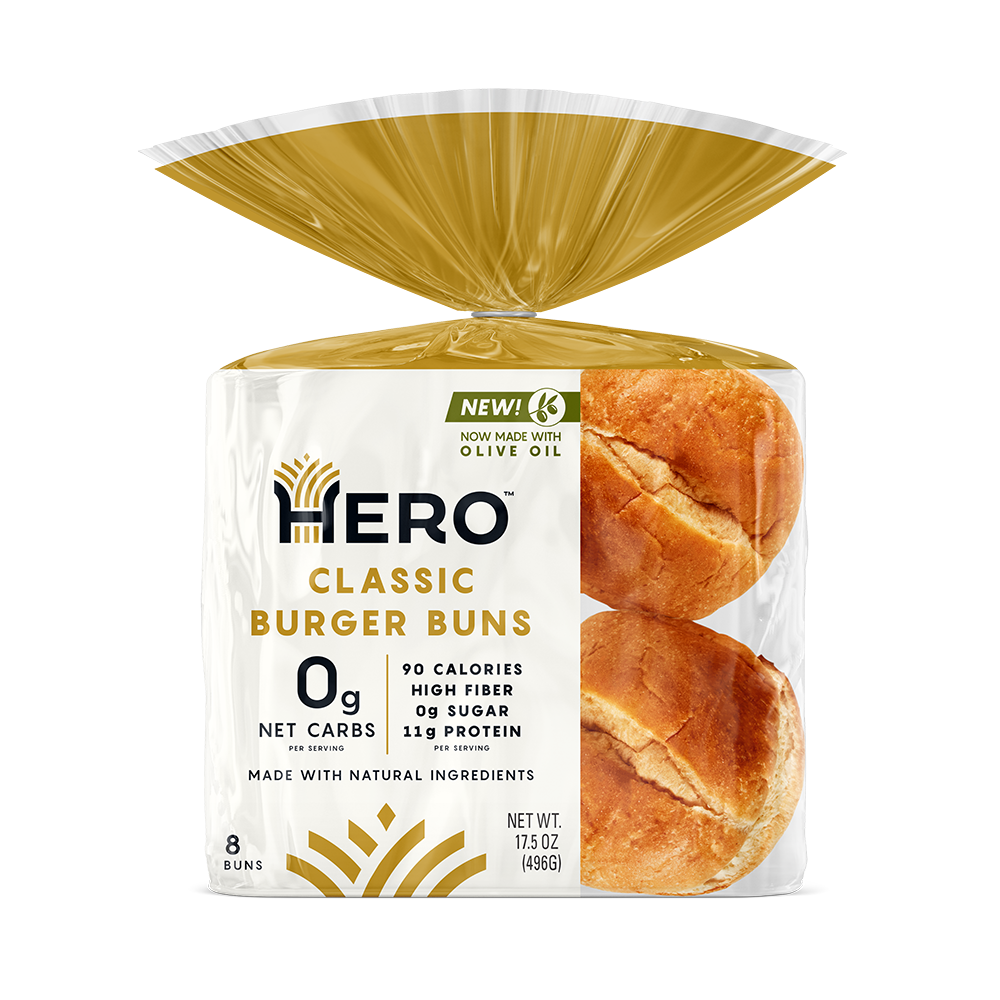


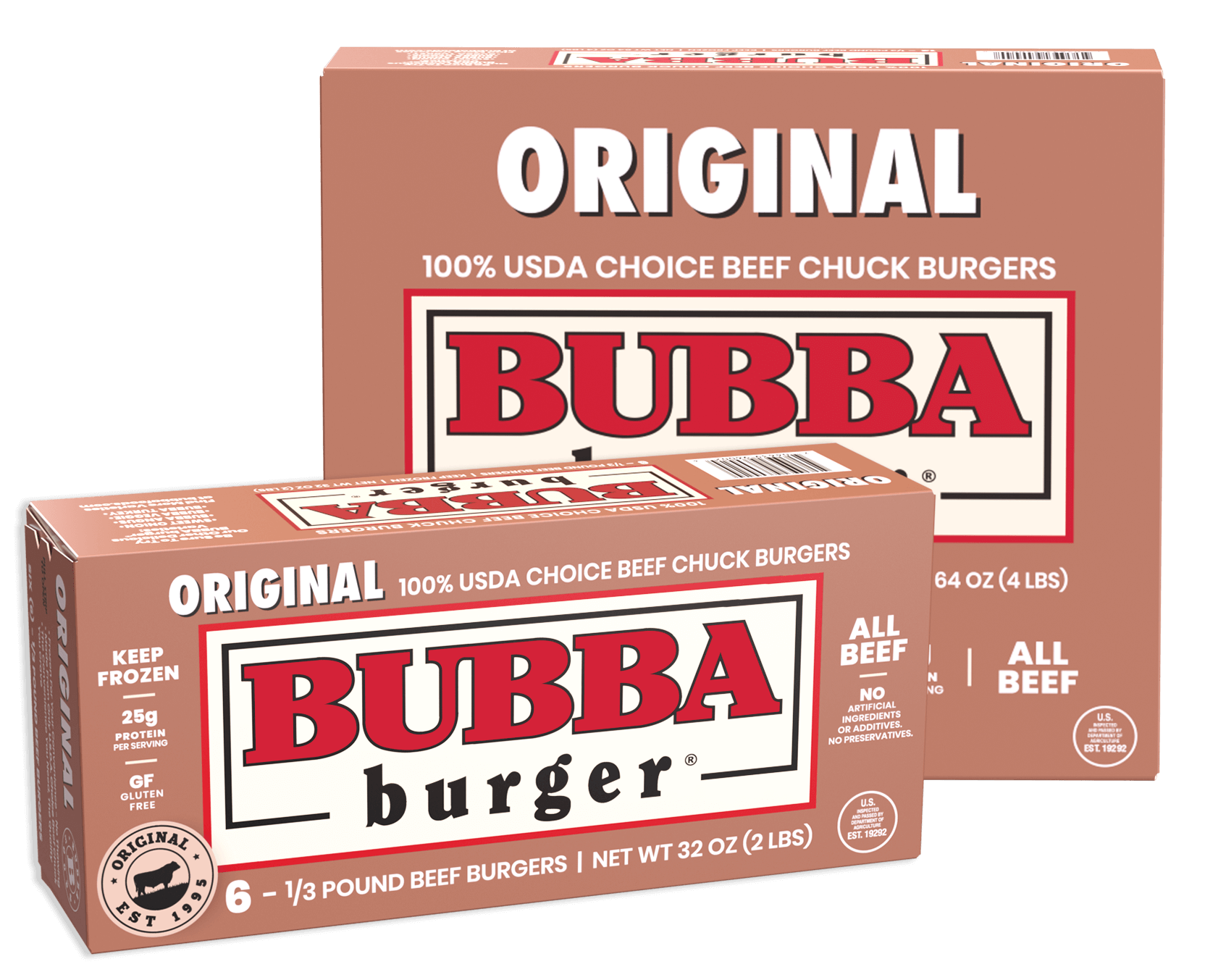

Hero Classic Burger Buns
HeroAnalysis updated August 2026 · How Scout scores
At a glance
Summary
This product contains beneficial ingredients such as olive oil, fava bean protein, and milled flaxseed, which contribute to its nutritional value. However, it is classified as ultra-processed due to the presence of additives like natural flavors and sunflower lecithin, which are less desirable. Despite having a good fiber content and some healthy components, the level of processing and use of certain additives limit its overall health score.
Key ingredients 17
Olive oilVery Good
Olive oil is a high-quality monounsaturated fat with anti-inflammatory properties. It contains antioxidants that support heart health. Cold-pressed extraction preserves beneficial compounds.
Benefits
Rich in monounsaturated fats that support heart health and provide anti-inflammatory properties.
Milled flaxseedVery Good
Milled flaxseed is rich in omega-3 fatty acids and dietary fiber. It supports heart health and aids in digestion. It is minimally processed and retains its nutritional benefits.
Benefits
Rich in omega-3 fatty acids and fiber, supporting heart health and digestion.
Resistant wheat starchGood
Resistant wheat starch is a type of dietary fiber that aids in digestion. It is minimally processed and helps improve gut health. It can also contribute to a feeling of fullness.
Benefits
Promotes digestive health and may help in maintaining healthy blood sugar levels.
Fava bean proteinGood
Fava bean protein is a plant-based protein source rich in essential amino acids. It is minimally processed and supports muscle health. It is a good alternative to animal proteins.
Risks
May cause allergic reactions in individuals sensitive to legumes.
Benefits
Provides a high-quality plant-based protein source that supports muscle maintenance.
Monk fruit extractGood
Monk fruit extract is a natural sweetener with zero calories. It is minimally processed and does not affect blood sugar levels. It is a suitable alternative for those managing sugar intake.
Benefits
Provides sweetness without impacting blood sugar levels.
Ascorbic acidGood
Vitamin C — beneficial even when serving as a preservative.
Benefits
Acts as a dough conditioner and preservative.
WaterNeutral
Water is a neutral ingredient used as a solvent and to provide moisture. It does not contribute any calories or nutrients. It is essential for the dough formation process.
See more about Water →Wheat proteinNeutral
Wheat protein provides essential amino acids but lacks the complete profile found in animal proteins. It is a plant-based protein source used to enhance protein content. It is suitable for vegetarians.
Risks
May cause allergic reactions in individuals with wheat allergies or gluten intolerance.
Benefits
Contributes to the protein content of the product, supporting muscle maintenance.
YeastNeutral
Yeast is a natural leavening agent used in bread making. It helps the dough rise and contributes to the texture of the bread. It is a common ingredient in baked goods.
Benefits
Contributes to the leavening and texture of the bread.
VinegarNeutral
Vinegar is used as a natural preservative and flavor enhancer. It is minimally processed and adds acidity to the product. It is commonly used in food preservation.
Benefits
Acts as a natural preservative and flavor enhancer.
SaltNeutral
Salt is used to enhance flavor and as a preservative. It is a common ingredient in processed foods. Excessive consumption can lead to health issues.
Risks
High sodium intake can contribute to hypertension and cardiovascular issues.
Benefits
Enhances flavor and acts as a preservative.
Guar gumNeutral
Guar gum is a thickening agent used to improve texture. It is derived from guar beans and is minimally processed. It is commonly used in gluten-free products.
Risks
Excessive consumption may cause digestive discomfort.
Benefits
Improves texture and stability of the product.
AlluloseNeutral
Standard formulation ingredient — neither beneficial nor harmful at typical use.
Risks
Excessive consumption may cause digestive discomfort.
Benefits
Provides sweetness with minimal impact on blood sugar levels.
Cultured wheat flourNeutral
Cultured wheat flour is used as a natural preservative. It is minimally processed and helps extend shelf life. It is a common ingredient in baked goods.
Risks
May cause allergic reactions in individuals with wheat allergies or gluten intolerance.
Benefits
Acts as a natural preservative, extending shelf life.
EnzymesNeutral
Enzymes are used to improve dough texture and shelf life. They are naturally occurring proteins that aid in food processing. They are commonly used in baking.
Benefits
Improves dough texture and extends shelf life.
Natural flavorsBad
Natural flavors are often used to enhance taste but lack transparency in their composition. They are processed and can contain multiple compounds. Their use is controversial due to lack of disclosure.
Risks
Potential allergens and undisclosed ingredients may pose health risks.
Benefits
Enhances flavor without adding calories.
Sunflower lecithinBad
Sunflower lecithin is an emulsifier used to improve texture and shelf life. It is processed and can contain residues from extraction. It is less desirable compared to whole food ingredients.
Risks
May contain residues from processing and extraction.
Benefits
Improves texture and stability of the product.
Processing
Ultra-Processed Foods
Get the full breakdown in the Scout appTake Scout shopping
Scan any product to see lab results, healthy alternatives, and your personalized analysis.
Download on theApp Store GET IT ONGoogle PlayAmazon pricing & content
Amazon price as of . Product prices and availability are accurate as of the date/time indicated and are subject to change. Any price and availability information displayed on Amazon.com at the time of purchase will apply to the purchase of this product.
CERTAIN CONTENT THAT APPEARS ON THIS SITE COMES FROM AMAZON. THIS CONTENT IS PROVIDED “AS IS” AND IS SUBJECT TO CHANGE OR REMOVAL AT ANY TIME.