
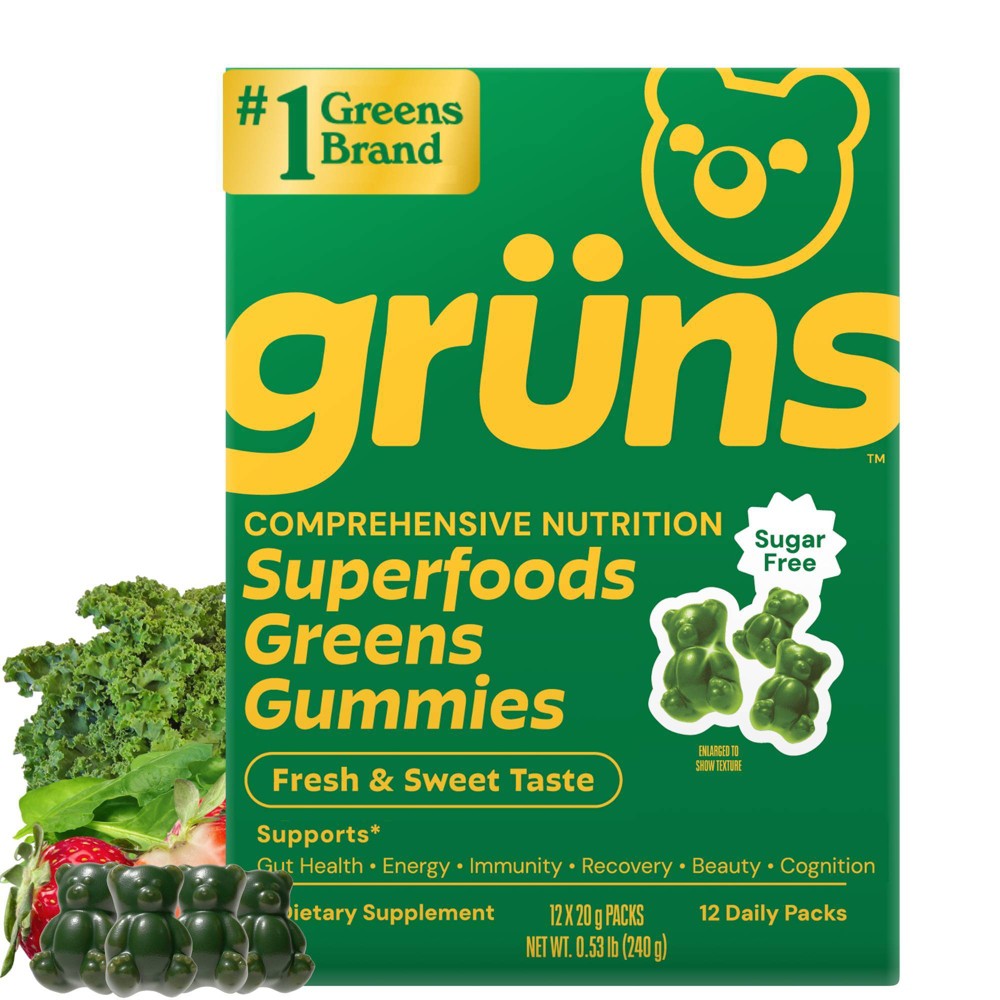


Grüns Adult Sugar Free Superfoods Greens Gummies with Prebiotic Fiber - 240g/12 Servings
Analysis updated September 2026 · How Scout scores
At a glance
Summary
This product contains a variety of beneficial vitamins and minerals, including bioavailable forms of Vitamin A, C, D, and E, which support overall health. However, the presence of added sugars detracts from its healthfulness, as they provide empty calories and can contribute to health issues like obesity and diabetes. The formulation is moderately processed, which impacts the overall score, but the inclusion of prebiotic fiber is a positive aspect for digestive health.
Key ingredients 25
Dietary FiberVery Good
Dietary fiber is essential for digestive health and can help regulate blood sugar levels. It is beneficial for maintaining a healthy gut microbiome. This ingredient is a positive addition to the product.
Benefits
Supports digestive health and can aid in maintaining healthy cholesterol levels.
Vitamin CVery Good
Vitamin C is a powerful antioxidant that supports immune function and skin health. Ascorbic acid is a well-absorbed form of this vitamin. It is essential for collagen synthesis and overall health.
Benefits
Enhances immune function and acts as an antioxidant.
Vitamin DVery Good
Vitamin D3 is important for bone health and immune function. VegaD3LightTM Cholecalciferol is a bioavailable form that supports calcium absorption. Adequate vitamin D levels are crucial for overall health.
Risks
Excessive intake can lead to toxicity, particularly in supplement form.
Benefits
Supports bone health and immune function.
FolateVery Good
Folate is essential for DNA synthesis and cell division. L-5-methyltetrahydrofolate is a bioactive form that is easily absorbed. It is particularly important during periods of rapid growth, such as pregnancy.
Benefits
Supports DNA synthesis and cell division.
Vitamin K2Very Good
Vitamin K2 is important for bone and cardiovascular health. It helps direct calcium to the bones and away from arteries. Adequate intake supports bone density and reduces arterial calcification.
Benefits
Supports bone and cardiovascular health.
Vitamin AGood
Vitamin A is crucial for vision, immune function, and skin health. It is provided in the form of retinyl palmitate, which is a stable and bioavailable form. This vitamin is an important part of a balanced diet.
Risks
Excessive intake can lead to toxicity, particularly in supplement form.
Benefits
Supports vision, immune function, and skin health.
Vitamin EGood
Vitamin E is an antioxidant that protects cells from oxidative damage. D-alpha-tocopherol is a natural and effective form of this vitamin. It plays a role in immune function and skin health.
Risks
High doses can interfere with blood clotting.
Benefits
Protects cells from oxidative damage and supports immune function.
ThiaminGood
Thiamin (Vitamin B1) is essential for energy metabolism and nerve function. Thiamin hydrochloride is a common and effective form used in supplements. It helps convert carbohydrates into energy.
Benefits
Supports energy metabolism and nerve function.
RiboflavinGood
Riboflavin (Vitamin B2) is important for energy production and cellular function. It is a water-soluble vitamin that helps in the metabolism of fats, drugs, and steroids. Adequate intake supports overall health.
Benefits
Supports energy production and cellular function.
NiacinGood
Niacin (Vitamin B3) supports energy metabolism and DNA repair. Niacinamide is a form that is less likely to cause flushing. It is important for maintaining healthy skin and nerves.
Risks
High doses can cause liver damage and gastrointestinal issues.
Benefits
Supports energy metabolism and skin health.
Vitamin B6Good
Vitamin B6 is crucial for protein metabolism and cognitive development. Pyridoxal-5-phosphate is an active form that is readily utilized by the body. It supports neurotransmitter synthesis and immune function.
Risks
Excessive intake can lead to nerve damage.
Benefits
Supports protein metabolism and cognitive development.
Vitamin B12Good
Vitamin B12 is vital for nerve function and red blood cell formation. Methylcobalamin is a bioactive form that is well-absorbed. It is crucial for maintaining healthy nerve cells and preventing anemia.
Benefits
Supports nerve function and red blood cell formation.
BiotinGood
Biotin is important for carbohydrate, fat, and protein metabolism. It is often associated with healthy hair, skin, and nails. Adequate biotin intake supports metabolic health.
Benefits
Supports metabolism and promotes healthy hair, skin, and nails.
Pantothenic AcidGood
Pantothenic acid is essential for synthesizing coenzyme A, which is crucial for fatty acid metabolism. Calcium d-pantothenate is a stable form used in supplements. It supports energy production and hormone synthesis.
Benefits
Supports energy production and hormone synthesis.
IronGood
Iron is crucial for oxygen transport and energy production. Ferrous fumarate is a form that is well-absorbed and commonly used in supplements. Adequate iron intake prevents anemia and supports overall health.
Risks
Excessive intake can lead to toxicity and gastrointestinal issues.
Benefits
Supports oxygen transport and energy production.
IodineGood
Iodine is essential for thyroid function and hormone production. Potassium iodide is a common form used in supplements. Adequate iodine intake supports metabolic health and cognitive function.
Risks
Excessive intake can lead to thyroid dysfunction.
Benefits
Supports thyroid function and hormone production.
ZincGood
Zinc is important for immune function and wound healing. Zinc citrate is a bioavailable form that is well-absorbed. It plays a role in DNA synthesis and cell division.
Risks
Excessive intake can lead to copper deficiency and immune dysfunction.
Benefits
Supports immune function and wound healing.
SeleniumGood
Selenium is a powerful antioxidant that supports immune function and thyroid health. Sodium selenite is a form used in supplements. It helps protect cells from oxidative damage.
Risks
Excessive intake can lead to toxicity and hair loss.
Benefits
Supports immune function and thyroid health.
CopperGood
Copper is essential for iron metabolism and neurological function. Copper citrate is a form used in supplements. It supports the formation of red blood cells and connective tissue.
Risks
Excessive intake can lead to toxicity and liver damage.
Benefits
Supports iron metabolism and neurological function.
ManganeseGood
Manganese is important for bone health and metabolism. Manganese gluconate is a form used in supplements. It plays a role in enzyme function and antioxidant defense.
Risks
Excessive intake can lead to neurological issues.
Benefits
Supports bone health and metabolism.
ChromiumGood
Chromium is important for macronutrient metabolism and insulin sensitivity. Chromium chloride is a form used in supplements. It supports blood sugar regulation and energy production.
Risks
Excessive intake can lead to kidney and liver damage.
Benefits
Supports macronutrient metabolism and insulin sensitivity.
MolybdenumGood
Molybdenum is essential for enzyme function and detoxification. Sodium molybdate is a form used in supplements. It supports the metabolism of sulfur-containing amino acids.
Benefits
Supports enzyme function and detoxification.
Total CarbohydrateNeutral
Total carbohydrates provide energy but can vary in health impact depending on the source and type. In this product, they are part of the overall nutritional profile. The specific type of carbohydrates is not detailed, so they are considered neutral.
Risks
Excessive carbohydrate intake can lead to weight gain and blood sugar spikes.
Benefits
Carbohydrates are a primary energy source for the body.
Core Nutrients BlendNeutral
Core nutrients blend typically includes a mix of essential vitamins and minerals. The specific components and their proportions are not detailed. It is considered neutral due to lack of specific information.
Risks
Potential for imbalance if not properly formulated.
Benefits
May provide a broad spectrum of essential nutrients.
Added SugarsBad
Added sugars can contribute to various health issues, including obesity and diabetes. They provide empty calories without nutritional benefits. Limiting added sugar intake is recommended for better health.
Risks
High intake of added sugars is linked to increased risk of chronic diseases.
Processing
Processed Foods
Get the full breakdown in the Scout appTake Scout shopping
Scan any product to see lab results, healthy alternatives, and your personalized analysis.
Download on theApp Store GET IT ONGoogle Play