
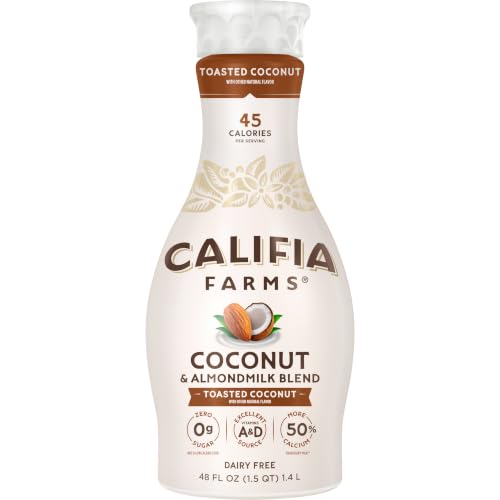


Califia Farms TOASTED COCONUT ALMONDMILK BLEND
At a glance
Summary
This almondmilk blend is ultra-processed, which limits its score despite some beneficial ingredients like almondmilk and coconut cream. The presence of additives such as sunflower lecithin and natural flavors, which are processed and lack transparency, further impacts the rating. While it avoids major harmful ingredients like seed oils or artificial sweeteners, the processing level and use of additives prevent a higher score.
Key ingredients 10
AlmondmilkGood
Almondmilk is a plant-based milk alternative that is low in calories and free from cholesterol. It is made from almonds and water, providing a source of vitamin E and healthy fats. It is a suitable option for those with lactose intolerance or dairy allergies.
Risks
Potential allergen for individuals with nut allergies.
Benefits
Provides vitamin E and healthy fats, supporting skin health and reducing inflammation.
Coconut creamGood
Coconut cream is a rich source of medium-chain triglycerides (MCTs), which are easily digestible fats that provide quick energy. It is derived from the flesh of coconuts and contains lauric acid, known for its antimicrobial properties. It adds a creamy texture and flavor to plant-based products.
Risks
High in saturated fats, which may be a concern for heart health if consumed in excess.
Benefits
Rich in MCTs that provide quick energy and support metabolic health.
Sea saltGood
Sea salt is a natural source of sodium and trace minerals, providing essential electrolytes. It is minimally processed compared to refined table salt. It enhances flavor without the need for artificial additives.
Risks
Excessive sodium intake can lead to high blood pressure and cardiovascular issues.
Benefits
Provides essential electrolytes and trace minerals, supporting hydration and nerve function.
Monk fruit extractGood
Beneficial ingredient — whole-food or functional value in this product class.
Benefits
Provides sweetness without calories, suitable for low-calorie and diabetic-friendly diets.
Calcium carbonateNeutral
Calcium carbonate is used as a calcium supplement and fortifying agent in plant-based milks. It helps to provide a source of calcium, which is essential for bone health. It is a common additive in non-dairy beverages to mimic the calcium content of cow's milk.
Risks
Excessive intake may lead to hypercalcemia, causing kidney stones or impaired absorption of other minerals.
Benefits
Provides a source of calcium, supporting bone health and preventing osteoporosis.
Potassium citrateNeutral
Potassium citrate is used as a buffering agent and to regulate acidity in food products. It provides a source of potassium, an essential mineral for maintaining electrolyte balance. It is commonly used in processed foods to improve stability and shelf life.
Risks
Excessive intake may lead to hyperkalemia, affecting heart and muscle function.
Benefits
Provides potassium, supporting heart health and muscle function.
Locust bean gumNeutral
Locust bean gum is a natural thickening agent derived from carob seeds. It is used to improve texture and consistency in food products. It is considered safe for consumption and is often used in gluten-free and vegan products.
Risks
May cause digestive discomfort in sensitive individuals when consumed in large amounts.
Benefits
Improves texture and consistency in food products, making them more appealing.
Gellan gumNeutral
Gellan gum is a gelling agent used to stabilize and thicken food products. It is produced through bacterial fermentation and is considered safe for consumption. It is commonly used in plant-based milks to improve mouthfeel and prevent separation.
Risks
May cause digestive issues in sensitive individuals when consumed in large amounts.
Benefits
Enhances texture and stability in food products, improving consumer experience.
Sunflower lecithinBad
Sunflower lecithin is an emulsifier used to improve texture and stability in food products. It is derived from sunflower seeds and is less processed than soy lecithin. However, it is still a refined additive that may not be necessary in whole food diets.
Risks
May cause digestive issues in sensitive individuals when consumed in large amounts.
Benefits
Helps to improve texture and stability in food products, making them more palatable.
Natural flavorsBad
Natural flavors are used to enhance taste but lack transparency regarding their specific composition. They are often highly processed and can contain a variety of chemical compounds. This lack of clarity makes it difficult to assess their health impact.
Risks
Potential allergen risk due to undisclosed ingredients; may contain additives or preservatives.
Processing
Ultra-Processed Foods
Get the full breakdown in the Scout appTake Scout shopping
Scan any product to see lab results, healthy alternatives, and your personalized analysis.
Download on theApp Store GET IT ONGoogle PlayAmazon pricing & content
Amazon price as of . Product prices and availability are accurate as of the date/time indicated and are subject to change. Any price and availability information displayed on Amazon.com at the time of purchase will apply to the purchase of this product.
CERTAIN CONTENT THAT APPEARS ON THIS SITE COMES FROM AMAZON. THIS CONTENT IS PROVIDED “AS IS” AND IS SUBJECT TO CHANGE OR REMOVAL AT ANY TIME.