
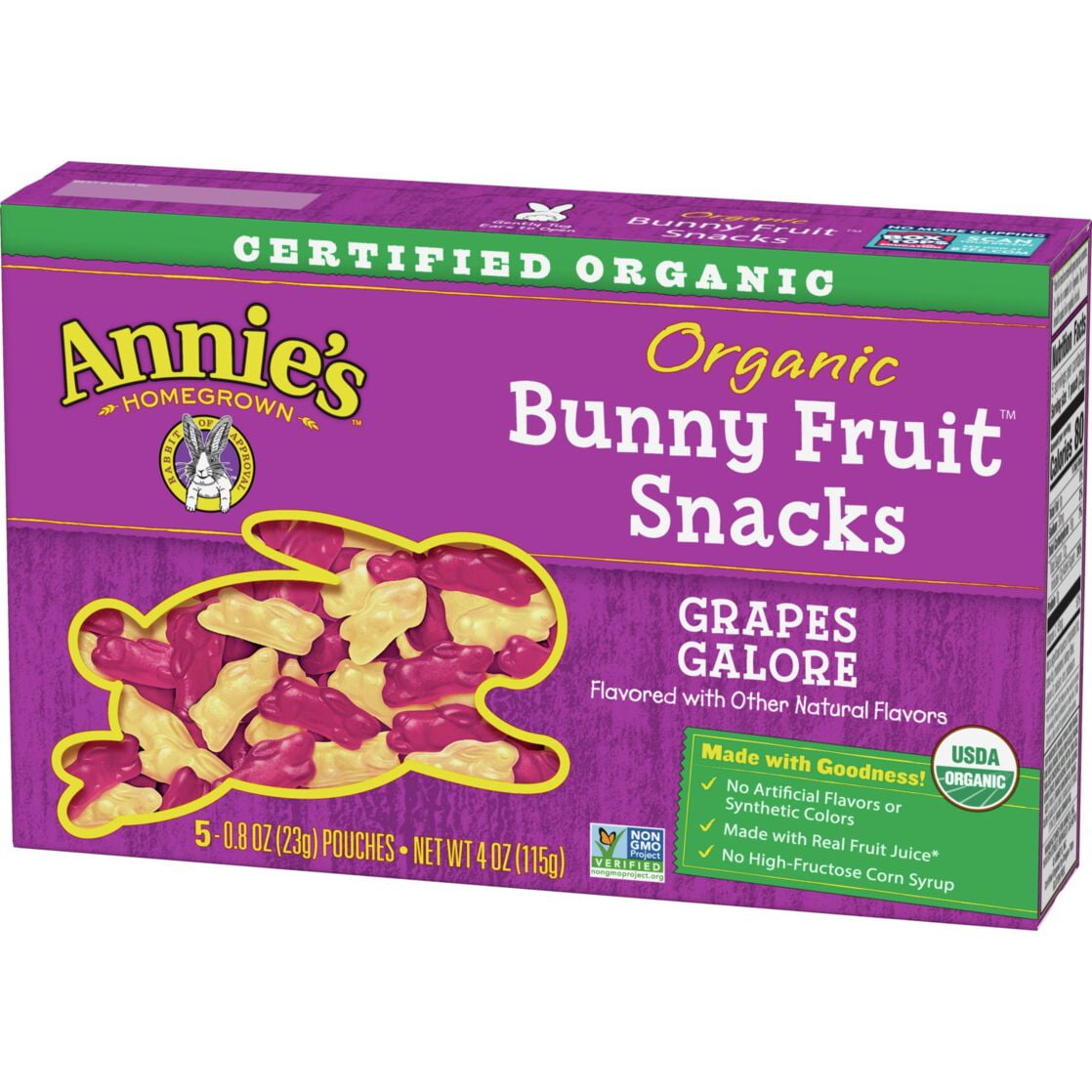

Annie's Homegrown Organic Grapes Galore Bunny Fruit Snacks
Analysis updated May 2026 · How Scout scores
At a glance
Summary
This product contains several organic ingredients, such as pear juice concentrate and natural colors, which are beneficial. However, it is heavily processed and includes refined sugars and sunflower oil, which are less desirable. The presence of multiple additives and the use of 'natural flavors' further contribute to its lower score, despite some positive aspects.
Key ingredients 13
Organic pear juice concentrateGood
Organic pear juice concentrate is used as a natural sweetener and flavor enhancer. It retains some nutrients from the fruit, unlike refined sugars. Organic certification ensures it is free from synthetic pesticides.
Risks
High in natural sugars, which can contribute to calorie intake if consumed in large amounts.
Benefits
Contains vitamins and minerals from pears, providing some nutritional value. Organic certification ensures purity and quality.
Ascorbic acidGood
Ascorbic acid, also known as vitamin C, is an antioxidant that helps preserve the product and provides nutritional benefits. It is essential for collagen synthesis and immune function. It is added to enhance nutritional value and prevent oxidation.
Benefits
Provides antioxidant properties and supports immune health. Essential for collagen production and skin health.
Organic colorGood
Organic color from black carrot and blackcurrant extracts provides natural coloring without synthetic dyes. It is derived from organic sources, ensuring no synthetic pesticides are used. It adds visual appeal while being safe and natural.
Benefits
Provides natural color without synthetic additives. Derived from organic sources, ensuring purity and quality.
Organic tapioca syrup solidsNeutral
Organic tapioca syrup solids are a dehydrated form of tapioca syrup used as a sweetener. They are less processed than some other sweeteners but still contribute to the sugar content. Being organic, they avoid synthetic additives.
Risks
High sugar content can lead to health issues like obesity and diabetes if consumed excessively.
Benefits
Provides energy through carbohydrates. Organic status ensures no synthetic chemicals are used.
WaterNeutral
Water is used as a solvent and to adjust the texture of the product. It is a neutral ingredient with no direct nutritional impact. It helps in mixing and processing other ingredients.
See more about Water →PectinNeutral
Standard formulation ingredient — neither beneficial nor harmful at typical use.
Benefits
Provides dietary fiber, which supports digestive health. Helps in achieving the desired texture without synthetic additives.
Citric acidNeutral
Citric acid is a natural acidulant used to enhance flavor and preserve freshness. It is commonly found in citrus fruits and is generally recognized as safe. It is used in small amounts and does not significantly impact health.
Risks
Excessive consumption may cause dental erosion, but it is unlikely at the levels used in food products.
Benefits
Enhances flavor and acts as a preservative, extending shelf life.
Sodium citrateNeutral
Sodium citrate is a salt of citric acid used as an acidity regulator and emulsifier. It is generally recognized as safe and helps maintain product stability. It is used in small amounts and does not significantly impact health.
Benefits
Helps maintain product consistency and stability.
Organic carnauba waxNeutral
Organic carnauba wax is used as a glazing agent to provide a shiny appearance. It is derived from the leaves of the carnauba palm and is considered safe for consumption. It is minimally processed and used in small amounts.
Benefits
Provides a glossy finish to products without synthetic additives.
Organic tapioca syrupBad
Processed additive flagged under Scout's ingredient doctrine.
Risks
High sugar content can contribute to obesity and dental issues if consumed in excess.
Benefits
Provides a source of carbohydrates for quick energy. Organic certification ensures no synthetic chemicals are used.
Organic cane sugarBad
Organic cane sugar is a refined sugar that contributes to the product's sweetness. Despite being organic, it is still a refined sugar with similar health impacts as conventional sugar. It lacks the nutritional benefits found in whole food sweeteners.
Risks
Excessive consumption can lead to weight gain, insulin resistance, and increased risk of chronic diseases.
Natural flavorBad
Natural flavor is a catch-all term for flavoring agents derived from natural sources. It lacks transparency, making it difficult to assess its health impact. It is often used to enhance taste without providing nutritional benefits.
Risks
Lack of transparency can be concerning for those with allergies or sensitivities.
Organic sunflower oilVery Bad
Organic sunflower oil is a seed oil high in omega-6 fatty acids, which can promote inflammation if consumed in excess. Despite being organic, it is still considered a seed oil with potential health concerns. It is used for its neutral flavor and cooking properties.
Risks
High omega-6 content may promote inflammation when consumed in excess.
Processing
Ultra-Processed Foods
Get the full breakdown in the Scout appTake Scout shopping
Scan any product to see lab results, healthy alternatives, and your personalized analysis.
Download on theApp Store GET IT ONGoogle Play