
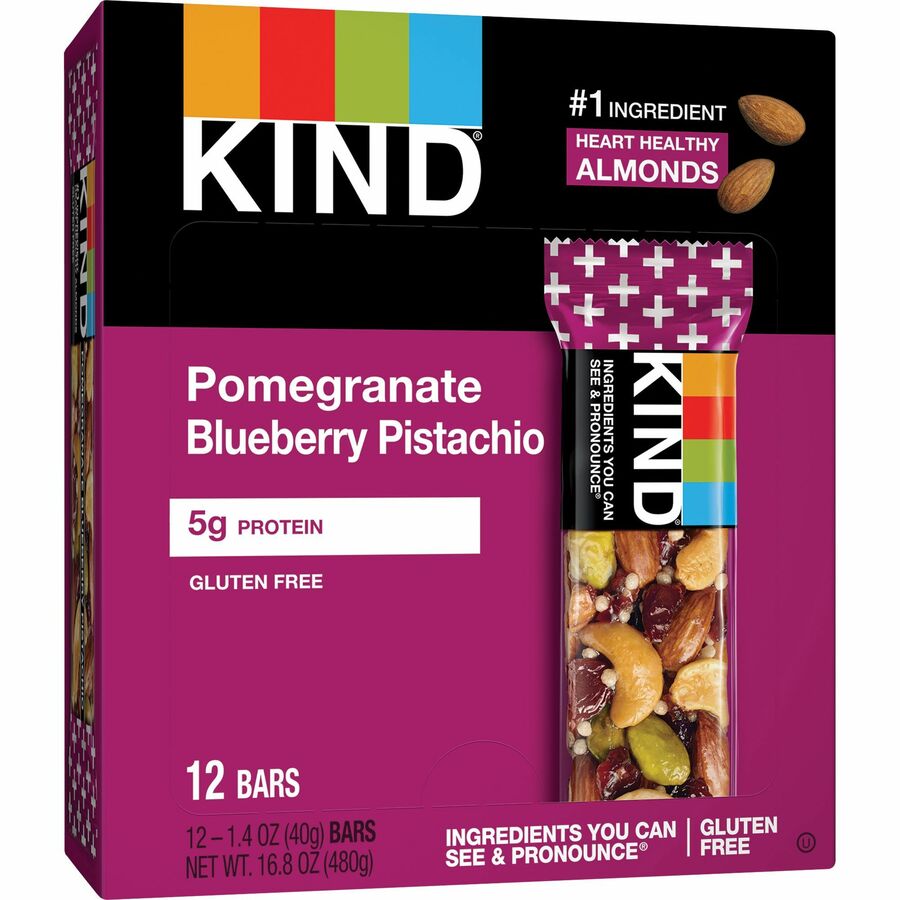





KIND, PLUS BAR, POMEGRANATE BLUEBERRY PISTACHIO + ANTIOXIDANTS
Analysis updated June 2026 · How Scout scores
At a glance
Summary
This snack bar contains a mix of nuts and fruits, which are beneficial for health due to their nutrient density and antioxidant properties. However, it also includes added sugars and processed ingredients like soy lecithin and natural flavors, which detract from its overall healthiness. The product is highly processed, which limits its score despite the presence of some whole food ingredients.
Key ingredients 21
BlueberriesVery Good
Blueberries are a superfood known for their high antioxidant content, particularly anthocyanins. They support brain health and may reduce the risk of heart disease. Their low glycemic index makes them a suitable fruit for blood sugar management.
Benefits
Rich in antioxidants that support cognitive function and cardiovascular health.
AlmondsGood
Almonds are a nutrient-dense nut rich in healthy fats, protein, and fiber. They provide essential vitamins and minerals such as vitamin E and magnesium. Their consumption is associated with improved heart health and reduced inflammation.
Risks
Potential allergen for individuals with nut allergies.
Benefits
Rich in monounsaturated fats and antioxidants, supporting heart health and reducing oxidative stress.
CashewsGood
Cashews are a good source of healthy fats, protein, and essential minerals like copper and magnesium. They contribute to bone health and energy production. Their creamy texture makes them a popular choice in plant-based diets.
Risks
Potential allergen for individuals with nut allergies.
Benefits
Provides healthy fats and essential minerals that support overall health and well-being.
PistachiosGood
Pistachios are rich in protein, fiber, and antioxidants, making them a heart-healthy snack. They contain lutein and zeaxanthin, which are beneficial for eye health. Their consumption is linked to improved cholesterol levels.
Risks
Potential allergen for individuals with nut allergies.
Benefits
Supports heart health and provides antioxidants that may protect against cellular damage.
PomegranateGood
Pomegranate is rich in antioxidants, particularly punicalagins and anthocyanins, which have anti-inflammatory properties. It supports heart health and may improve memory. Its vibrant color indicates a high concentration of beneficial compounds.
Benefits
Provides potent antioxidants that support cardiovascular health and reduce inflammation.
ApplesGood
Apples are a good source of fiber and vitamin C, promoting digestive health and immune function. They contain polyphenols that may have antioxidant effects. Regular consumption is associated with a reduced risk of chronic diseases.
Benefits
Supports digestive health and provides antioxidants that may reduce disease risk.
PlumsGood
Plums are rich in vitamins, minerals, and antioxidants, particularly vitamin C and phenolic compounds. They support digestive health and may improve bone health. Their natural sweetness makes them a healthy alternative to refined sugars.
Benefits
Provides antioxidants and nutrients that support overall health and well-being.
HoneyGood
Traditional whole-food sweetener with trace enzymes and antioxidants.
Risks
High sugar content may contribute to weight gain and dental issues if consumed excessively.
Benefits
Offers a natural alternative to refined sugars with some antioxidant benefits.
Chicory Root FiberGood
Chicory root fiber is a prebiotic fiber that supports digestive health by promoting beneficial gut bacteria. It is often used to increase fiber content in food products. Its consumption is associated with improved bowel regularity.
Risks
Excessive consumption may cause digestive discomfort in some individuals.
Benefits
Supports digestive health and increases dietary fiber intake.
Vitamin C (Ascorbic Acid)Good
Vitamin C is a water-soluble vitamin essential for collagen synthesis and immune function. It acts as an antioxidant, protecting cells from oxidative damage. Regular intake supports overall health and may reduce the duration of colds.
Benefits
Supports immune function and acts as a powerful antioxidant.
Vitamin E (D-alpha Tocopheryl Acetate)Good
Vitamin E is a fat-soluble antioxidant that protects cell membranes from oxidative damage. It supports immune function and skin health. Its acetate form is stable and commonly used in food fortification.
Benefits
Provides antioxidant protection and supports immune and skin health.
RaisinsNeutral
Raisins are dried grapes that provide natural sugars and some fiber. They are a convenient source of quick energy. However, they are high in sugar and should be consumed in moderation.
Risks
High sugar content may contribute to dental issues if consumed excessively.
Benefits
Offers a natural source of energy and some dietary fiber.
Non GMO GlucoseNeutral
Non GMO glucose is a simple sugar used as a sweetener and energy source. It is derived from non-genetically modified sources, which may appeal to consumers avoiding GMOs. However, it is still a refined sugar and should be consumed in moderation.
Risks
Excessive consumption may lead to blood sugar spikes and contribute to metabolic issues.
Benefits
Provides a quick source of energy.
Crisp RiceNeutral
Crisp rice is a processed grain product used for texture in snack bars. It is low in nutrients but adds a crunchy texture. It is generally considered neutral in terms of health impact.
Benefits
Adds texture to food products without significant nutritional impact.
Apple JuiceNeutral
Apple juice is a natural sweetener derived from apples. It provides some vitamins and minerals but is high in sugar. It is often used to enhance flavor in processed foods.
Risks
High sugar content may contribute to dental issues and weight gain if consumed excessively.
Benefits
Offers a natural source of sweetness with some vitamins and minerals.
Vegetable GlycerineNeutral
Vegetable glycerine is a sugar alcohol used as a sweetener and humectant. It is generally recognized as safe and has a low glycemic index. It is often used in food products to retain moisture.
Risks
Excessive consumption may cause digestive discomfort.
Benefits
Helps retain moisture in food products and has a low glycemic impact.
Citrus PectinNeutral
Citrus pectin is a natural gelling agent derived from citrus fruits. It is used to stabilize and thicken food products. It is generally recognized as safe and may have some prebiotic effects.
Benefits
May support digestive health through prebiotic effects.
Vitamin A (Vit. A Acetate)Neutral
Vitamin A acetate is a synthetic form of vitamin A used to fortify foods. It is essential for vision, immune function, and skin health. However, excessive intake can lead to toxicity.
Risks
Excessive intake may lead to vitamin A toxicity.
Benefits
Supports vision, immune function, and skin health.
SugarBad
Sugar is a refined sweetener that provides empty calories with no nutritional benefits. It is associated with increased risk of obesity, type 2 diabetes, and dental cavities. Its consumption should be limited in a healthy diet.
Risks
Contributes to weight gain, insulin resistance, and dental cavities when consumed in excess.
Soy LecithinBad
Soy lecithin is an emulsifier derived from soybeans, used to improve texture and shelf life in processed foods. It is a highly processed ingredient and may contain traces of soy allergens. While generally considered safe, it is not a necessary component of a healthy diet.
Risks
May contain soy allergens and is a highly processed ingredient.
Natural Blueberry FlavorBad
Natural blueberry flavor is a processed ingredient used to enhance taste. It is derived from natural sources but lacks the nutritional benefits of whole blueberries. Its use in food products is often to compensate for lower quality ingredients.
Risks
May contain additives and lacks the nutritional benefits of whole foods.
Processing
Ultra-Processed Foods
Get the full breakdown in the Scout appTake Scout shopping
Scan any product to see lab results, healthy alternatives, and your personalized analysis.
Download on theApp Store GET IT ONGoogle Play