
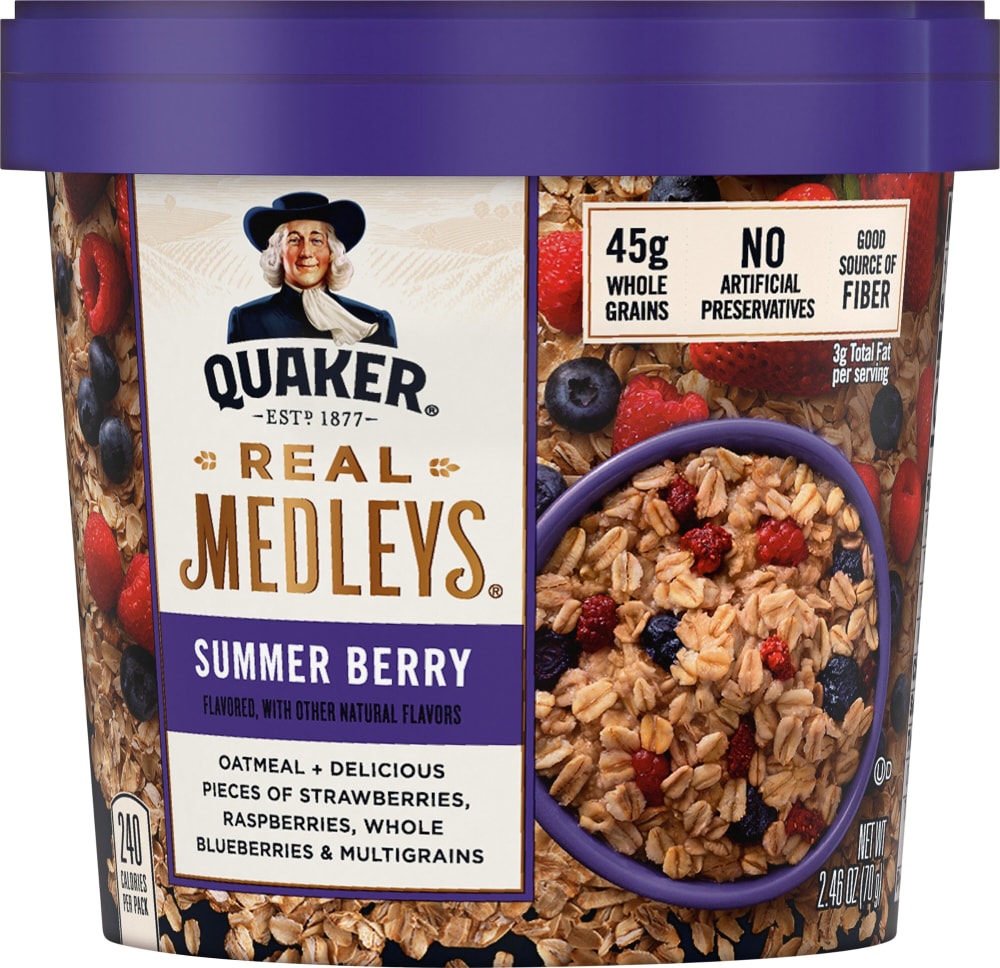




Quaker Real Medleys Summer Berry Oatmeal 2.46 Ounce Cup
Analysis updated May 2026 · How Scout scores
At a glance
Summary
This oatmeal product contains beneficial whole grains and dried fruits, which provide fiber and nutrients. However, it is considered ultra-processed due to the inclusion of brown sugar and natural flavors, which are refined and lack nutritional benefits. The presence of these ingredients, along with the processing level, limits its overall healthiness despite the presence of some nutritious components.
Key ingredients 9
Whole Grain Rolled OatsVery Good
Whole grain rolled oats are a high-quality source of complex carbohydrates and fiber. They provide beta-glucan, which is beneficial for heart health and cholesterol management. The minimal processing retains most of the nutrients and natural fiber content.
Benefits
Rich in fiber and beta-glucan, which support heart health and provide sustained energy.
Multi Grain BlendGood
The multi-grain blend includes whole grain rolled oats, rolled barley, and whole grain rolled rye, offering a diverse nutrient profile. These grains are minimally processed, retaining their natural fiber and nutrient content. The blend provides a variety of vitamins and minerals essential for health.
Benefits
Provides a variety of nutrients and fiber, supporting digestive health and providing sustained energy.
Whole Grain Rolled WheatGood
Whole grain rolled wheat is a source of complex carbohydrates and dietary fiber. It is minimally processed, retaining its natural nutrients and fiber content. This ingredient supports digestive health and provides sustained energy.
Risks
Contains gluten, which may be a concern for individuals with celiac disease or gluten sensitivity.
Benefits
Rich in fiber and nutrients, supporting digestive health and providing energy.
Dried FruitGood
Dried fruit, including strawberries, blueberries, and raspberries, provides natural sweetness and antioxidants. The drying process concentrates the nutrients, offering vitamins and minerals. These fruits contribute to the overall flavor and nutritional profile of the product.
Risks
May contain added sugars and preservatives, which can reduce nutritional value.
Benefits
Rich in antioxidants and vitamins, supporting overall health and adding natural sweetness.
Nonfat Dry MilkNeutral
Nonfat dry milk is a source of protein and calcium, commonly used in processed foods. It is made by removing water from pasteurized milk, which extends shelf life. While it provides some nutrients, it lacks the fat-soluble vitamins found in whole milk.
Risks
Contains lactose, which may be a concern for individuals with lactose intolerance.
Benefits
Provides protein and calcium, supporting bone health.
SaltNeutral
Salt is used to enhance flavor and preserve food. It is a common ingredient in processed foods but should be consumed in moderation. Excessive salt intake can lead to health issues such as hypertension.
Risks
High sodium intake may increase the risk of hypertension and cardiovascular diseases.
Benefits
Enhances flavor and acts as a preservative.
Citric AcidNeutral
Citric acid is a natural preservative and flavor enhancer derived from citrus fruits. It is commonly used in food products to add acidity and preserve freshness. While generally recognized as safe, excessive consumption can cause digestive discomfort.
Risks
Excessive consumption may cause digestive discomfort or tooth enamel erosion.
Benefits
Acts as a preservative and enhances flavor by adding acidity.
Brown SugarBad
Brown sugar is a refined sugar that contributes to the overall sugar content of the product. It can lead to increased blood sugar levels and potential weight gain if consumed in excess. While it adds sweetness, it offers minimal nutritional benefits compared to whole food sweeteners.
Risks
Excessive consumption may lead to weight gain and increased risk of metabolic disorders.
Benefits
Provides a sweet flavor that enhances the taste of the product.
Natural FlavorBad
Natural flavor is a catch-all term for flavoring agents derived from natural sources. It is highly processed and lacks transparency regarding its specific components. The use of natural flavors can mask the absence of real ingredients.
Risks
May contain undisclosed allergens or additives, posing a risk for sensitive individuals.
Benefits
Enhances the flavor profile of the product without adding calories.
Processing
Ultra-Processed Foods
Get the full breakdown in the Scout appTake Scout shopping
Scan any product to see lab results, healthy alternatives, and your personalized analysis.
Download on theApp Store GET IT ONGoogle Play