
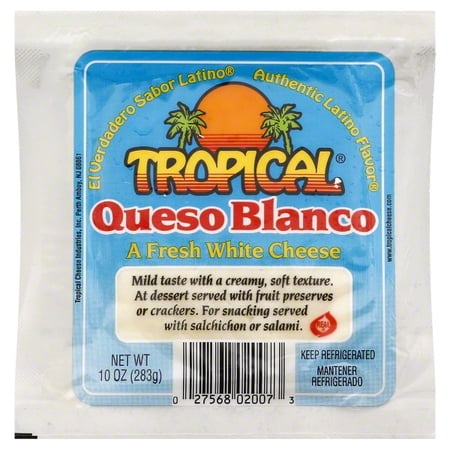
Tropical Queso Blanco Cheese, 10 Oz.
At a glance
Summary
This cheese product includes pasteurized milk, which is a beneficial ingredient providing essential nutrients. However, the presence of soy protein, a less desirable filler, indicates a higher level of processing. The product's processing level limits its score, as it is not as clean or traditional as higher-scoring cheeses. Its plastic packaging can shed microplastics into the food and lowers its score.
Key ingredients 6
Pasteurized milkGood
Pasteurized milk is a primary ingredient in cheese, providing essential nutrients like calcium and protein. The pasteurization process ensures safety by eliminating harmful bacteria. It is a standard ingredient in cheese production, contributing to the product's nutritional profile.
Benefits
Rich in calcium and protein, supporting bone health and muscle maintenance.
SaltNeutral
Salt is used in cheese for flavor and as a preservative. It is a common ingredient in cheese-making, contributing to the taste and shelf-life. While necessary in moderation, excessive salt intake can lead to health issues.
Risks
High sodium intake can contribute to hypertension and cardiovascular issues.
Benefits
Enhances flavor and acts as a preservative in cheese.
EnzymesNeutral
Enzymes are used in cheese-making to coagulate milk, forming curds. They are essential for the cheese production process. Typically derived from microbial or animal sources, they are a standard component in cheese.
Benefits
Facilitates the cheese-making process by aiding in milk coagulation.
Cheese culturesNeutral
Cheese cultures are bacteria used to ferment milk, developing flavor and texture in cheese. They are crucial for the fermentation process in cheese-making. These cultures contribute to the unique characteristics of different cheese varieties.
Benefits
Contributes to the development of flavor and texture in cheese.
Lactic starterNeutral
Lactic starter cultures are used to initiate fermentation in cheese-making. They help convert lactose into lactic acid, aiding in flavor and texture development. These cultures are a standard part of the cheese production process.
Benefits
Aids in the fermentation process, enhancing flavor and texture.
Soy proteinBad
Soy protein is a plant-based protein that can be used as a filler or fortifier in cheese products. It is less desirable than animal-based proteins due to its lower amino acid profile. The inclusion of soy protein may indicate a more processed product.
Risks
May cause allergic reactions in individuals sensitive to soy and is considered less bioavailable compared to animal proteins.
Benefits
Provides a source of protein, though less complete than animal-based options.
Processing
Processed Foods
Get the full breakdown in the Scout appTake Scout shopping
Scan any product to see lab results, healthy alternatives, and your personalized analysis.
Are you Tropical? Fix an error Get the badge Get tested


