
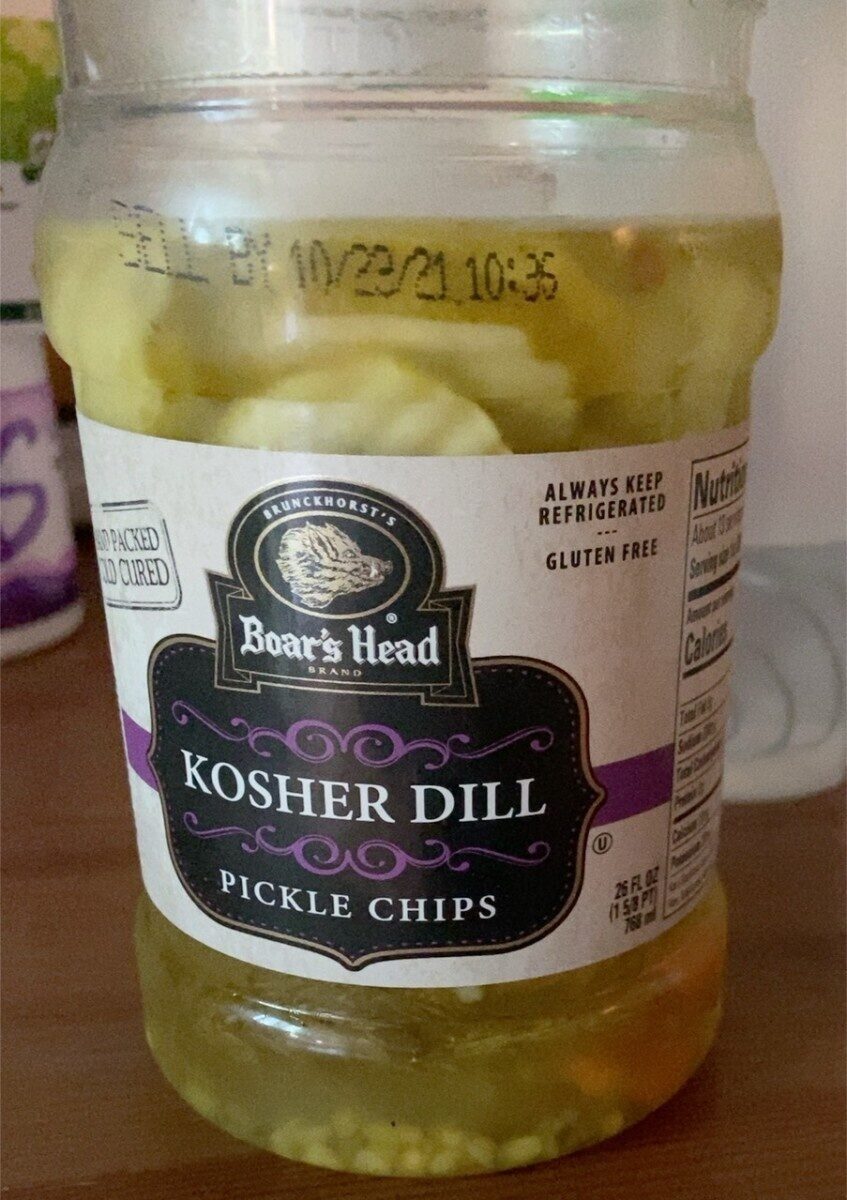

Boar's Head Pickle chips
At a glance
Summary
This product consists primarily of whole food ingredients like cucumbers, carrots, and fresh dill, which are minimally processed and provide nutritional benefits. The presence of a small amount of sodium benzoate as a preservative is a minor concern, but the overall ingredient list is clean and lacks harmful additives. The processing level limits the score, but the product remains a healthy choice due to its natural components.
Key ingredients 10
CucumbersGood
Cucumbers are low in calories and provide hydration due to their high water content. They contain antioxidants and some vitamins, contributing to overall health. As a whole food, they are minimally processed and retain their nutritional benefits.
Benefits
Cucumbers are hydrating and provide a source of antioxidants and vitamins.
VinegarGood
Vinegar is used for its preservative qualities and tangy flavor. It can aid digestion and has antimicrobial properties. The acetic acid in vinegar may help with blood sugar control.
Risks
Excessive consumption may lead to digestive discomfort.
Benefits
May aid digestion and has antimicrobial properties.
CarrotsGood
Carrots are rich in beta-carotene, fiber, and antioxidants. They support eye health and provide essential nutrients. As a whole food, they are minimally processed and nutritious.
Benefits
Rich in beta-carotene and fiber, supporting eye health and digestion.
Fresh DillGood
Fresh dill adds flavor and contains antioxidants. It may aid digestion and has anti-inflammatory properties. As a fresh herb, it is minimally processed and beneficial.
Benefits
Contains antioxidants and may aid digestion.
GarlicGood
Garlic is known for its health benefits, including antimicrobial and cardiovascular support. It contains allicin, which has been linked to various health benefits. As a natural ingredient, it is minimally processed.
Risks
May cause digestive discomfort in some individuals.
Benefits
Supports cardiovascular health and has antimicrobial properties.
SpicesGood
Whole-food seasonings, antioxidant-bearing.
Benefits
May provide flavor and some health benefits depending on the type.
WaterNeutral
Water is a fundamental component used in food processing and preservation. It acts as a solvent and carrier for other ingredients. It does not provide nutritional value but is essential for hydration.
Benefits
Essential for hydration and acts as a solvent in food processing.
SaltNeutral
Salt is used for flavor enhancement and preservation. It is essential for bodily functions but should be consumed in moderation. Excessive intake can lead to health issues like hypertension.
Risks
High intake can lead to hypertension and cardiovascular issues.
Benefits
Essential for bodily functions and enhances flavor.
Calcium ChlorideNeutral
Calcium chloride is used to maintain firmness in pickled products. It is generally recognized as safe and provides a source of calcium. It does not significantly impact the nutritional profile of the product.
Benefits
Helps maintain firmness and provides a source of calcium.
Sodium BenzoateBad
Sodium benzoate is a preservative used to prevent spoilage. It is generally recognized as safe but can form benzene, a carcinogen, under certain conditions. Its use is limited to small amounts due to potential health concerns.
Risks
May form benzene, a carcinogen, under certain conditions.
Benefits
Extends shelf life by preventing microbial growth.
Processing
Processed Foods
Get the full breakdown in the Scout appTake Scout shopping
Scan any product to see lab results, healthy alternatives, and your personalized analysis.
Download on theApp Store GET IT ONGoogle Play