
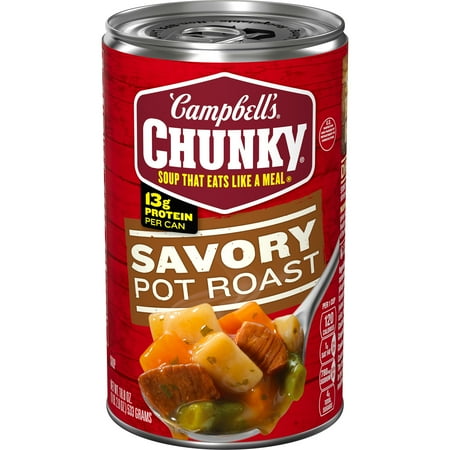
Campbell’s Chunky Soup Savory Pot Roast Soup 18.8 oz Can
Summary
This soup contains beneficial ingredients like potatoes, carrots, and seasoned beef, which provide essential nutrients. However, it is heavily processed with additives such as caramel color and xanthan gum, and contains high sodium levels. The presence of ultra-processing and these additives significantly impacts its health rating.
At a glance
Key ingredients 12
WaterNeutral
Water is a neutral ingredient used as a base for the soup. It provides no nutritional value but is essential for hydration. It acts as a solvent for other ingredients.
See more about Water →PotatoesGood
Potatoes are a good source of carbohydrates and provide essential nutrients like vitamin C and potassium. They are minimally processed in this context, retaining most of their nutritional value. Potatoes can contribute to satiety and energy levels.
Risks
Excessive consumption may lead to high carbohydrate intake.
Benefits
Rich in vitamin C and potassium, supporting immune function and heart health.
CarrotsGood
Carrots are rich in beta-carotene, which the body converts to vitamin A, essential for vision and immune function. They are minimally processed, preserving their nutritional benefits. Carrots also provide dietary fiber, aiding digestion.
Benefits
High in beta-carotene and fiber, supporting eye health and digestion.
Seasoned beefGood
Beef provides high-quality protein and essential nutrients like iron and zinc. The beef is seasoned, which may include added sodium, but it remains a valuable protein source. Animal-based proteins offer a complete amino acid profile.
Risks
May contain added sodium and preservatives.
Benefits
Rich in protein, iron, and zinc, supporting muscle growth and immune function.
Tomato pureeGood
Tomato puree is a concentrated source of tomatoes, providing lycopene, an antioxidant linked to reduced risk of chronic diseases. It is processed but retains significant nutritional benefits. Lycopene absorption is enhanced when consumed with fats.
Benefits
Contains lycopene, supporting heart health and reducing oxidative stress.
Modified food starchNeutral
Modified food starch is used as a thickening agent in processed foods. It is derived from starches like corn or potatoes and is generally considered safe. It provides no significant nutritional value.
See more about Modified food starch →Soy sauceBad
Soy sauce is a fermented product that adds flavor but is high in sodium. It contains wheat and soy, which may be allergens for some individuals. The fermentation process can enhance flavor but does not mitigate sodium content.
Risks
High sodium content may contribute to hypertension.
Benefits
Adds umami flavor to dishes.
Beef tallowNeutral
Beef tallow is a rendered form of beef fat used for flavor and texture. It is a source of saturated fats, which should be consumed in moderation. Tallow can enhance the flavor profile of dishes.
Risks
High in saturated fats, which may impact heart health if consumed in excess.
Benefits
Provides flavor and texture to foods.
Caramel colorBad
Caramel color is a food coloring agent used to enhance appearance. It is a processed additive with no nutritional value. Some forms of caramel color may contain contaminants like 4-MEI, which have raised health concerns.
Risks
Potential presence of 4-MEI, a possible carcinogen.
Glutamic acidNeutral
Glutamic acid is an amino acid that occurs naturally in many foods and is used as a flavor enhancer. It is generally recognized as safe but can cause sensitivity in some individuals. It contributes to the umami taste in foods.
Risks
May cause sensitivity in individuals sensitive to MSG.
Benefits
Enhances flavor by contributing to umami taste.
Xanthan gumNeutral
Xanthan gum is a polysaccharide used as a thickening and stabilizing agent. It is produced through fermentation and is generally considered safe. It provides no significant nutritional value but improves texture.
Risks
May cause digestive issues in large amounts.
Benefits
Improves texture and stability of food products.
Sesame seed oilNeutral
Sesame seed oil is a plant-based oil used for flavor and cooking. It contains healthy fats but is not a significant source of nutrients in small amounts. It adds a distinct flavor to dishes.
Risks
May cause allergic reactions in individuals with sesame allergies.
Benefits
Contains healthy fats and adds flavor to dishes.
Processing
Ultra-Processed Foods
Get the full breakdown in the Scout app
Scan any product to see lab results, healthy alternatives, and your personalized analysis.
Download on theApp Store