
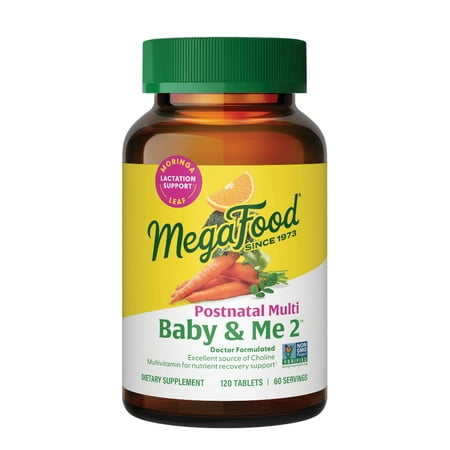

MegaFood Baby & Me 2 Postnatal Multi - Folate Choline Iodine Vitamin D3 - 60 Servings
At a glance
Summary
This postnatal multivitamin features a comprehensive blend of bioavailable vitamins and minerals, including essential nutrients like folate, choline, and iodine, which are crucial for postnatal health. The formulation avoids harmful additives and uses natural sources for vitamins, enhancing its safety and effectiveness. The presence of beneficial ingredients such as Vitamin D3 and beta carotene further supports its high rating, making it a well-rounded choice for new mothers.
Key ingredients 31
Vitamin AVery Good
Vitamin A, as beta carotene, is essential for vision, immune function, and skin health. It is a precursor to retinol and is converted in the body as needed. Beta carotene is a safe source of Vitamin A, reducing the risk of toxicity.
Risks
Excessive intake of Vitamin A can lead to toxicity, but beta carotene is generally safe.
Benefits
Supports vision, immune function, and skin health.
Vitamin CVery Good
Vitamin C, as ascorbic acid, is a powerful antioxidant that supports immune function and collagen synthesis. It is water-soluble and essential for overall health. Regular intake is necessary as the body does not store it.
Risks
High doses may cause gastrointestinal discomfort.
Benefits
Enhances immune function and supports collagen synthesis.
Vitamin EVery Good
Vitamin E, as d-alpha tocopherol from sunflower seed oil, is an antioxidant that protects cells from oxidative damage. It is derived from natural sources, enhancing its effectiveness. It supports skin health and immune function.
Risks
High doses may interfere with blood clotting.
Benefits
Protects cells from oxidative damage and supports skin health.
Vitamin KVery Good
Vitamin K, as phytonadione, is essential for blood clotting and bone health. It is a fat-soluble vitamin that plays a critical role in calcium metabolism. Adequate intake is necessary for preventing bleeding disorders.
Benefits
Supports blood clotting and bone health.
ThiaminVery Good
Thiamin, as thiamin hydrochloride, is vital for energy metabolism and nerve function. It is a water-soluble B vitamin that must be consumed regularly. It supports the conversion of carbohydrates into energy.
Benefits
Supports energy metabolism and nerve function.
Vitamin B6Very Good
Vitamin B6, as pyridoxal-5-phosphate, is crucial for amino acid metabolism and neurotransmitter synthesis. It is the active form of Vitamin B6, enhancing its bioavailability. It supports brain health and immune function.
Risks
High doses may cause nerve damage.
Benefits
Supports amino acid metabolism and brain health.
FolateVery Good
Folate, as L-5-methyltetrahydrofolate, is vital for DNA synthesis and cell division. It is the active form of folate, improving its absorption and utilization. It is essential for fetal development and preventing neural tube defects.
Benefits
Supports DNA synthesis and fetal development.
Pantothenic AcidVery Good
Pantothenic acid, as d-calcium pantothenate, is crucial for synthesizing coenzyme A and energy production. It is a water-soluble B vitamin that supports adrenal function and stress response. It is essential for the metabolism of carbohydrates, proteins, and fats.
Benefits
Supports energy production and adrenal function.
CholineVery Good
Choline, as choline bitartrate, is essential for liver function and brain development. It is a precursor to acetylcholine, a neurotransmitter involved in memory and muscle control. Adequate intake is necessary for cognitive health.
Risks
Excessive intake may cause fishy body odor and gastrointestinal distress.
Benefits
Supports liver function and brain development.
IronVery Good
Iron, as fermented iron bisglycinate, is crucial for oxygen transport and energy production. Fermentation may enhance its absorption and reduce gastrointestinal side effects. It is essential for preventing anemia and supporting overall health.
Risks
Excessive intake can lead to iron overload and toxicity.
Benefits
Supports oxygen transport and prevents anemia.
IodineVery Good
Iodine, as fermented iodine glycinate, is essential for thyroid function and hormone production. Fermentation may enhance its bioavailability. It is crucial for metabolic regulation and preventing iodine deficiency disorders.
Risks
Excessive intake can lead to thyroid dysfunction.
Benefits
Supports thyroid function and hormone production.
SeleniumVery Good
Selenium, as fermented selenium glycinate, is a powerful antioxidant that supports thyroid function and immune health. Fermentation may enhance its absorption. It is essential for preventing oxidative stress and supporting overall health.
Risks
Excessive intake can lead to selenosis, causing hair and nail loss.
Benefits
Supports thyroid function and acts as an antioxidant.
CopperVery Good
Copper, as fermented copper bisglycinate, is essential for iron metabolism and connective tissue formation. Fermentation may enhance its bioavailability. It supports cardiovascular health and immune function.
Risks
Excessive intake can lead to copper toxicity and liver damage.
Benefits
Supports iron metabolism and connective tissue formation.
ManganeseVery Good
Manganese, as fermented manganese bisglycinate, is important for bone health and enzyme function. Fermentation may enhance its absorption. It supports metabolism and antioxidant defense.
Risks
High doses may cause neurological issues.
Benefits
Supports bone health and enzyme function.
GTF ChromiumVery Good
GTF Chromium, as fermented chromium glycinate, nicotinate, glutamate, is essential for glucose metabolism and insulin sensitivity. Fermentation may enhance its bioavailability. It supports blood sugar regulation and metabolic health.
Benefits
Supports glucose metabolism and insulin sensitivity.
MolybdenumVery Good
Molybdenum, as fermented molybdenum bisglycinate, is crucial for enzyme function and detoxification processes. Fermentation may enhance its absorption. It supports the metabolism of sulfur-containing amino acids.
Benefits
Supports enzyme function and detoxification.
Organic Moringa LeafVery Good
Organic moringa leaf is a nutrient-dense plant rich in vitamins, minerals, and antioxidants. It is known for its anti-inflammatory and immune-boosting properties. As an organic ingredient, it is free from synthetic pesticides and fertilizers.
Benefits
Rich in nutrients and supports immune health.
Vitamin D3Good
Vitamin D3, as fermented cholecalciferol, is crucial for calcium absorption and bone health. Fermentation may enhance its bioavailability. It is essential for maintaining healthy bones and immune function.
Risks
Excessive intake can lead to hypercalcemia.
Benefits
Supports bone health and calcium absorption.
RiboflavinGood
Riboflavin, as riboflavin 5'-phosphate sodium, is important for energy production and cellular function. It is a water-soluble B vitamin that aids in the metabolism of fats, drugs, and steroids. It also supports skin and eye health.
Benefits
Supports energy production and cellular function.
NiacinGood
Niacin, as niacinamide, is essential for DNA repair and energy metabolism. It is a form of Vitamin B3 that supports skin health and reduces cholesterol levels. It is water-soluble and must be consumed regularly.
Risks
High doses may cause flushing and liver damage.
Benefits
Supports DNA repair and energy metabolism.
Vitamin B12Good
Vitamin B12, as methylcobalamin, is essential for nerve function and red blood cell formation. It is the active form of B12, enhancing its bioavailability. It supports energy production and neurological health.
Benefits
Supports nerve function and red blood cell formation.
BiotinGood
Biotin, as biotin, is important for carbohydrate, fat, and protein metabolism. It is a water-soluble B vitamin that supports hair, skin, and nail health. Regular intake is necessary as the body does not store it.
Benefits
Supports metabolism and hair, skin, and nail health.
ZincGood
Zinc, as zinc bisglycinate, is important for immune function and wound healing. It is a trace mineral that supports enzyme activity and DNA synthesis. Adequate intake is necessary for maintaining overall health.
Risks
High doses may cause nausea and interfere with copper absorption.
Benefits
Supports immune function and wound healing.
BoronGood
Boron, as fermented boron triglycinate, is important for bone health and hormone regulation. Fermentation may enhance its bioavailability. It supports calcium metabolism and cognitive function.
Benefits
Supports bone health and hormone regulation.
Microcrystalline CelluloseNeutral
Microcrystalline cellulose is a common filler and binder used in supplements. It is derived from plant fibers and is considered safe for consumption. It does not provide nutritional benefits but aids in the manufacturing process.
See more about Microcrystalline Cellulose →Ferment MediaNeutral
Ferment media, including rice protein and yeast extract, is used to support the fermentation process of vitamins and minerals. It is generally considered safe and can enhance the bioavailability of nutrients. However, it does not provide direct nutritional benefits.
Benefits
May enhance the bioavailability of nutrients through fermentation.
Rice ProteinNeutral
Rice protein is a plant-based protein source used in supplements. It is hypoallergenic and suitable for those with dietary restrictions. While it provides protein, it lacks some essential amino acids found in animal-based proteins.
Benefits
Provides a hypoallergenic protein source suitable for various dietary needs.
Stearic AcidNeutral
Stearic acid is a fatty acid used as a lubricant in supplement manufacturing. It is naturally occurring and considered safe for consumption. It does not contribute nutritional value but aids in the production process.
See more about Stearic Acid →Silicon DioxideNeutral
Silicon dioxide is used as an anti-caking agent in supplements. It is naturally found in the earth's crust and is considered safe for consumption. It does not provide nutritional benefits but ensures product stability.
See more about Silicon Dioxide →Autolyzed YeastNeutral
Autolyzed yeast is used to enhance flavor and nutrient content in supplements. It is a source of B vitamins and amino acids. While it provides some nutrients, it is primarily used for its functional properties.
Benefits
Provides B vitamins and amino acids, enhancing nutrient content.
HypromelloseNeutral
Hypromellose is a plant-derived compound used as a capsule material in supplements. It is considered safe and is commonly used as a vegetarian alternative to gelatin. It does not provide nutritional benefits but is essential for capsule formation.
See more about Hypromellose →Processing
Unprocessed or Minimally Processed Foods
Get the full breakdown in the Scout appTake Scout shopping
Scan any product to see lab results, healthy alternatives, and your personalized analysis.
Download on theApp Store GET IT ONGoogle PlayAmazon pricing & content
Amazon price as of . Product prices and availability are accurate as of the date/time indicated and are subject to change. Any price and availability information displayed on Amazon.com at the time of purchase will apply to the purchase of this product.
CERTAIN CONTENT THAT APPEARS ON THIS SITE COMES FROM AMAZON. THIS CONTENT IS PROVIDED “AS IS” AND IS SUBJECT TO CHANGE OR REMOVAL AT ANY TIME.