
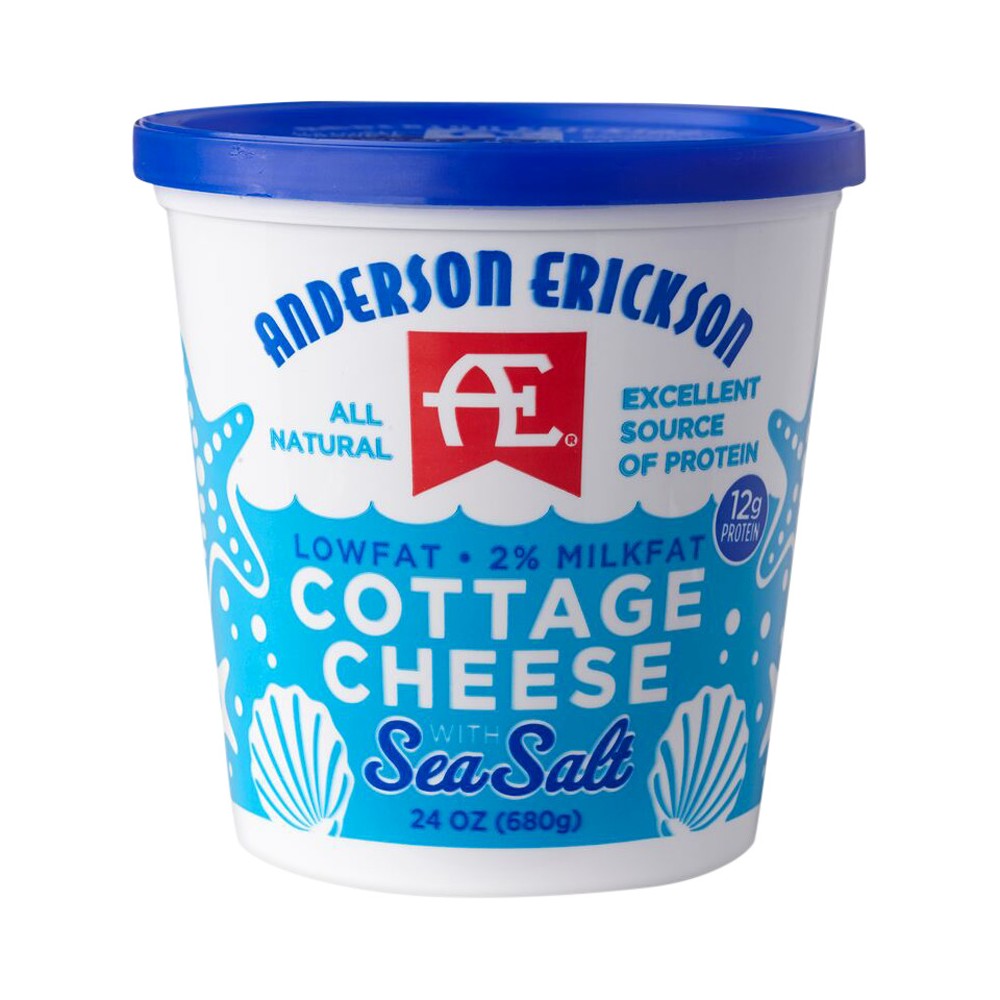


Anderson Erickson Dairy COTTAGE CHEESE WITH SEA SALT
Analysis updated August 2026 · How Scout scores
At a glance
Summary
This cottage cheese is ultra-processed due to the inclusion of multiple additives such as guar gum, xanthan gum, and mono and diglycerides, which are used to enhance texture and stability. While it contains beneficial ingredients like sea salt, the presence of these processed additives and the overall level of processing limit its healthfulness compared to more traditional cheese products.
Key ingredients 8
MilkGood
Whole dairy ingredient.
Risks
Potential lactose intolerance or milk allergy in some individuals.
Benefits
Rich in essential nutrients like calcium, vitamin D, and protein, supporting overall health.
CreamGood
Traditional whole-fat dairy ingredient.
Risks
High in saturated fats, which may impact heart health if consumed in excess.
Benefits
Enhances flavor and texture, providing a source of energy and fat-soluble vitamins.
Sea saltGood
Sea salt is a natural source of sodium and trace minerals, used to enhance flavor. It is minimally processed compared to refined table salt. Sea salt can contribute to the overall mineral intake in a diet.
Risks
Excessive sodium intake can lead to high blood pressure and cardiovascular issues.
Benefits
Provides essential sodium and trace minerals, supporting electrolyte balance and nerve function.
Cultured grade a pasteurized nonfat milkNeutral
This ingredient is a primary component of cottage cheese, providing a source of protein and calcium. It is pasteurized to ensure safety and reduce the risk of harmful bacteria. However, it lacks the additional nutrients found in whole milk.
Benefits
Provides protein and calcium, essential for bone health and muscle maintenance.
Guar gumNeutral
Standard formulation ingredient — neither beneficial nor harmful at typical use.
Risks
May cause digestive discomfort such as gas and bloating in some people.
Benefits
Helps improve texture and consistency in food products.
Xanthan gumNeutral
Fermentation-derived thickener, well tolerated at food-use levels.
Risks
May cause digestive issues such as bloating and gas in sensitive individuals.
Benefits
Enhances texture and stability in food products, especially in gluten-free formulations.
Locust bean gumNeutral
Locust bean gum is a natural thickening agent derived from carob seeds. It is used to improve texture and consistency in food products. It is less processed compared to other gums and generally well-tolerated.
Benefits
Provides a natural source of fiber and helps improve texture in food products.
Mono and diglyceridesBad
Mono and diglycerides are emulsifiers used to blend ingredients that typically do not mix well, such as oil and water. They are often derived from vegetable oils and can be highly processed. Their presence indicates a higher level of food processing.
Risks
Potential source of trans fats if not properly processed, which can impact heart health.
Benefits
Improves texture and shelf stability of food products.
Processing
Ultra-Processed Foods
Get the full breakdown in the Scout appTake Scout shopping
Scan any product to see lab results, healthy alternatives, and your personalized analysis.
Download on theApp Store GET IT ONGoogle Play