
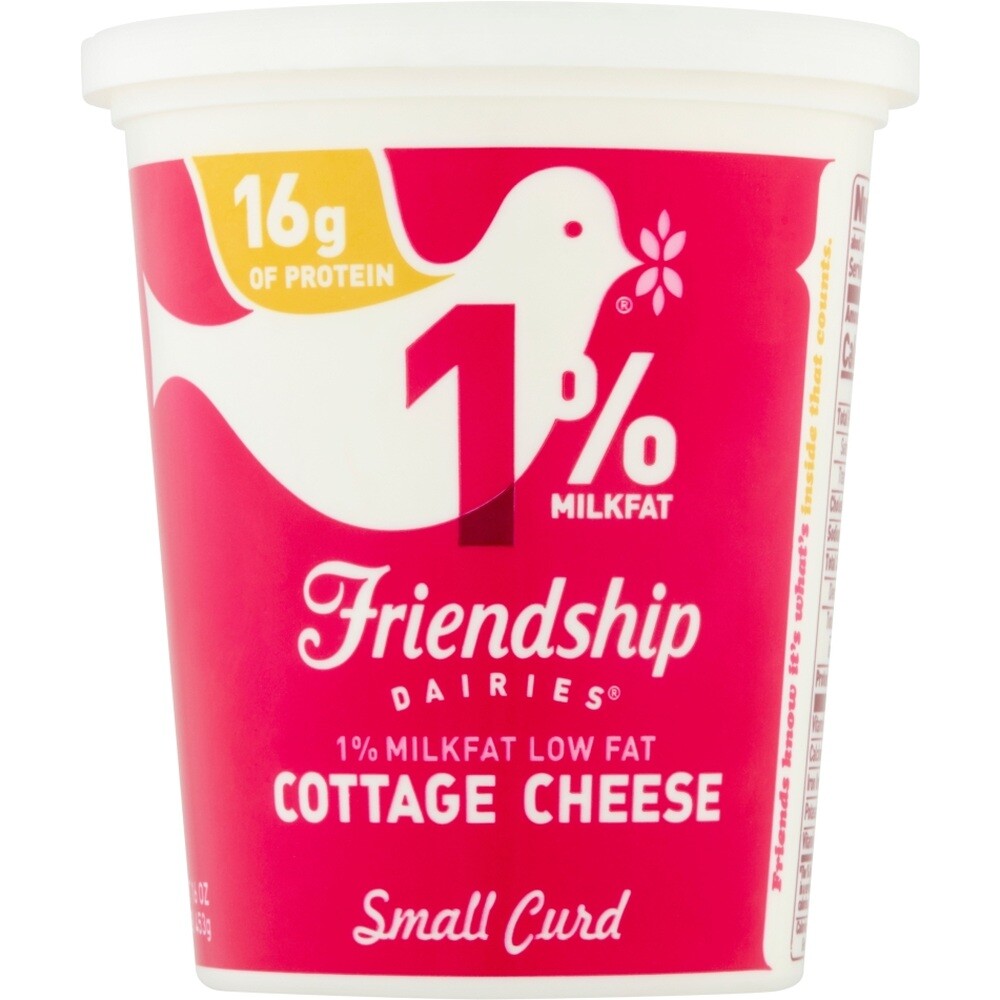


1% MILKFAT LOW FAT COTTAGE CHEESE
Analysis updated August 2026 · How Scout scores
At a glance
Summary
This low-fat cottage cheese is ultra-processed, which limits its score despite having a good protein content. It contains additives like locust bean gum and carrageenan, which are used to improve texture but can cause digestive issues and are linked to potential health concerns. The presence of these additives and the level of processing prevent it from scoring higher.
Key ingredients 9
Cultured skim milkGood
Cultured skim milk is a source of protein and probiotics, beneficial for gut health. It is minimally processed and provides essential nutrients like calcium. The fermentation process enhances digestibility and nutrient absorption.
Benefits
Provides protein and probiotics that support digestive health and bone strength.
MilkGood
Whole dairy ingredient.
Risks
May cause digestive issues for those with lactose intolerance.
Benefits
Rich in calcium and protein, supporting bone health and muscle maintenance.
Nonfat milkNeutral
Nonfat milk provides protein and calcium without the fat content of whole milk. It is a processed form of milk with reduced fat content. Suitable for those seeking lower calorie dairy options.
Risks
May cause digestive issues for those with lactose intolerance.
Benefits
Offers protein and calcium with reduced fat content, beneficial for weight management.
SaltNeutral
Salt is used for flavor enhancement and preservation. It is a refined ingredient without additional minerals. Excessive consumption can lead to health issues like hypertension.
Risks
High sodium intake can contribute to hypertension and cardiovascular issues.
Benefits
Enhances flavor and acts as a preservative in food products.
Locust bean gumNeutral
Standard formulation ingredient — neither beneficial nor harmful at typical use.
Risks
May cause digestive issues such as bloating and gas when consumed in large amounts.
Benefits
Improves texture and stability of food products.
Carbon dioxideNeutral
Carbon dioxide is used to preserve freshness by inhibiting microbial growth. It is a natural gas with no nutritional value. Commonly used in food packaging to extend shelf life.
Benefits
Helps preserve freshness and extend the shelf life of food products.
Vitamin A palmitateNeutral
Vitamin A palmitate is a synthetic form of vitamin A used to fortify foods. It is added to enhance nutritional value, particularly in low-fat dairy products. Overconsumption can lead to toxicity.
Risks
Excessive intake can lead to vitamin A toxicity, causing health issues.
Benefits
Enhances vitamin A content, supporting vision and immune function.
EnzymesNeutral
Enzymes are used in cheese production to aid in milk coagulation. They are natural proteins that facilitate biochemical reactions. Essential for the cheese-making process, improving texture and flavor.
Benefits
Facilitates cheese production, improving texture and flavor.
CarrageenanBad
Carrageenan is a seaweed-derived thickener and stabilizer. It is heavily processed and has been linked to digestive inflammation. Its use is controversial due to potential health concerns.
Risks
Associated with digestive inflammation and potential gastrointestinal issues.
Benefits
Provides thickening and stabilizing properties in food products.
Processing
Ultra-Processed Foods
Get the full breakdown in the Scout appTake Scout shopping
Scan any product to see lab results, healthy alternatives, and your personalized analysis.
Download on theApp Store GET IT ONGoogle Play