


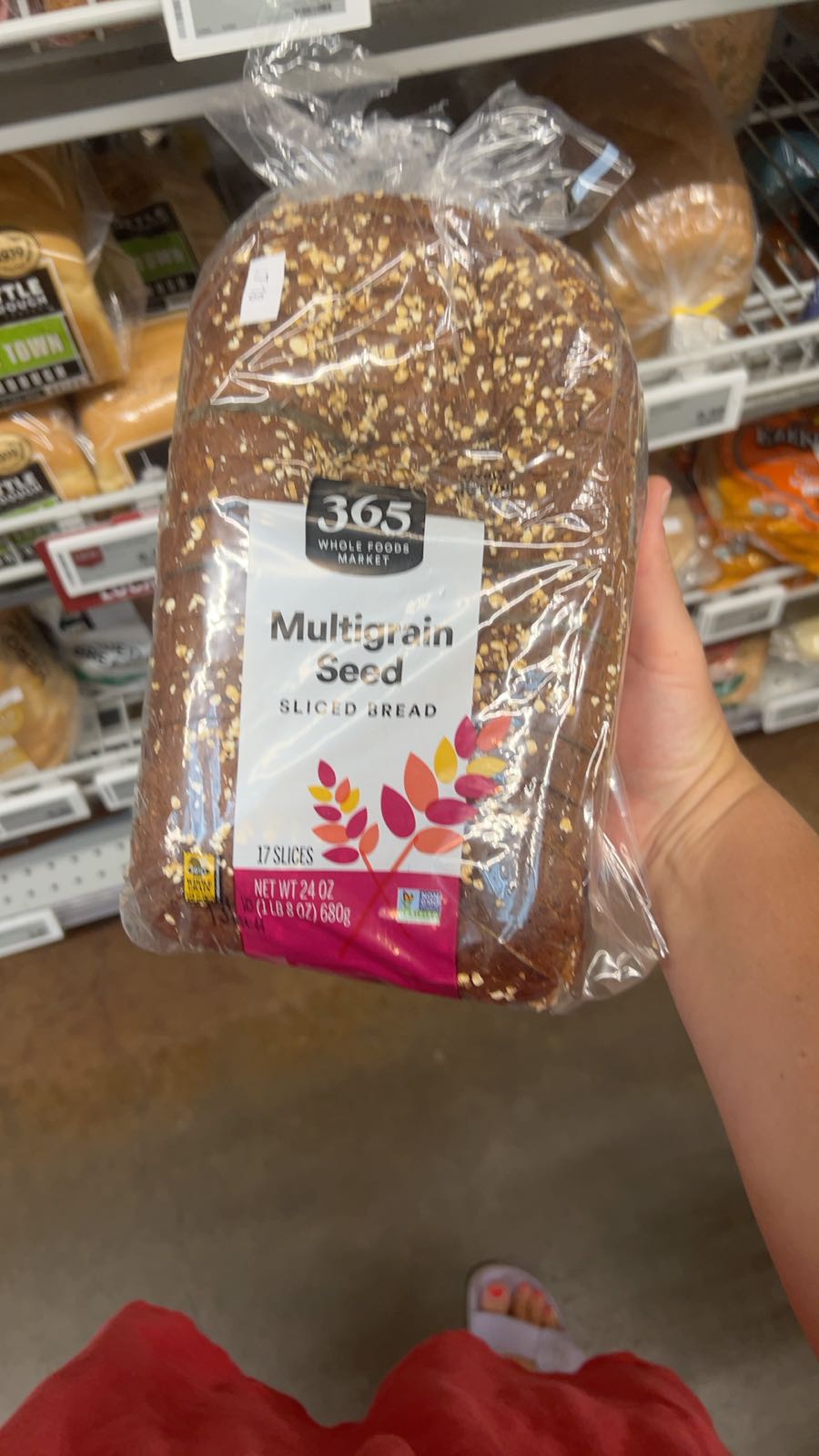

At a glance
Summary
This bread features a variety of organic whole grains and seeds, which contribute to its nutritional value and fiber content. However, it is classified as ultra-processed due to the presence of multiple ingredients and processing steps, which limits its score. The inclusion of organic palm oil, although organic, raises concerns due to its saturated fat content and environmental impact.
Key ingredients 28
Organic whole grainsVery Good
Organic whole grains are a rich source of fiber and essential nutrients. They are minimally processed, retaining their natural vitamins and minerals. Organic certification ensures no synthetic pesticides or fertilizers are used.
Benefits
Provides dietary fiber, vitamins, and minerals that support digestive health and reduce the risk of chronic diseases.
Organic whole grain cracked wheatVery Good
Organic whole grain cracked wheat is a nutritious source of complex carbohydrates and fiber. It is less processed than refined grains, preserving its nutrient content. Organic certification ensures it is free from synthetic chemicals.
Benefits
Supports digestive health and provides sustained energy due to its fiber and complex carbohydrate content.
Organic cracked wheatVery Good
Organic cracked wheat is a minimally processed grain that retains its natural nutrients. It is a good source of fiber and complex carbohydrates. Organic certification ensures it is grown without synthetic chemicals.
Benefits
Supports digestive health and provides a steady release of energy.
Organic grain and seed blendVery Good
Organic grain and seed blend provides a variety of nutrients and healthy fats. It includes a mix of grains and seeds, enhancing the nutritional profile of the bread. Organic certification ensures no synthetic chemicals are used.
Benefits
Rich in fiber, healthy fats, and essential nutrients, supporting overall health.
Organic whole brown flax seedsVery Good
Organic whole brown flax seeds are a rich source of omega-3 fatty acids and fiber. They are minimally processed, retaining their natural nutrients. Organic certification ensures they are free from synthetic chemicals.
Benefits
Provides omega-3 fatty acids and fiber, supporting heart health and digestion.
Organic rolled oatsVery Good
Organic rolled oats are a whole grain rich in fiber and essential nutrients. They are minimally processed, retaining their natural vitamins and minerals. Organic certification ensures no synthetic chemicals are used.
Benefits
Supports heart health and digestion due to its high fiber content.
Organic quinoaVery Good
Organic quinoa is a complete protein source, providing all essential amino acids. It is minimally processed and rich in fiber and nutrients. Organic certification ensures it is free from synthetic chemicals.
Benefits
Provides complete protein and essential nutrients, supporting muscle health and overall nutrition.
Organic chia seedsVery Good
Organic chia seeds are a rich source of omega-3 fatty acids, fiber, and protein. They are minimally processed, retaining their natural nutrients. Organic certification ensures they are free from synthetic chemicals.
Benefits
Provides omega-3 fatty acids, fiber, and protein, supporting heart health and digestion.
Organic whole grain steel cut oatsVery Good
Organic whole grain steel cut oats are a minimally processed whole grain rich in fiber and nutrients. They retain their natural vitamins and minerals. Organic certification ensures no synthetic chemicals are used.
Benefits
Supports heart health and digestion due to its high fiber content.
Organic whole wheat flourGood
Organic whole wheat flour is a healthier alternative to refined flour, offering more fiber and nutrients. It is made by grinding whole wheat kernels, retaining the bran and germ. Organic certification ensures no harmful chemicals are used.
Benefits
Rich in dietary fiber and essential nutrients, supporting heart health and digestion.
InulinGood
Inulin is a prebiotic fiber that supports gut health by promoting beneficial bacteria. It is derived from natural sources like chicory root. It can improve digestive health and enhance mineral absorption.
Risks
Excessive consumption may cause digestive discomfort in some individuals.
Benefits
Supports gut health by promoting beneficial bacteria and improving mineral absorption.
Organic sunflower seedsGood
Organic sunflower seeds are a good source of healthy fats, protein, and vitamins. They are minimally processed and provide essential nutrients. Organic certification ensures they are grown without synthetic chemicals.
Benefits
Rich in healthy fats, protein, and vitamins, supporting heart health and overall nutrition.
Organic sesame seedsGood
Organic sesame seeds are a nutritious source of healthy fats, protein, and minerals. They are minimally processed and provide essential nutrients. Organic certification ensures they are free from synthetic chemicals.
Benefits
Provides healthy fats, protein, and minerals, supporting heart health and bone health.
Organic black sesame seedsGood
Organic black sesame seeds are rich in healthy fats, protein, and minerals. They are minimally processed and provide essential nutrients. Organic certification ensures they are grown without synthetic chemicals.
Benefits
Provides healthy fats, protein, and minerals, supporting heart health and bone health.
Organic pumpkin seedsGood
Organic pumpkin seeds are a good source of healthy fats, protein, and minerals. They are minimally processed and provide essential nutrients. Organic certification ensures they are free from synthetic chemicals.
Benefits
Rich in healthy fats, protein, and minerals, supporting heart health and overall nutrition.
Organic oat fiberGood
Organic oat fiber is a concentrated source of dietary fiber, supporting digestive health. It is derived from oats and is minimally processed. Organic certification ensures it is free from synthetic chemicals.
Benefits
Supports digestive health by providing a concentrated source of dietary fiber.
Sea saltGood
Unrefined sea salt — a minimally processed, natural source of sodium and essential trace minerals, and a legitimate whole-food seasoning. Treated as a positive ingredient.
Risks
Excessive consumption may contribute to high blood pressure.
Benefits
Provides trace minerals and enhances flavor.
Organic cultured wheat flourGood
Organic cultured wheat flour is fermented to improve digestibility and nutrient absorption. It is made from organically grown wheat, ensuring no synthetic chemicals are used. Fermentation enhances the nutritional profile.
Benefits
Improves digestibility and nutrient absorption due to fermentation.
Ascorbic acidGood
Vitamin C — beneficial even when serving as a preservative.
Benefits
Improves dough strength and acts as an antioxidant.
Filtered waterNeutral
Filtered water is used to hydrate and bind ingredients in bread. It is free from impurities and contaminants. It does not contribute any nutritional value.
See more about Filtered water →Leavened wheat flourNeutral
Leavened wheat flour is used to provide structure and volume to bread. It undergoes fermentation, which can enhance digestibility. It is a common ingredient in bread-making.
Organic wheat flourNeutral
Standard formulation ingredient — neither beneficial nor harmful at typical use.
Benefits
Contributes to dietary fiber intake and provides essential nutrients.
Organic wheat glutenNeutral
Organic wheat gluten is used to improve the texture and elasticity of bread. It is a concentrated protein derived from wheat. Organic certification ensures it is free from synthetic chemicals.
Risks
May cause allergic reactions in individuals with gluten sensitivity or celiac disease.
Benefits
Enhances the texture and elasticity of bread, providing a better baking quality.
Organic sunflower mealNeutral
Organic sunflower meal is a byproduct of sunflower oil extraction, used as a protein source. It is minimally processed and provides some nutrients. Organic certification ensures it is free from synthetic chemicals.
Benefits
Provides a source of protein, though less complete than animal-based proteins.
YeastNeutral
Yeast is used as a leavening agent in bread, helping it rise and develop flavor. It is a natural ingredient commonly used in baking. It does not contribute significant nutritional value.
See more about Yeast →EnzymesNeutral
Enzymes are used to improve the texture and shelf life of bread. They are naturally occurring proteins that catalyze biochemical reactions. They do not contribute significant nutritional value.
Benefits
Improves the texture and shelf life of bread.
Organic distilled vinegarNeutral
Organic distilled vinegar is used as a natural preservative and flavor enhancer. It is made from the fermentation of ethanol. Organic certification ensures it is free from synthetic chemicals.
Benefits
Acts as a natural preservative and enhances flavor.
Organic palm oilBad
Organic palm oil is a source of saturated fat, which can impact heart health if consumed in excess. It is derived from the fruit of the oil palm tree. Organic certification ensures it is free from synthetic chemicals, but environmental concerns remain.
Risks
High in saturated fats, which may contribute to heart disease if consumed in excess.
Benefits
Provides a stable cooking fat with a high smoke point.
Processing
Ultra-Processed Foods
Get the full breakdown in the Scout appTake Scout shopping
Scan any product to see lab results, healthy alternatives, and your personalized analysis.
Download on theApp Store GET IT ONGoogle Play