
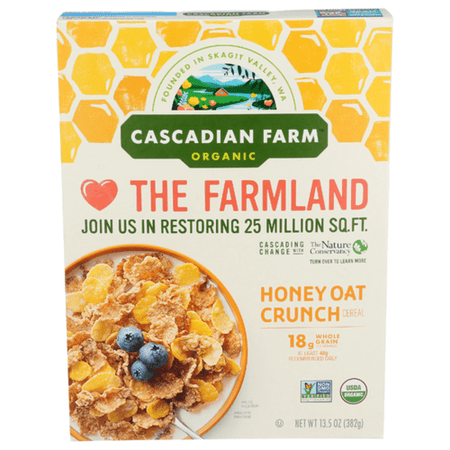


Cascadian Farm Honey Oat Crunch Cereal 13.5 oz - Pack of 2
Analysis updated August 2026 · How Scout scores
At a glance
Summary
This cereal contains several beneficial ingredients such as whole grain oats, whole grain wheat, and Kernza perennial grains, which provide fiber and essential nutrients. However, the presence of refined cane sugar and sunflower oil, a seed oil high in omega-6 fatty acids, detracts from its healthfulness. The product is moderately processed, which limits its score despite the inclusion of some nutritious components.
Key ingredients 12
Whole Grain OatsVery Good
Whole grain oats are rich in dietary fiber, particularly beta-glucan, which supports heart health by lowering cholesterol levels. They provide essential nutrients and have a low glycemic index, promoting stable blood sugar levels. Oats are a highly beneficial ingredient in a balanced diet.
Benefits
Supports heart health, provides essential nutrients, and helps maintain stable blood sugar levels.
Kernza Perennial GrainsVery Good
Kernza perennial grains are a sustainable crop with deep roots that improve soil health and carbon sequestration. They are rich in fiber and nutrients, supporting digestive health and environmental sustainability. Kernza is a promising ingredient for sustainable agriculture.
Benefits
Supports digestive health and environmental sustainability through improved soil health and carbon sequestration.
Whole Grain WheatGood
Whole grain wheat is a good source of dietary fiber and essential nutrients. It supports digestive health and provides sustained energy. The use of whole grains is associated with reduced risk of chronic diseases.
Risks
May cause allergic reactions in individuals with wheat allergies or gluten intolerance.
Benefits
Rich in dietary fiber, vitamins, and minerals, supporting overall health and reducing the risk of chronic diseases.
HoneyGood
Honey is a natural sweetener with antioxidant properties and trace nutrients. It is less processed than refined sugars and can provide a healthier alternative in moderation. Honey has been used traditionally for its potential health benefits.
Risks
Excessive consumption can contribute to high sugar intake.
Benefits
Contains antioxidants and trace nutrients, offering a natural alternative to refined sugars.
Sea SaltGood
Sea salt is a natural source of sodium and trace minerals, minimally processed compared to refined table salt. It enhances flavor and provides essential electrolytes. Sea salt is considered a beneficial ingredient in moderation.
Risks
Excessive sodium intake can lead to high blood pressure.
Benefits
Provides essential electrolytes and trace minerals, enhancing flavor naturally.
Yellow Corn GritsNeutral
Yellow corn grits are a source of carbohydrates and provide some fiber. They are minimally processed but lack significant nutritional benefits compared to whole grains. They are generally considered a neutral ingredient in terms of health impact.
Benefits
Provides carbohydrates for energy but lacks significant nutritional benefits compared to whole grains.
RiceNeutral
Rice is a staple carbohydrate source that provides energy but lacks significant amounts of other nutrients. It is minimally processed and generally considered neutral in terms of health impact. White rice has a higher glycemic index compared to whole grains.
Benefits
Provides carbohydrates for energy but lacks significant nutritional benefits compared to whole grains.
Invert Cane SyrupNeutral
Invert cane syrup is a sweetener made from cane sugar, providing a similar caloric content and sweetness. It is used for its ability to retain moisture and enhance texture in foods. While it is a refined sugar, it is less processed than high fructose corn syrup.
Risks
High intake can contribute to increased calorie consumption and related health issues.
MolassesNeutral
Standard formulation ingredient — neither beneficial nor harmful at typical use.
Risks
Excessive consumption can contribute to high sugar intake.
Benefits
Contains vitamins and minerals, offering a nutrient-rich alternative to refined sugars.
SoyNeutral
Soy is a source of plant-based protein and contains essential amino acids. It is a versatile ingredient used in various forms, but whole soybeans are less processed than soy isolates. Soy can be part of a balanced diet, though some individuals may have allergies.
Risks
May cause allergic reactions in individuals with soy allergies.
Benefits
Provides plant-based protein and essential amino acids, supporting a balanced diet.
Cane SugarBad
Cane sugar is a refined sugar that contributes to increased calorie intake without providing essential nutrients. Excessive consumption can lead to health issues such as obesity and dental cavities. It is considered a negative ingredient due to its refined nature and health impacts.
Risks
High intake can lead to obesity, insulin resistance, and dental cavities.
Sunflower OilVery Bad
Sunflower oil is a seed oil high in omega-6 fatty acids, which can promote inflammation when consumed in excess. It is highly processed and lacks beneficial nutrients. The high omega-6 content is a concern for health when not balanced with omega-3 intake.
Risks
High omega-6 content may promote inflammation when consumed in excess.
Processing
Processed Foods
Get the full breakdown in the Scout appTake Scout shopping
Scan any product to see lab results, healthy alternatives, and your personalized analysis.
Download on theApp Store GET IT ONGoogle PlayAmazon pricing & content
Amazon price as of . Product prices and availability are accurate as of the date/time indicated and are subject to change. Any price and availability information displayed on Amazon.com at the time of purchase will apply to the purchase of this product.
CERTAIN CONTENT THAT APPEARS ON THIS SITE COMES FROM AMAZON. THIS CONTENT IS PROVIDED “AS IS” AND IS SUBJECT TO CHANGE OR REMOVAL AT ANY TIME.