
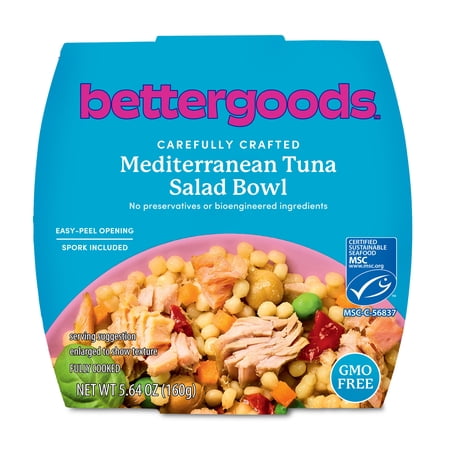


bettergoods Mediterranean Tuna Salad Bowl MSC Certified 5.64 oz
Analysis updated June 2026 · How Scout scores
At a glance
Summary
This Mediterranean Tuna Salad Bowl contains a variety of beneficial ingredients such as light tuna, olive oil, and chickpeas, which provide high-quality protein, healthy fats, and fiber. However, the presence of sunflower oil, a seed oil high in omega-6 fatty acids, detracts from its overall healthiness. The product is moderately processed, which limits its score despite the inclusion of several nutrient-rich components.
Key ingredients 17
Olive oilVery Good
Olive oil is a high-quality monounsaturated fat with anti-inflammatory properties. It contains antioxidants that support heart health. Cold-pressed extraction preserves beneficial compounds.
Benefits
Rich in monounsaturated fats that support heart health and provide anti-inflammatory properties. Contains antioxidants like vitamin E and polyphenols that may reduce oxidative stress.
Light tunaGood
Light tuna is a good source of high-quality protein and omega-3 fatty acids. It is typically lower in mercury compared to other types of tuna. This makes it a healthier choice for regular consumption.
Risks
Potential mercury content, though lower than other tuna varieties, can still be a concern if consumed in large quantities.
Benefits
Provides essential omega-3 fatty acids and high-quality protein that support heart and brain health.
ChickpeasGood
Chickpeas are a good source of plant-based protein and fiber. They contribute to satiety and digestive health. They are also rich in vitamins and minerals like folate and iron.
Risks
May cause digestive discomfort in some individuals due to high fiber content.
Benefits
Provides plant-based protein and fiber, supporting digestive health and satiety.
CarrotsGood
Carrots are a nutrient-dense vegetable rich in beta-carotene, fiber, and antioxidants. They support eye health and immune function. Their natural sweetness can enhance the flavor profile of dishes.
Benefits
Rich in beta-carotene, which is converted to vitamin A, supporting vision and immune health.
PeasGood
Peas are a good source of plant-based protein, fiber, and essential vitamins. They support digestive health and provide a moderate amount of protein. Their natural sweetness can enhance the flavor of dishes.
Benefits
Provides plant-based protein and fiber, supporting digestive health and satiety.
Red peppersGood
Red peppers are rich in vitamins A and C, as well as antioxidants. They support immune health and provide anti-inflammatory benefits. Their vibrant color and flavor enhance the visual and taste appeal of dishes.
Benefits
High in vitamin C and antioxidants, supporting immune function and reducing inflammation.
OnionGood
Onions are a flavorful vegetable rich in antioxidants and sulfur compounds. They support heart health and have anti-inflammatory properties. Their natural compounds may also have antibacterial effects.
Risks
May cause digestive discomfort in some individuals.
Benefits
Contains antioxidants and sulfur compounds that support heart health and have anti-inflammatory properties.
TomatoesGood
Tomatoes are rich in lycopene, an antioxidant linked to reduced risk of chronic diseases. They provide vitamins C and K, supporting immune and bone health. Their natural acidity and sweetness enhance flavor profiles.
Benefits
High in lycopene and vitamins, supporting heart health and reducing inflammation.
Green olivesGood
Green olives are a source of healthy monounsaturated fats and antioxidants. They support heart health and provide anti-inflammatory benefits. Their distinct flavor enhances the taste of Mediterranean dishes.
Risks
High sodium content may be a concern for individuals monitoring salt intake.
Benefits
Rich in monounsaturated fats and antioxidants, supporting heart health and reducing inflammation.
Lemon juiceGood
Lemon juice is rich in vitamin C and antioxidants. It supports immune health and provides a fresh, tangy flavor. Its acidity can also aid in food preservation.
Benefits
High in vitamin C, supporting immune function and providing antioxidant benefits.
White pepperGood
Beneficial ingredient — whole-food or functional value in this product class.
Benefits
May provide mild anti-inflammatory benefits due to piperine content.
WaterNeutral
Water is used as a base or filler in many food products. It does not contribute any calories or nutrients. It is essential for hydration but does not provide additional nutritional benefits in this context.
See more about Water →Durum wheat semolinaNeutral
Standard formulation ingredient — neither beneficial nor harmful at typical use.
Risks
Contains gluten, which can be problematic for individuals with celiac disease or gluten sensitivity.
Benefits
Rich in complex carbohydrates and provides a moderate amount of protein, supporting energy levels.
SaltNeutral
Salt is used to enhance flavor and preserve food. It is a necessary nutrient but should be consumed in moderation. Excessive intake can lead to health issues such as hypertension.
Risks
Excessive sodium intake can lead to hypertension and cardiovascular issues.
Benefits
Essential for maintaining fluid balance and nerve function.
VinegarNeutral
Vinegar is used for flavoring and preservation. It contains acetic acid, which can aid digestion and provide antimicrobial properties. Its acidity can enhance the flavor profile of dishes.
Benefits
May aid digestion and provide antimicrobial benefits due to acetic acid content.
Yeast extractBad
Concentrated glutamate source — MSG-adjacent flavor enhancer.
Risks
May cause reactions in individuals sensitive to glutamates.
Benefits
Enhances umami flavor in foods, contributing to taste complexity.
Sunflower oilVery Bad
Sunflower oil is a seed oil high in omega-6 fatty acids, which can promote inflammation when consumed in excess. It is often highly processed, which can degrade its nutritional quality. Compared to other oils, it lacks beneficial compounds like antioxidants.
Risks
High omega-6 content may promote inflammation when consumed in excess.
Processing
Processed Foods
Get the full breakdown in the Scout appTake Scout shopping
Scan any product to see lab results, healthy alternatives, and your personalized analysis.
Download on theApp Store GET IT ONGoogle Play