


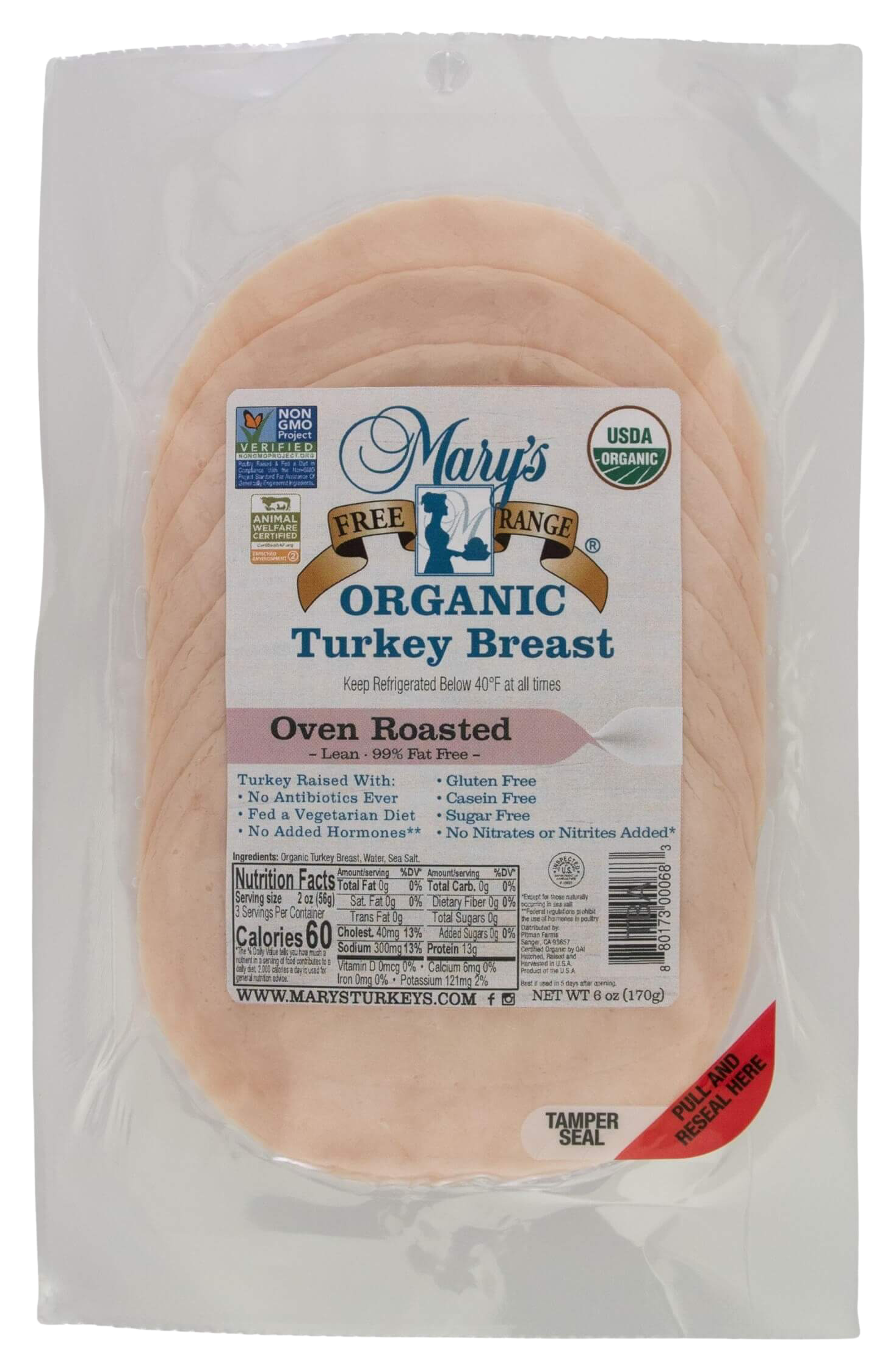


At a glance
Summary
This roasted carved turkey breast is a processed food with a relatively clean ingredient list, featuring turkey breast as the primary component, which is a high-quality source of lean protein. However, the presence of dextrose, a refined sugar, and natural flavor, which lacks transparency, slightly detracts from its overall healthiness. The product's processing level limits its score, but it remains a healthier option compared to more heavily processed meats.
Key ingredients 9
Turkey BreastGood
Turkey breast is a lean source of high-quality protein, which supports muscle maintenance and overall health.
GarlicGood
Part of Vegetable Powders. Vegetable powders add natural flavor and nutrients, generally considered neutral in health impact.
See more about Garlic →Vinegar PowderNeutral
Vinegar powder adds flavor and acidity without significant health concerns, making it a neutral ingredient.
See more about Vinegar Powder →Potato StarchNeutral
Potato starch is used as a thickening agent and is generally neutral in health impact when used in small quantities.
See more about Potato Starch →SaltNeutral
Salt is essential for flavor and preservation but should be consumed in moderation to avoid health issues.
See more about Salt →OnionNeutral
Part of Vegetable Powders. Vegetable powders add natural flavor and nutrients, generally considered neutral in health impact.
See more about Onion →Natural FlavourNeutral
Natural flavorings are used to enhance taste without artificial additives, making them neutral.
See more about Natural Flavour →DextroseBad
Dextrose is a form of sugar that can contribute to excess calorie intake and blood sugar spikes if consumed in large amounts.
See more about Dextrose →Yeast ExtractBad
Concentrated glutamate source — MSG-adjacent flavor enhancer.
See more about Yeast Extract →Processing
Processed Foods
Get the full breakdown in the Scout appTake Scout shopping
Scan any product to see lab results, healthy alternatives, and your personalized analysis.
Download on theApp Store GET IT ONGoogle Play