
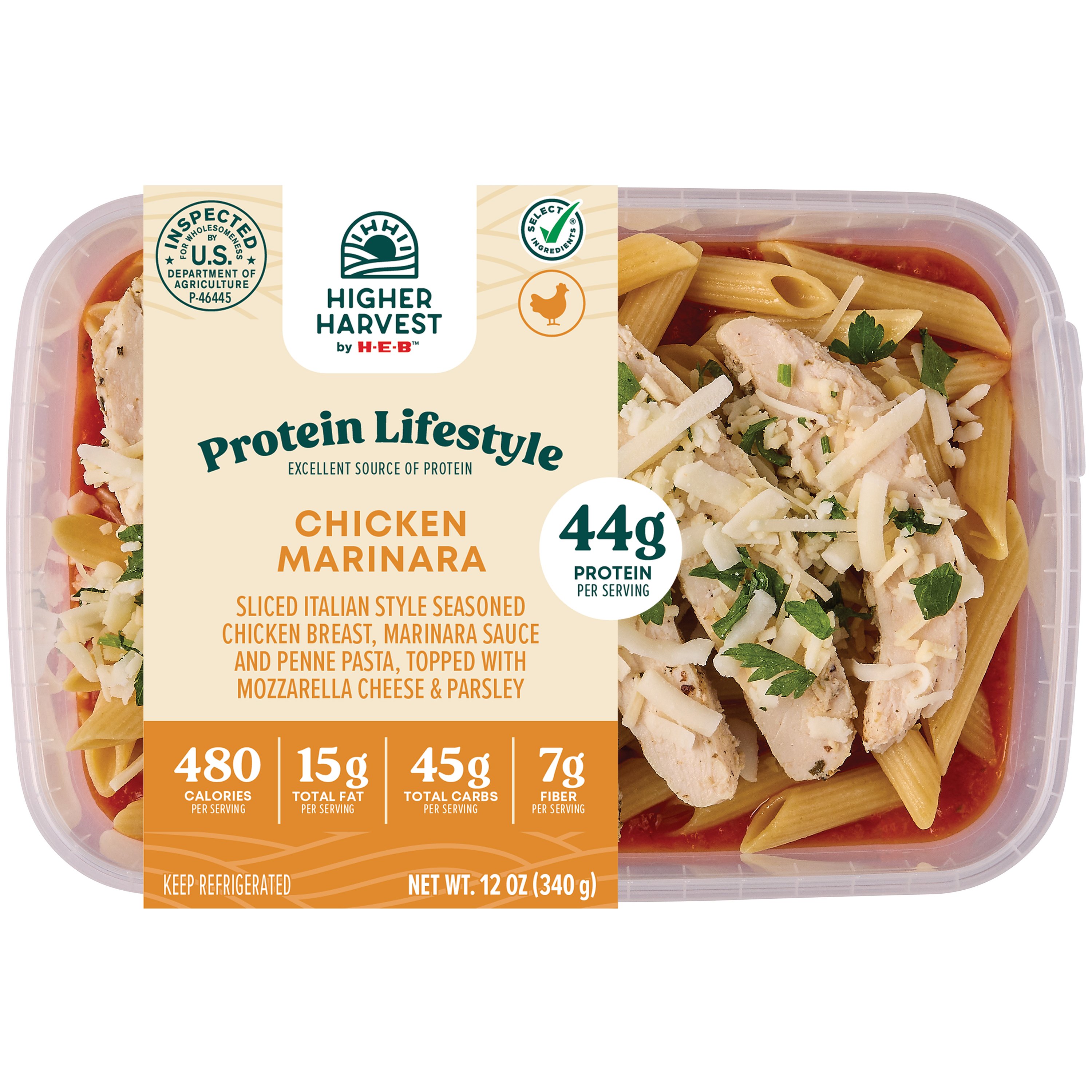


Higher Harvest Chicken Marinara
Analysis updated September 2026 · How Scout scores
At a glance
Summary
This product contains a mix of beneficial ingredients like extra virgin olive oil and tomatoes, which provide healthy fats and antioxidants. However, the presence of canola oil, a heavily processed seed oil, and sodium phosphates, a common preservative, detracts from its overall healthiness. The product is also highly processed, which limits its score despite some nutritious components.
Key ingredients 10
Extra virgin olive oilVery Good
High-quality monounsaturated fat with anti-inflammatory properties. Contains antioxidants that support heart health. Cold-pressed extraction preserves beneficial compounds.
Benefits
Rich in monounsaturated fats that support heart health and provide anti-inflammatory properties. Contains antioxidants like vitamin E and polyphenols that may reduce oxidative stress.
Italian style seasoned chickenGood
Provides high-quality protein essential for muscle growth and repair. Seasoning enhances flavor without significant negative health impacts. Typically minimally processed when compared to other protein sources.
Risks
Potential for added sodium from seasoning, which may be a concern for those monitoring salt intake.
Benefits
Rich source of protein and essential amino acids, supporting muscle health and overall nutrition.
Sea saltGood
Unrefined mineral salt that provides essential trace minerals. Less processed than regular table salt, retaining more natural minerals. Enhances flavor without the additives found in iodized salt.
Risks
Excessive consumption can contribute to high blood pressure.
Benefits
Provides essential minerals and enhances flavor naturally.
TomatoesGood
Rich in vitamins A and C, and antioxidants like lycopene. Lycopene has been linked to reduced risk of heart disease and cancer. Fresh tomatoes are minimally processed, retaining most of their nutritional value.
Benefits
High in antioxidants and vitamins, supporting immune function and reducing inflammation.
GarlicGood
Contains compounds with potent medicinal properties, such as allicin. Known for its ability to boost the immune system and reduce blood pressure. Fresh garlic is minimally processed, retaining its health benefits.
Benefits
Supports immune health and may help lower blood pressure.
OnionGood
Rich in antioxidants and sulfur-containing compounds. These compounds have been linked to reduced risk of heart disease and cancer. Onions are a natural, minimally processed ingredient.
Benefits
Provides antioxidants and supports heart health.
Shredded mozzarella cheeseNeutral
Provides calcium and protein, essential for bone health and muscle function. Often contains added cellulose to prevent clumping, which is generally considered safe. Moderately processed but retains nutritional benefits of dairy.
Risks
May contain added sodium and preservatives.
Benefits
Good source of calcium and protein.
Cultured dextroseNeutral
Used as a natural preservative to inhibit spoilage. Derived from fermentation of dextrose, a simple sugar. Minimal impact on health when consumed in small amounts.
Risks
May contribute to overall sugar intake if consumed in large quantities.
Benefits
Acts as a natural preservative, extending shelf life without artificial additives.
Sodium phosphatesBad
Used as a preservative and to retain moisture in meats. Excessive intake can lead to imbalances in phosphate levels in the body. Often found in processed foods, contributing to overall phosphate load.
Risks
High intake may affect kidney function and bone health.
Benefits
Helps maintain moisture and texture in processed meats.
Canola oilVery Bad
Canola oil is a seed oil high in omega-6 fatty acids, which can promote inflammation. It is often heavily processed and refined, which may reduce its nutritional value. The extraction process can involve high heat and chemicals.
Risks
High omega-6 content may promote inflammation when consumed in excess.
Processing
Ultra-Processed Foods
Get the full breakdown in the Scout appTake Scout shopping
Scan any product to see lab results, healthy alternatives, and your personalized analysis.
Download on theApp Store GET IT ONGoogle Play