
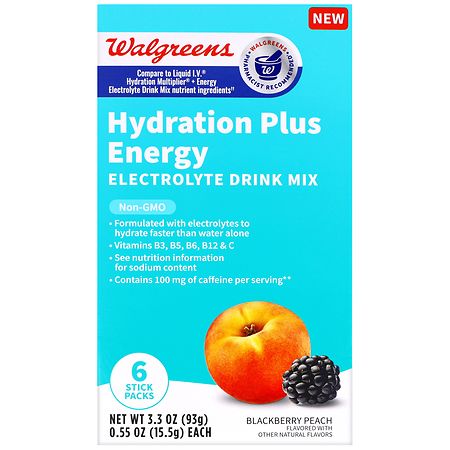


Walgreens Hydration Plus Energy Electrolyte Drink Mix Blackberry Peach - 0.55 oz x 6 pack
Analysis updated September 2026 · How Scout scores
At a glance
Summary
This electrolyte drink mix contains beneficial ingredients such as potassium citrate and L-theanine, which support hydration and cognitive function. However, it includes sucrose and dextrose, which contribute to added sugar content, and natural flavors, which lack transparency. The presence of maltodextrin as a filler and the use of caffeine also influence the processing level, impacting the overall score.
Key ingredients 20
Vitamin C (As Ascorbic Acid)Very Good
Vitamin C is a powerful antioxidant that supports immune function and skin health. It is essential for collagen synthesis and helps protect cells from oxidative damage. It also enhances iron absorption from plant-based foods.
Risks
Excessive intake can cause gastrointestinal discomfort.
Benefits
Supports immune health and acts as a potent antioxidant.
Vitamin B6 (As Pyridoxine HCI)Very Good
Vitamin B6 is crucial for protein metabolism and cognitive development. It supports neurotransmitter synthesis and immune function. Pyridoxine HCI is a stable form used in supplements to ensure adequate intake.
Risks
High doses can cause nerve damage over time.
Benefits
Supports brain health and immune function.
Vitamin B12 (As Cyanocobalamin)Very Good
Vitamin B12 is essential for red blood cell formation and neurological function. It is crucial for DNA synthesis and energy production. Cyanocobalamin is a common form used in supplements to prevent deficiency.
Benefits
Supports energy production and neurological health.
Sodium ChlorideGood
Beneficial ingredient — whole-food or functional value in this product class.
Risks
High sodium intake is associated with increased blood pressure and cardiovascular risk.
Benefits
Essential for electrolyte balance and proper muscle function.
Potassium CitrateGood
Potassium citrate is used to replenish potassium, an essential electrolyte for muscle and nerve function. It helps prevent muscle cramps and supports cardiovascular health. It also aids in maintaining acid-base balance in the body.
Risks
Excessive intake may lead to hyperkalemia, especially in individuals with kidney issues.
Benefits
Supports muscle function, prevents cramps, and aids in maintaining electrolyte balance.
Potassium Phosphate DibasicGood
Potassium phosphate dibasic is a source of both potassium and phosphate, important for energy production and bone health. It helps maintain electrolyte balance and supports cellular functions. It is beneficial in preventing deficiencies in these minerals.
Risks
High intake can lead to imbalances in phosphate levels, affecting bone health.
Benefits
Provides essential minerals for energy production and bone health.
L-TheanineGood
L-Theanine is an amino acid found in tea that promotes relaxation without drowsiness. It is known to enhance cognitive performance and reduce stress. It is often used in combination with caffeine to improve focus and attention.
Benefits
Promotes relaxation and enhances cognitive performance.
Niacin (As Niacinamide)Good
Niacin, or vitamin B3, is important for energy metabolism and maintaining healthy skin. It supports the function of the digestive system and nervous system. Niacinamide is a form of niacin that is less likely to cause flushing.
Risks
High doses can cause skin flushing and liver damage.
Benefits
Supports energy production and skin health.
Pantothenic Acid (As Calcium Pantothenate)Good
Pantothenic acid, or vitamin B5, is essential for synthesizing coenzyme A, crucial for fatty acid metabolism. It supports adrenal function and helps convert food into energy. Calcium pantothenate is a stable form used in supplements.
Benefits
Supports energy metabolism and adrenal health.
Citric AcidNeutral
Citric acid is a natural preservative and flavor enhancer commonly used in food and beverages. It is generally recognized as safe and helps maintain product freshness. It can also enhance the absorption of minerals like calcium.
Risks
Excessive consumption may cause dental erosion due to its acidic nature.
Benefits
Citric acid can enhance flavor and improve mineral absorption.
AcaciaNeutral
Acacia, also known as gum arabic, is a natural emulsifier and fiber source. It is used to stabilize products and improve texture. It is generally recognized as safe and can aid in digestive health.
Risks
Excessive consumption may cause digestive discomfort in some individuals.
Benefits
Acts as a prebiotic fiber, supporting digestive health.
Stevia ExtractNeutral
Stevia extract is a natural, zero-calorie sweetener derived from the stevia plant. It is used as a sugar substitute without affecting blood sugar levels. It is considered safe and does not contribute to caloric intake.
Benefits
Provides sweetness without calories, suitable for those managing blood sugar levels.
Sodium Citrate TribasicNeutral
Sodium citrate tribasic is used as an acidity regulator and to enhance flavor. It helps maintain the stability of the product and is generally recognized as safe. It can also aid in buffering stomach acid.
Benefits
Helps maintain product stability and can aid in digestion.
CaffeineNeutral
Caffeine is a natural stimulant that can enhance alertness and performance. It is commonly used in energy products to boost energy levels. While beneficial in moderation, excessive intake can lead to negative side effects.
Risks
High doses can cause jitteriness, insomnia, and increased heart rate.
Benefits
Enhances mental alertness and physical performance.
Silicon DioxideNeutral
Silicon dioxide is used as an anti-caking agent to prevent clumping in powdered products. It is generally recognized as safe and does not affect the nutritional value of the product. It is inert and does not react with other ingredients.
Benefits
Prevents clumping and maintains product consistency.
Dicalcium PhosphateNeutral
Dicalcium phosphate is used as a dietary supplement to provide calcium and phosphorus. It supports bone health and is often used as a food additive. It is generally recognized as safe and effective for mineral supplementation.
Risks
Excessive intake may lead to imbalances in calcium and phosphorus levels.
Benefits
Provides essential minerals for bone health.
SucroseBad
Sucrose is a simple sugar that can contribute to increased blood sugar levels and caloric intake. It is often used as a sweetener in processed foods and beverages. Excessive consumption of sucrose can lead to health issues such as obesity and dental cavities.
Risks
High intake of sucrose can increase the risk of obesity, type 2 diabetes, and tooth decay.
Benefits
Sucrose provides a quick source of energy but lacks essential nutrients.
DextroseBad
Refined added sugar.
Risks
Excessive consumption can lead to spikes in blood sugar levels.
Benefits
Provides a rapid source of energy, beneficial during intense physical activity.
MaltodextrinBad
Processed additive flagged under Scout's ingredient doctrine.
Risks
May cause spikes in blood sugar levels due to its high glycemic index.
Benefits
Provides a quick source of energy, useful in sports nutrition.
Natural Blackberry Peach FlavorBad
Natural flavors are often used to enhance taste but can be a catch-all for various additives. The exact composition is not disclosed, which can be concerning for those with allergies or sensitivities. They are less desirable compared to whole food flavorings.
Risks
Potential allergen risk due to undisclosed components.
Benefits
Enhances product flavor without adding calories.
Processing
Processed Foods
Get the full breakdown in the Scout appTake Scout shopping
Scan any product to see lab results, healthy alternatives, and your personalized analysis.
Download on theApp Store GET IT ONGoogle Play