
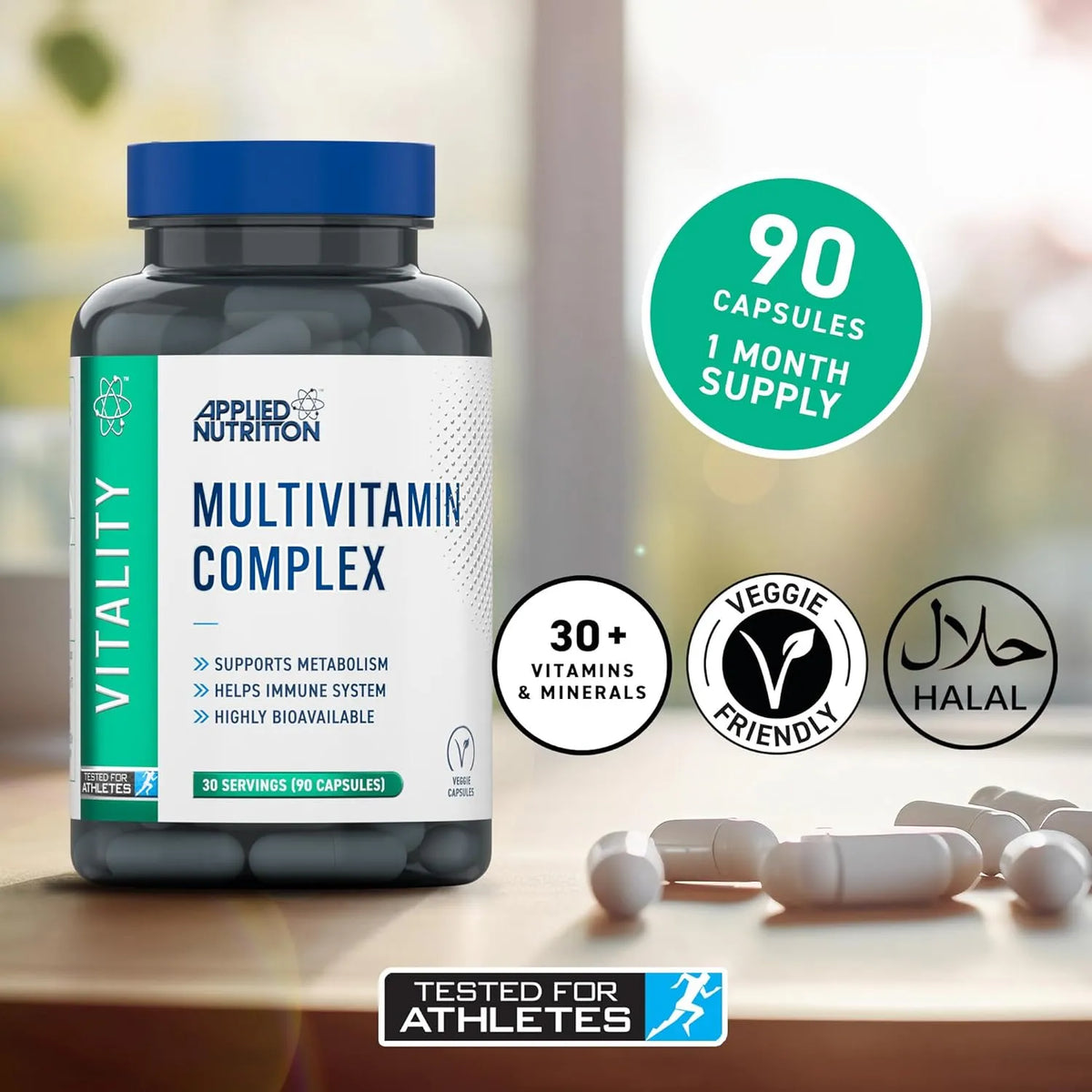



Applied Nutrition Multi-vitamin Complex - 90 Tabs
Analysis updated August 2026 · How Scout scores
At a glance
Summary
This multivitamin complex contains a wide range of essential vitamins and minerals, including calcium, magnesium, and vitamin C, which are crucial for overall health. The inclusion of beneficial extracts like green tea and grape seed enhances its antioxidant profile. The formulation is free from harmful additives, artificial sweeteners, and dyes, making it a high-quality supplement choice.
Key ingredients 33
Vitamin CVery Good
Vitamin C is a powerful antioxidant that supports the immune system and skin health. It is water-soluble and must be consumed regularly as the body does not store it. Vitamin C also enhances iron absorption from plant-based foods.
Risks
Excessive intake can lead to gastrointestinal disturbances and kidney stones.
Benefits
Boosts immune function and promotes healthy skin by aiding collagen production.
Vitamin EVery Good
Vitamin E is a fat-soluble antioxidant that protects cell membranes from oxidative damage. It is often included in supplements to support skin health and immune function. Vitamin E also plays a role in preventing chronic diseases.
Risks
High doses can increase the risk of bleeding and interfere with blood clotting.
Benefits
Provides antioxidant protection and supports skin and immune health.
Vitamin AVery Good
Vitamin A is essential for vision, immune function, and skin health. It is a fat-soluble vitamin that supports the maintenance of healthy epithelial tissues. Vitamin A also plays a role in cell growth and differentiation.
Risks
Excessive intake can lead to toxicity and liver damage.
Benefits
Supports vision and immune function, and is important for skin health.
CalciumGood
Calcium is essential for bone health and plays a critical role in muscle function and nerve signaling. It is typically derived from natural sources and is a key component in maintaining strong bones and teeth. Adequate calcium intake is crucial for preventing osteoporosis.
Risks
Excessive calcium intake can lead to kidney stones and impaired absorption of other minerals.
Benefits
Supports bone density and strength, and is vital for proper muscle and nerve function.
MagnesiumGood
Magnesium is important for numerous biochemical reactions in the body, including energy production and protein synthesis. It is often included in supplements to support muscle and nerve function. Magnesium also helps regulate blood pressure and blood sugar levels.
Risks
High doses can cause diarrhea, nausea, and abdominal cramping.
Benefits
Supports muscle and nerve function, and helps maintain a healthy immune system.
Green Tea 95% ExtractGood
Green tea extract is rich in antioxidants, particularly catechins, which support metabolic health and weight management. It is derived from natural tea leaves and is known for its potential to enhance fat oxidation. Green tea extract may also support cardiovascular health.
Risks
High doses can lead to liver toxicity and gastrointestinal issues.
Benefits
Provides antioxidant support and may aid in weight management and cardiovascular health.
Choline BitartrateGood
Choline is essential for liver function, brain development, and muscle movement. It is often included in supplements to support cognitive function and memory. Choline also plays a role in lipid metabolism and neurotransmitter synthesis.
Risks
Excessive intake can cause fishy body odor, sweating, and gastrointestinal distress.
Benefits
Supports brain health and cognitive function, and is important for liver health.
Grape Seed 95% ExtractGood
Grape seed extract is high in antioxidants, particularly proanthocyanidins, which support cardiovascular health. It is derived from grape seeds and is known for its potential to improve circulation and reduce oxidative stress. Grape seed extract may also support skin health.
Risks
May interact with certain medications, such as blood thinners.
Benefits
Supports cardiovascular health and provides antioxidant protection.
HesperidinGood
Hesperidin is a flavonoid found in citrus fruits that supports vascular health and has anti-inflammatory properties. It is often included in supplements to improve circulation and reduce inflammation. Hesperidin may also support immune function.
Risks
High doses can cause gastrointestinal discomfort.
Benefits
Promotes vascular health and has anti-inflammatory and antioxidant properties.
Vitamin B1Good
Vitamin B1, or thiamine, is essential for energy metabolism and nerve function. It is water-soluble and must be consumed regularly as the body does not store it. Thiamine is crucial for converting carbohydrates into energy.
Benefits
Supports energy metabolism and is vital for proper nerve function.
Vitamin B2Good
Vitamin B2, or riboflavin, is important for energy production and cellular function. It is water-soluble and plays a key role in the metabolism of fats, drugs, and steroids. Riboflavin also supports skin and eye health.
Benefits
Supports energy production and is important for maintaining healthy skin and eyes.
Vitamin B3Good
Vitamin B3, or niacin, is essential for energy metabolism and DNA repair. It is water-soluble and supports cardiovascular health by improving cholesterol levels. Niacin also plays a role in skin health and nervous system function.
Risks
High doses can cause flushing, itching, and gastrointestinal issues.
Benefits
Supports cardiovascular health and energy metabolism, and is important for skin health.
Vitamin B5Good
Vitamin B5, or pantothenic acid, is crucial for synthesizing coenzyme A, which is important for fatty acid metabolism. It is water-soluble and supports energy production and hormone synthesis. Pantothenic acid also aids in the production of red blood cells.
Benefits
Supports energy metabolism and is important for hormone and red blood cell production.
Vitamin B6Good
Vitamin B6 is essential for amino acid metabolism and neurotransmitter synthesis. It is water-soluble and supports brain health and immune function. Vitamin B6 also plays a role in hemoglobin production and homocysteine metabolism.
Risks
High doses can cause nerve damage and skin lesions.
Benefits
Supports brain health and immune function, and is important for hemoglobin production.
QuercetinGood
Quercetin is a flavonoid with antioxidant and anti-inflammatory properties. It is found in many fruits and vegetables and supports immune function and cardiovascular health. Quercetin may also help reduce allergy symptoms.
Risks
High doses can cause headaches and tingling sensations.
Benefits
Provides antioxidant support and may reduce inflammation and allergy symptoms.
InositolGood
Inositol is a carbohydrate that plays a role in cell membrane formation and insulin signaling. It is often included in supplements to support mental health and metabolic function. Inositol may also help improve fertility in women with PCOS.
Risks
High doses can cause gastrointestinal distress and dizziness.
Benefits
Supports mental health and metabolic function, and may improve fertility in women with PCOS.
ZincGood
Zinc is a trace mineral essential for immune function, wound healing, and DNA synthesis. It is often included in supplements to support immune health and skin integrity. Zinc also plays a role in taste and smell perception.
Risks
Excessive intake can lead to nausea, vomiting, and impaired immune function.
Benefits
Supports immune function and wound healing, and is important for DNA synthesis.
IronGood
Iron is a vital mineral for oxygen transport and energy production. It is often included in supplements to prevent anemia and support cognitive function. Iron is crucial for the production of hemoglobin and myoglobin.
Risks
Excessive intake can cause gastrointestinal issues and iron toxicity.
Benefits
Supports oxygen transport and energy production, and is important for preventing anemia.
ProbioticsGood
Probiotics are beneficial bacteria that support gut health and digestion. They are often included in supplements to improve gut flora balance and enhance immune function. Probiotics may also help alleviate symptoms of irritable bowel syndrome.
Risks
May cause gas and bloating in some individuals.
Benefits
Supports gut health and digestion, and enhances immune function.
LuteinGood
Lutein is a carotenoid that supports eye health and may reduce the risk of age-related macular degeneration. It is often included in supplements to protect against oxidative stress in the eyes. Lutein also supports skin health.
Benefits
Supports eye health and may reduce the risk of age-related macular degeneration.
Co Enzyme Q10Good
Coenzyme Q10 is an antioxidant that supports energy production and cardiovascular health. It is often included in supplements to improve mitochondrial function and reduce oxidative stress. CoQ10 may also support brain health.
Risks
May cause mild gastrointestinal symptoms in some individuals.
Benefits
Supports energy production and cardiovascular health, and reduces oxidative stress.
PiperineGood
Piperine is an alkaloid found in black pepper that enhances the bioavailability of other nutrients. It is often included in supplements to improve the absorption of curcumin and other compounds. Piperine may also support digestive health.
Risks
High doses can cause gastrointestinal irritation.
Benefits
Enhances nutrient absorption and supports digestive health.
Lycopene 10%Good
Lycopene is a carotenoid with antioxidant properties that supports heart health and may reduce the risk of certain cancers. It is often included in supplements to protect against oxidative stress. Lycopene also supports skin health.
Benefits
Supports heart health and provides antioxidant protection.
D-BiotinGood
Biotin is a B-vitamin that supports hair, skin, and nail health. It is water-soluble and plays a role in energy metabolism and fatty acid synthesis. Biotin is often included in supplements to promote healthy hair and nails.
Benefits
Supports hair, skin, and nail health, and is important for energy metabolism.
ManganeseGood
Manganese is a trace mineral important for bone formation and antioxidant defense. It is often included in supplements to support bone health and metabolic function. Manganese also plays a role in wound healing and collagen production.
Risks
Excessive intake can lead to neurological symptoms.
Benefits
Supports bone health and antioxidant defense, and is important for wound healing.
CopperGood
Copper is a trace mineral essential for iron metabolism and the formation of red blood cells. It is often included in supplements to support cardiovascular health and immune function. Copper also plays a role in collagen synthesis and antioxidant defense.
Risks
Excessive intake can lead to liver damage and gastrointestinal issues.
Benefits
Supports iron metabolism and cardiovascular health, and is important for immune function.
Vitamin K1Good
Vitamin K1 is essential for blood clotting and bone health. It is a fat-soluble vitamin that supports the synthesis of proteins involved in coagulation. Vitamin K1 also plays a role in maintaining bone density.
Benefits
Supports blood clotting and bone health, and is important for maintaining bone density.
ChromiumGood
Chromium is a trace mineral that enhances insulin action and supports glucose metabolism. It is often included in supplements to improve blood sugar control and support weight management. Chromium also plays a role in lipid metabolism.
Risks
High doses can cause kidney and liver damage.
Benefits
Supports glucose metabolism and insulin action, and may aid in weight management.
BoronGood
Boron is a trace mineral that supports bone health and hormone regulation. It is often included in supplements to improve bone density and support cognitive function. Boron also plays a role in reducing inflammation.
Risks
High doses can cause nausea and diarrhea.
Benefits
Supports bone health and hormone regulation, and may reduce inflammation.
Vitamin B12Good
Vitamin B12 is essential for nerve function and red blood cell formation. It is water-soluble and supports energy metabolism and DNA synthesis. Vitamin B12 is crucial for preventing anemia and maintaining neurological health.
Benefits
Supports nerve function and red blood cell formation, and is important for energy metabolism.
SeleniumGood
Selenium is a trace mineral with antioxidant properties that supports immune function and thyroid health. It is often included in supplements to protect against oxidative stress and support metabolic function. Selenium also plays a role in DNA synthesis.
Risks
Excessive intake can cause hair loss, nail brittleness, and neurological symptoms.
Benefits
Supports immune function and thyroid health, and provides antioxidant protection.
Vitamin D3Good
Vitamin D3 is essential for calcium absorption and bone health. It is a fat-soluble vitamin that supports immune function and muscle health. Vitamin D3 also plays a role in reducing inflammation and supporting cardiovascular health.
Risks
Excessive intake can lead to hypercalcemia and kidney damage.
Benefits
Supports calcium absorption and bone health, and is important for immune function.
Folic AcidNeutral
Standard formulation ingredient — neither beneficial nor harmful at typical use.
Risks
High doses can mask vitamin B12 deficiency symptoms.
Benefits
Supports DNA synthesis and cell division, and is important for preventing neural tube defects.
Processing
Processed Foods
Get the full breakdown in the Scout appTake Scout shopping
Scan any product to see lab results, healthy alternatives, and your personalized analysis.
Download on theApp Store GET IT ONGoogle Play