
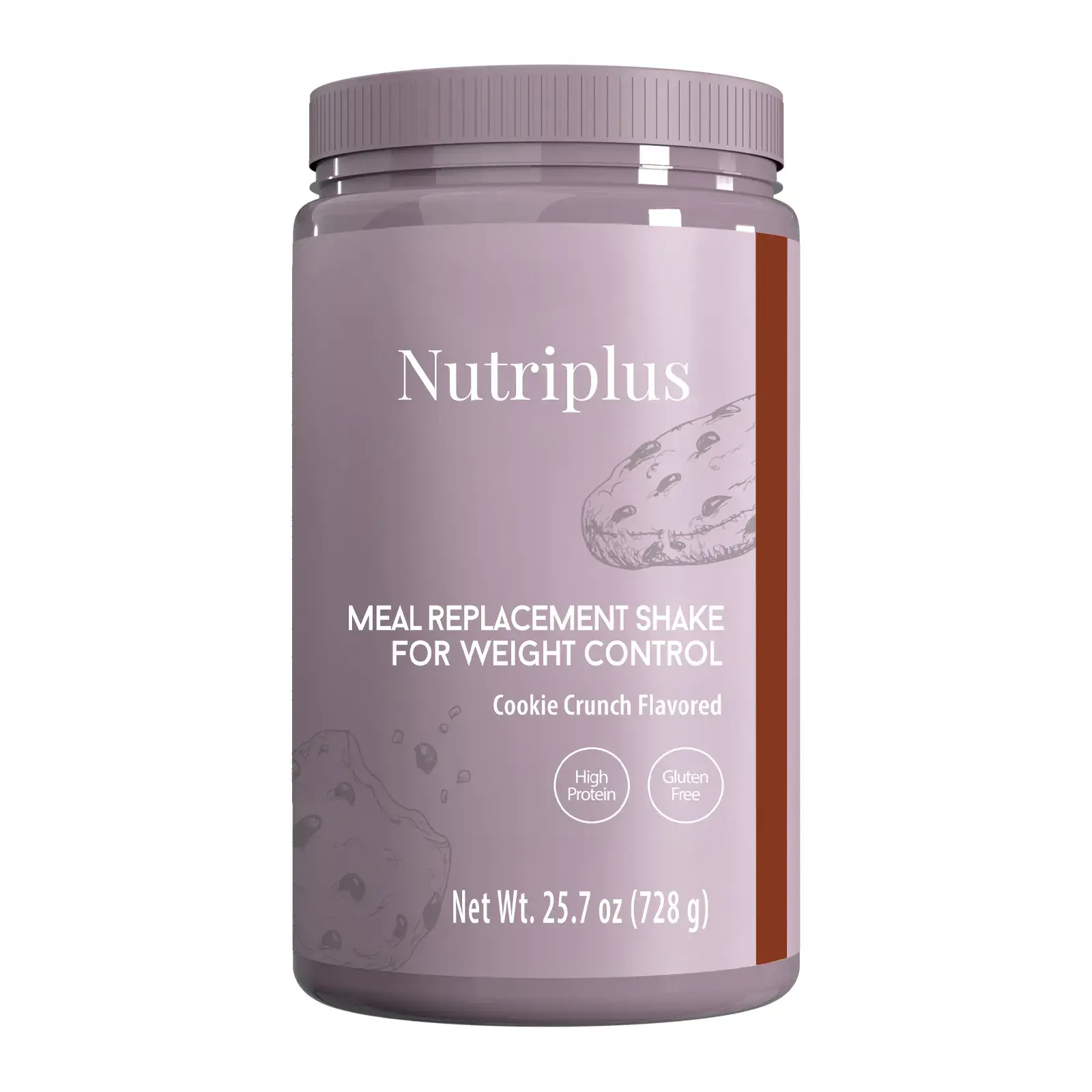


MEAL REPLACEMENT SHAKE FOR WEIGHT CONTROL Cookie Crunch Flavored
Analysis updated October 2026 · How Scout scores
At a glance
Summary
This meal replacement shake contains beneficial ingredients like pea protein isolate and inulin, which support muscle maintenance and gut health. However, the presence of fructose and sunflower oil powder, which can contribute to metabolic issues and inflammation, respectively, detracts from its overall healthiness. Additionally, the use of multiple flavoring agents and gums indicates a moderate level of processing, which impacts the score.
Key ingredients 38
InulinGood
Inulin is a prebiotic fiber that supports gut health by promoting the growth of beneficial bacteria. It is derived from chicory root and can improve digestive health. It may also aid in blood sugar control.
Risks
Excessive consumption may cause digestive discomfort such as bloating or gas.
Benefits
Supports digestive health and may improve gut microbiota balance.
Potassium CitrateGood
Potassium citrate is a potassium salt that helps maintain electrolyte balance and supports heart health. It is used to prevent kidney stones and improve metabolic health. It is generally safe when consumed in appropriate amounts.
Risks
Excessive intake may lead to hyperkalemia, a condition of elevated potassium levels.
Benefits
Supports electrolyte balance and may prevent kidney stones.
Magnesium OxideGood
Magnesium oxide is a magnesium supplement used to support muscle and nerve function. It is commonly used to prevent magnesium deficiency. It is effective in maintaining normal muscle and nerve function.
Risks
Excessive intake may lead to digestive issues such as diarrhea.
Benefits
Supports muscle and nerve function and prevents magnesium deficiency.
Ascorbic AcidGood
Ascorbic acid, or vitamin C, is an essential nutrient that supports immune function and acts as an antioxidant. It is important for collagen synthesis and skin health. It is commonly used in supplements to prevent vitamin C deficiency.
Risks
Excessive intake may lead to digestive issues such as diarrhea.
Benefits
Supports immune function and acts as an antioxidant.
Vitamin E AcetateGood
Vitamin E acetate is a form of vitamin E used as an antioxidant to protect cells from damage. It supports skin health and immune function. It is commonly used in supplements to prevent vitamin E deficiency.
Risks
Excessive intake may lead to bleeding disorders.
Benefits
Acts as an antioxidant and supports skin and immune health.
NiacinamideGood
Niacinamide, or vitamin B3, supports energy metabolism and skin health. It is used to prevent niacin deficiency and improve skin conditions. It is commonly found in dietary supplements and skincare products.
Risks
Excessive intake may lead to liver damage or gastrointestinal issues.
Benefits
Supports energy metabolism and improves skin health.
Ferrous FumarateGood
Ferrous fumarate is an iron supplement used to prevent and treat iron deficiency anemia. It is a common form of iron in dietary supplements. It is effective in increasing iron levels in the body.
Risks
Excessive intake may lead to iron overload and gastrointestinal issues.
Benefits
Prevents and treats iron deficiency anemia.
D-Calcium PantothenateGood
D-Calcium pantothenate is a form of vitamin B5 that supports energy metabolism and the synthesis of coenzyme A. It is used to prevent pantothenic acid deficiency. It is commonly found in dietary supplements.
Benefits
Supports energy metabolism and the synthesis of coenzyme A.
Zinc SulfateGood
Zinc sulfate is a zinc supplement used to support immune function and wound healing. It is effective in preventing zinc deficiency. It is commonly used in dietary supplements.
Risks
Excessive intake may lead to nausea and gastrointestinal issues.
Benefits
Supports immune function and wound healing.
Thiamine HClGood
Thiamine HCl, or vitamin B1, supports energy metabolism and nerve function. It is used to prevent thiamine deficiency. It is commonly found in dietary supplements.
Benefits
Supports energy metabolism and nerve function.
Pyridoxine HClGood
Pyridoxine HCl, or vitamin B6, supports protein metabolism and cognitive development. It is used to prevent vitamin B6 deficiency. It is commonly found in dietary supplements.
Risks
Excessive intake may lead to nerve damage.
Benefits
Supports protein metabolism and cognitive development.
Manganese SulfateGood
Manganese sulfate is a manganese supplement used to support bone health and metabolism. It is effective in preventing manganese deficiency. It is commonly used in dietary supplements.
Risks
Excessive intake may lead to neurological issues.
Benefits
Supports bone health and metabolism.
Copper GluconateGood
Copper gluconate is a copper supplement used to support immune function and iron metabolism. It is effective in preventing copper deficiency. It is commonly used in dietary supplements.
Risks
Excessive intake may lead to copper toxicity.
Benefits
Supports immune function and iron metabolism.
RiboflavinGood
Riboflavin, or vitamin B2, supports energy metabolism and skin health. It is used to prevent riboflavin deficiency. It is commonly found in dietary supplements.
Benefits
Supports energy metabolism and skin health.
Potassium IodideGood
Potassium iodide is a source of iodine used to support thyroid function. It is effective in preventing iodine deficiency. It is commonly used in dietary supplements.
Risks
Excessive intake may lead to thyroid dysfunction.
Benefits
Supports thyroid function and prevents iodine deficiency.
D-BiotinGood
D-Biotin, or vitamin B7, supports hair, skin, and nail health. It is used to prevent biotin deficiency. It is commonly found in dietary supplements.
Benefits
Supports hair, skin, and nail health.
Chromium PicolinateGood
Chromium picolinate is a form of chromium used to support glucose metabolism. It is effective in improving insulin sensitivity. It is commonly used in dietary supplements.
Risks
Excessive intake may lead to kidney or liver damage.
Benefits
Supports glucose metabolism and improves insulin sensitivity.
Vitamin K1Good
Vitamin K1 is used to support blood clotting and bone health. It is effective in preventing vitamin K deficiency. It is commonly found in dietary supplements.
Benefits
Supports blood clotting and bone health.
Sodium SeleniteGood
Sodium selenite is a form of selenium used to support antioxidant function and thyroid health. It is effective in preventing selenium deficiency. It is commonly used in dietary supplements.
Risks
Excessive intake may lead to selenium toxicity.
Benefits
Supports antioxidant function and thyroid health.
CyanocobalaminGood
Cyanocobalamin, or vitamin B12, supports nerve function and red blood cell formation. It is used to prevent vitamin B12 deficiency. It is commonly found in dietary supplements.
Benefits
Supports nerve function and red blood cell formation.
Vitamin D3Good
Vitamin D3 supports bone health and immune function. It is effective in preventing vitamin D deficiency. It is commonly found in dietary supplements.
Risks
Excessive intake may lead to hypercalcemia.
Benefits
Supports bone health and immune function.
Pea Protein IsolateNeutral
Pea protein isolate is a plant-based protein source with a decent amino acid profile. It is less complete compared to animal-based proteins but is a good option for vegetarians and vegans. It is generally well-tolerated and hypoallergenic.
Benefits
Provides a plant-based protein source that is suitable for those avoiding animal products.
Biscuit FlavorNeutral
Biscuit flavor is an artificial flavoring used to mimic the taste of biscuits. It does not provide nutritional benefits and is used for taste enhancement. The specific components of the flavor are not disclosed.
Benefits
Enhances the flavor profile of the product.
Guar GumNeutral
Guar gum is a thickening agent derived from guar beans. It is used to improve texture and consistency in food products. It is generally recognized as safe when consumed in typical amounts.
Risks
Excessive consumption may lead to digestive issues such as gas or bloating.
Benefits
Improves texture and consistency of food products.
Cream FlavorNeutral
Cream flavor is an artificial flavoring used to mimic the taste of cream. It does not provide nutritional benefits and is used for taste enhancement. The specific components of the flavor are not disclosed.
Benefits
Enhances the flavor profile of the product.
Protein Masker FlavorNeutral
Protein masker flavor is used to mask the taste of protein in supplements. It does not provide nutritional benefits and is used for taste enhancement. The specific components of the flavor are not disclosed.
Benefits
Improves palatability of protein supplements.
Monopotassium PhosphateNeutral
Monopotassium phosphate is a source of potassium and phosphorus, used to maintain electrolyte balance. It is commonly used in food products as a buffering agent. It is generally recognized as safe.
Risks
Excessive intake may lead to imbalances in phosphorus levels.
Benefits
Helps maintain electrolyte balance.
Calcium CarbonateNeutral
Standard formulation ingredient — neither beneficial nor harmful at typical use.
Risks
Excessive intake may lead to hypercalcemia, a condition of elevated calcium levels.
Benefits
Supports bone health and prevents calcium deficiency.
Sodium ChlorideNeutral
Sodium chloride, or table salt, is used to enhance flavor and preserve food. It is essential for maintaining fluid balance and nerve function. It is generally safe when consumed in moderation.
Risks
Excessive intake may lead to high blood pressure and cardiovascular issues.
Benefits
Essential for maintaining fluid balance and nerve function.
Xanthan GumNeutral
Xanthan gum is a thickening agent used to improve texture and consistency in food products. It is produced by fermenting sugar with bacteria. It is generally recognized as safe when consumed in typical amounts.
Risks
Excessive consumption may lead to digestive issues such as gas or bloating.
Benefits
Improves texture and consistency of food products.
SteviaNeutral
Stevia is a natural sweetener derived from the leaves of the Stevia plant. It provides sweetness without calories and is considered safe for consumption. It is a popular alternative to artificial sweeteners.
Benefits
Provides sweetness without adding calories.
Folic AcidNeutral
Standard formulation ingredient — neither beneficial nor harmful at typical use.
Risks
Excessive intake may mask vitamin B12 deficiency.
Benefits
Supports cell division and prevents neural tube defects.
Vitamin A PalmitateNeutral
Standard formulation ingredient — neither beneficial nor harmful at typical use.
Risks
Excessive intake may lead to vitamin A toxicity.
Benefits
Supports vision and immune function.
Sodium MolybdateNeutral
Sodium molybdate is a source of molybdenum used to support enzyme function. It is generally recognized as safe when consumed in typical amounts. It is commonly used in dietary supplements.
Benefits
Supports enzyme function.
FructoseBad
Fructose is a simple sugar that can contribute to increased blood sugar levels and insulin resistance when consumed in excess. It is often used as a sweetener in processed foods. Overconsumption may lead to metabolic issues.
Risks
Excessive intake of fructose can lead to insulin resistance and metabolic syndrome.
Benefits
Provides sweetness without the need for artificial sweeteners.
MaltodextrinBad
Processed additive flagged under Scout's ingredient doctrine.
Risks
May cause rapid spikes in blood sugar levels.
Benefits
Provides a quick source of energy.
Sunflower LecithinBad
Sunflower lecithin is an emulsifier derived from sunflower seeds. It is used to improve texture and mixability in food products. While it is less processed than other emulsifiers, it still lacks significant nutritional benefits.
Benefits
Improves texture and mixability of food products.
Sunflower Oil PowderVery Bad
Sunflower oil powder is derived from sunflower oil, which is high in omega-6 fatty acids. Excessive omega-6 intake can promote inflammation and is often highly processed. It is not recommended for regular consumption.
Risks
High omega-6 content may promote inflammation when consumed in excess.
Processing
Processed Foods
Get the full breakdown in the Scout appTake Scout shopping
Scan any product to see lab results, healthy alternatives, and your personalized analysis.
Download on theApp Store GET IT ONGoogle Play