
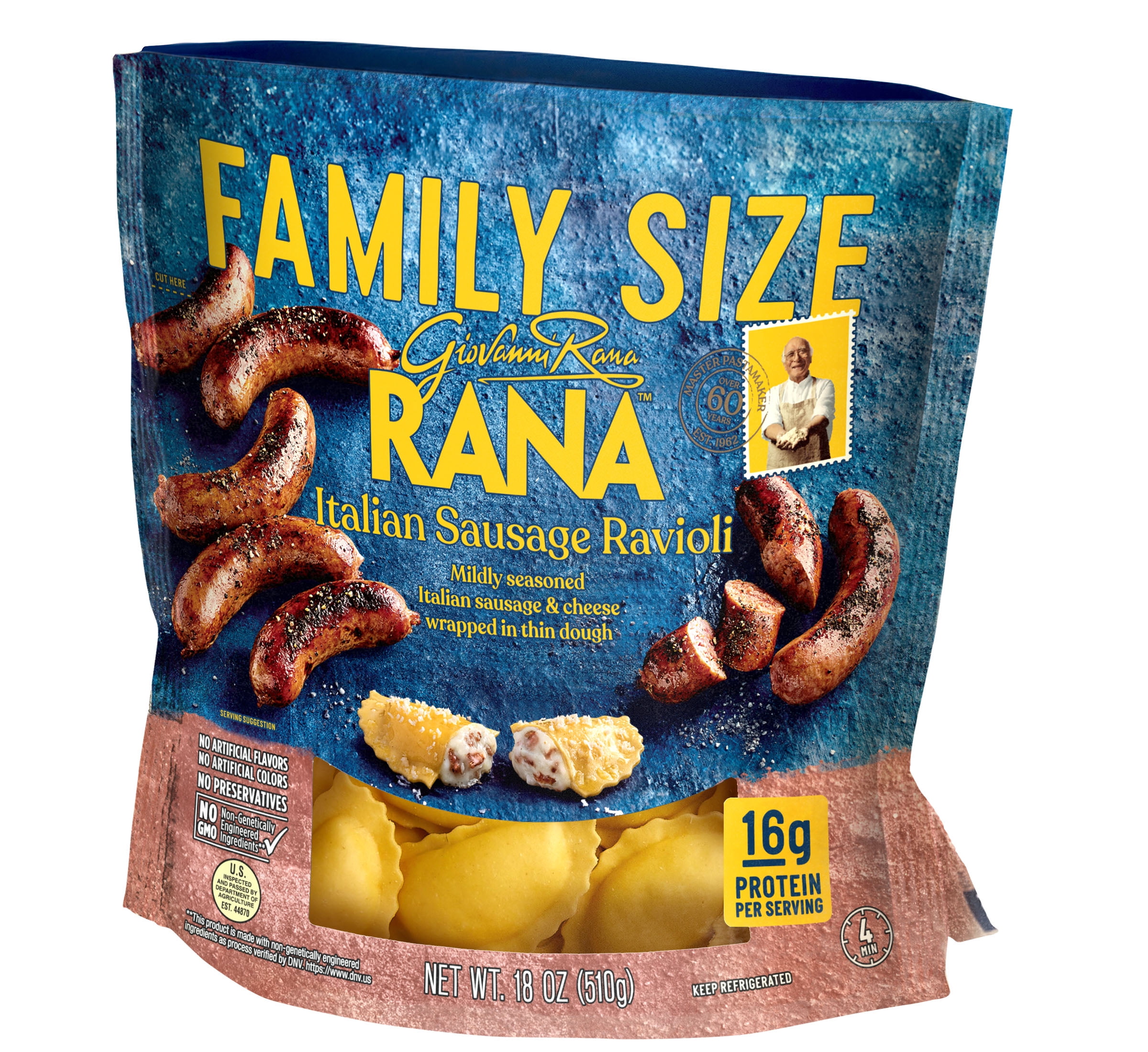



Rana Ravioli italian sausage
Analysis updated August 2026 · How Scout scores
At a glance
Summary
This ravioli product contains several high-quality ingredients like Italian sausage, ricotta, and mozzarella cheese, which provide essential nutrients and flavor. However, it is classified as ultra-processed due to the presence of additives and ingredients like sugar and natural flavors, which are often highly processed and can mask the quality of the base ingredients. The processing level and presence of refined ingredients limit its healthiness despite the beneficial components.
Key ingredients 15
Italian sausage porkGood
Italian sausage pork is a high-quality protein source that provides essential amino acids. It is typically seasoned with spices that enhance flavor without excessive processing. However, it may contain added salt and preservatives.
Risks
High sodium content and potential preservatives may pose health risks if consumed in excess.
Benefits
Provides essential amino acids and is a good source of protein, supporting muscle maintenance and growth.
Ricotta cheeseGood
Ricotta cheese is a dairy product rich in calcium and protein. It is made from whey, which is a byproduct of cheese production, and is less processed than many other cheeses. Its creamy texture and mild flavor make it a versatile ingredient.
Risks
Contains lactose, which may be a concern for individuals with lactose intolerance.
Benefits
Rich in calcium and protein, supporting bone health and muscle function.
Mascarpone cheeseGood
Mascarpone cheese is a creamy, high-fat cheese made from pasteurized cream. It is minimally processed and provides a rich source of fats and some vitamins. Its smooth texture enhances the mouthfeel of dishes.
Risks
High in saturated fats, which may contribute to heart disease if consumed in excess.
Benefits
Provides a rich source of fats and enhances the flavor and texture of dishes.
Mozzarella cheeseGood
Mozzarella cheese is a fresh cheese made from pasteurized milk, known for its mild flavor and stretchy texture. It is a good source of calcium and protein. It is less processed compared to aged cheeses.
Risks
Contains lactose, which may be problematic for those with lactose intolerance.
Benefits
Rich in calcium and protein, supporting bone health and muscle maintenance.
Durum wheat flourGood
Durum wheat flour is a high-protein flour used in pasta making, providing a firm texture. It is minimally processed and retains more nutrients compared to refined flours. It is a staple in traditional pasta recipes.
Risks
Contains gluten, which may be a concern for individuals with celiac disease or gluten sensitivity.
Benefits
Provides a good source of carbohydrates and protein, supporting energy levels and muscle maintenance.
Roasted onionGood
Roasted onion adds flavor and aroma to dishes with minimal processing. It retains some nutrients and antioxidants found in fresh onions. The roasting process enhances its natural sweetness and flavor.
Benefits
Adds flavor and aroma, and provides some antioxidants and nutrients.
GarlicGood
Garlic is a natural ingredient known for its health benefits, including antimicrobial properties. It is minimally processed and adds flavor and aroma to dishes. It contains compounds like allicin that may support heart health.
Risks
May cause digestive discomfort in some individuals when consumed in large amounts.
Benefits
Contains compounds that may support heart health and provide antimicrobial benefits.
EggsGood
Eggs are a high-quality protein source with essential amino acids and nutrients like choline. They are minimally processed and versatile in cooking. Eggs support muscle maintenance and brain health.
Risks
Potential allergen for some individuals and high cholesterol content may be a concern for certain populations.
Benefits
Rich in protein and nutrients, supporting muscle maintenance and brain health.
Psyllium fiberGood
Psyllium fiber is a soluble fiber that aids in digestion and supports heart health. It is derived from the husks of the Plantago ovata plant seeds and is minimally processed. It helps regulate blood sugar levels and promotes satiety.
Risks
May cause digestive discomfort if consumed in large amounts without adequate water.
Benefits
Supports digestive health and helps regulate blood sugar levels.
SaltNeutral
Salt is used as a seasoning and preservative in foods. It is a necessary nutrient for maintaining fluid balance and nerve function. However, excessive intake can lead to health issues.
Risks
High sodium intake can lead to hypertension and cardiovascular issues.
Benefits
Essential for maintaining fluid balance and nerve function.
Citric acidNeutral
Citric acid is a natural preservative and flavor enhancer found in citrus fruits. It is used to add acidity and preserve freshness in foods. It is generally recognized as safe when used in food products.
Benefits
Helps preserve freshness and enhance flavor in food products.
Potato starchNeutral
Potato starch is a refined carbohydrate used as a thickener and stabilizer in foods. It is derived from potatoes and is gluten-free. It provides texture without significant nutritional benefits.
Benefits
Provides texture and is gluten-free, suitable for those with gluten intolerance.
CelluloseNeutral
Cellulose is a plant-based fiber used as a bulking agent and stabilizer in foods. It is derived from plant cell walls and is minimally processed. It adds bulk without calories or nutrients.
Benefits
Adds bulk to foods without adding calories, aiding in digestion.
SugarBad
Sugar is a refined carbohydrate that provides quick energy but lacks essential nutrients. Excessive consumption can lead to health issues such as obesity and diabetes. It is often added to enhance flavor.
Risks
High intake can contribute to obesity, diabetes, and dental cavities.
Benefits
Provides quick energy but should be consumed in moderation.
Natural flavorsBad
Natural flavors are additives used to enhance taste, derived from natural sources but often highly processed. They can mask the quality of the base ingredients. The exact composition is often undisclosed, leading to potential allergen concerns.
Risks
Potential allergen concerns and lack of transparency in ingredient composition.
Benefits
Enhances flavor without adding calories, but benefits are limited due to processing.
Processing
Ultra-Processed Foods
Get the full breakdown in the Scout appTake Scout shopping
Scan any product to see lab results, healthy alternatives, and your personalized analysis.
Download on theApp Store GET IT ONGoogle PlayAmazon pricing & content
Amazon price as of . Product prices and availability are accurate as of the date/time indicated and are subject to change. Any price and availability information displayed on Amazon.com at the time of purchase will apply to the purchase of this product.
CERTAIN CONTENT THAT APPEARS ON THIS SITE COMES FROM AMAZON. THIS CONTENT IS PROVIDED “AS IS” AND IS SUBJECT TO CHANGE OR REMOVAL AT ANY TIME.