
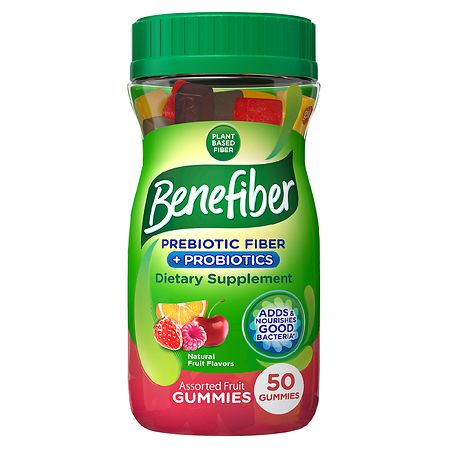




Benefiber Prebiotic GLP-1 Friendly Fiber + Probiotic Gummies Assorted Fruit - 50ct
Analysis updated June 2026 · How Scout scores
At a glance
Summary
This product contains sucrose, which is a simple sugar that can contribute to health issues like obesity and dental cavities when consumed in excess. The use of natural flavors, while derived from natural sources, lacks transparency and may include highly processed components. Despite these concerns, the product does not contain any major harmful additives, and the presence of prebiotic fiber and probiotics offers some health benefits.
Key ingredients 12
Coconut OilGood
Beneficial ingredient — whole-food or functional value in this product class.
Risks
High in saturated fats, which may impact heart health if consumed in excess.
Benefits
Contains MCTs that may provide quick energy and support metabolic health.
WaterNeutral
Water is a neutral ingredient used as a solvent and to provide moisture. It is essential for the consistency and texture of the gummies. No significant health impacts are associated with water in this context.
See more about Water →PectinNeutral
Pectin is a natural gelling agent derived from fruits, used to provide structure to gummies. It is considered a clean ingredient with no significant processing concerns. Pectin can aid in digestion by acting as a soluble fiber.
Benefits
Pectin may support digestive health by acting as a soluble fiber.
Citric AcidNeutral
Citric acid is a natural preservative and flavor enhancer commonly used in food products. It is generally recognized as safe and helps maintain the stability and taste of the product. Citric acid is naturally found in citrus fruits and is used to add a sour flavor.
Risks
Excessive consumption may lead to dental erosion, but typical usage levels in foods are considered safe.
Benefits
Helps preserve the product and enhance flavor without significant health benefits.
Sodium CitrateNeutral
Sodium citrate is used as an acidity regulator and emulsifier in food products. It is generally recognized as safe and helps maintain the product's pH balance. Sodium citrate is often used to enhance the stability and texture of processed foods.
Benefits
Contributes to the stability and texture of the product without significant nutritional benefits.
ColorNeutral
Color additives are used to enhance the visual appeal of food products. The specific type of colorant is not disclosed, which can raise concerns about artificial dyes. However, without specific information, it is classified as neutral.
Risks
Potential concerns if artificial dyes are used, but no specific risks identified without further information.
Grape Juice ConcentrateNeutral
Grape juice concentrate is used as a natural sweetener and flavoring agent. It provides some natural sugars and antioxidants but is concentrated, which increases sugar content. It is often used to enhance the flavor profile of fruit-based products.
Risks
High sugar content may contribute to excessive calorie intake if consumed in large amounts.
Benefits
Contains natural sugars and some antioxidants, contributing to flavor and sweetness.
Watermelon Juice ConcentrateNeutral
Watermelon juice concentrate is used for flavor and sweetness in food products. It provides natural sugars and some vitamins but is concentrated, increasing sugar content. It enhances the fruity flavor profile of the product.
Risks
High sugar content may contribute to excessive calorie intake if consumed in large amounts.
Benefits
Contains natural sugars and some vitamins, contributing to flavor and sweetness.
Carnauba WaxNeutral
Carnauba wax is used as a glazing agent to provide a shiny finish to food products. It is derived from the leaves of the carnauba palm and is considered safe for consumption. It is commonly used in confectionery products to improve appearance.
Benefits
Improves the appearance of the product without significant nutritional benefits.
Corn StarchNeutral
Corn starch is used as a thickening agent in food products. It is a refined carbohydrate that provides texture and stability. While it is a common ingredient, it does not offer significant nutritional value.
Benefits
Provides texture and stability to the product without significant nutritional benefits.
SucroseBad
Sucrose is a simple sugar used as a sweetener in many processed foods. Excessive consumption of sucrose can lead to health issues such as obesity and dental cavities. It is often criticized for contributing to the high sugar content in processed foods.
Risks
High intake of sucrose can increase the risk of obesity, type 2 diabetes, and dental problems.
Benefits
Sucrose provides quick energy but lacks other nutritional benefits.
Natural FlavorsBad
Natural flavors are a catch-all term for flavoring agents derived from natural sources but can be highly processed. The lack of transparency in their composition raises concerns about potential allergens and additives. They are often criticized for not providing any nutritional benefits.
Risks
Potential allergens and additives may be present, with no clear disclosure of specific components.
Processing
Ultra-Processed Foods
Get the full breakdown in the Scout appTake Scout shopping
Scan any product to see lab results, healthy alternatives, and your personalized analysis.
Download on theApp Store GET IT ONGoogle PlayAmazon pricing & content
Amazon price as of . Product prices and availability are accurate as of the date/time indicated and are subject to change. Any price and availability information displayed on Amazon.com at the time of purchase will apply to the purchase of this product.
CERTAIN CONTENT THAT APPEARS ON THIS SITE COMES FROM AMAZON. THIS CONTENT IS PROVIDED “AS IS” AND IS SUBJECT TO CHANGE OR REMOVAL AT ANY TIME.