

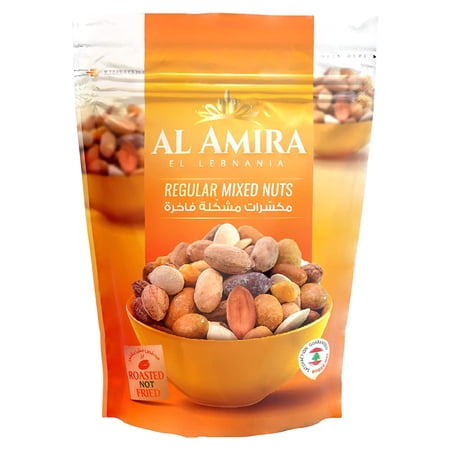


At a glance
Summary
This mixed nuts product contains a variety of beneficial nuts like almonds, pecans, walnuts, and pistachios, which are rich in healthy fats, protein, and antioxidants. However, the use of peanut oil, a seed oil high in omega-6 fatty acids, introduces a potential for promoting inflammation, which slightly detracts from the overall healthfulness. The product is processed, which limits its maximum score, but the clean ingredient list and nutrient density of the nuts contribute positively to its rating.
Key ingredients 9
AlmondsVery Good
Almonds are high in monounsaturated fats, which are beneficial for heart health. They are a rich source of vitamin E, an antioxidant that supports skin health. Almonds also provide fiber, which aids in digestion and satiety.
Benefits
Almonds support heart health and provide antioxidants that may reduce inflammation. They are also beneficial for skin health due to their vitamin E content.
PecansVery Good
Pecans are rich in healthy fats and antioxidants, which support heart health. They contain polyphenols that may reduce inflammation and oxidative stress. Pecans are also a good source of fiber and essential minerals like zinc and magnesium.
Benefits
Pecans provide healthy fats and antioxidants that support cardiovascular health. They also contribute to improved digestion and nutrient absorption.
WalnutsVery Good
Walnuts are an excellent source of omega-3 fatty acids, which are beneficial for brain and heart health. They contain antioxidants that may reduce inflammation and improve cognitive function. Walnuts are also rich in polyphenols and essential nutrients.
Benefits
Walnuts support brain health and reduce inflammation due to their omega-3 content. They also provide antioxidants that protect against cellular damage.
PistachiosVery Good
Pistachios are high in protein and fiber, which aid in digestion and satiety. They contain antioxidants like lutein and zeaxanthin, which support eye health. Pistachios also provide healthy fats that contribute to heart health.
Benefits
Pistachios support heart and eye health due to their antioxidant content. They also aid in digestion and weight management.
HazelnutsVery Good
Hazelnuts are rich in monounsaturated fats and vitamin E, which support heart and skin health. They contain antioxidants that may reduce inflammation and improve overall health. Hazelnuts also provide fiber and essential minerals like magnesium and copper.
Benefits
Hazelnuts support cardiovascular and skin health due to their healthy fat and vitamin E content. They also provide antioxidants that protect against oxidative stress.
PeanutsGood
Peanuts are a good source of protein and healthy fats, contributing to heart health. They contain resveratrol, an antioxidant that may reduce inflammation. Peanuts are minimally processed and provide essential nutrients like magnesium and vitamin E.
Risks
Peanuts can be a common allergen and may cause severe allergic reactions in sensitive individuals.
Benefits
Rich in protein and healthy fats, peanuts support muscle growth and cardiovascular health. They also provide antioxidants that may protect against oxidative stress.
Sea SaltGood
Sea salt is a natural source of sodium and trace minerals, supporting electrolyte balance. It is minimally processed, retaining beneficial minerals. Sea salt can enhance flavor without the need for excessive additives.
Risks
Excessive sodium intake can lead to high blood pressure and cardiovascular issues.
Benefits
Provides essential minerals and supports electrolyte balance. Enhances flavor naturally without additives.
Tree NutsGood
Tree nuts are a diverse group of nuts rich in healthy fats, protein, and antioxidants. They support heart health and provide essential nutrients like magnesium and vitamin E. Tree nuts are minimally processed and contribute to a balanced diet.
Risks
Tree nuts can be allergens and may cause allergic reactions in sensitive individuals.
Benefits
Support heart health and provide essential nutrients. Rich in antioxidants that may reduce inflammation.
Peanut OilBad
Peanut oil is a seed oil high in omega-6 fatty acids, which can promote inflammation when consumed in excess. It is often refined, which may reduce its nutritional value. The high omega-6 content can disrupt the omega-3 to omega-6 balance in the diet.
Risks
High omega-6 content may promote inflammation and increase the risk of chronic diseases when consumed in excess.
Processing
Processed Foods
Get the full breakdown in the Scout appTake Scout shopping
Scan any product to see lab results, healthy alternatives, and your personalized analysis.
Download on theApp Store GET IT ONGoogle Play