
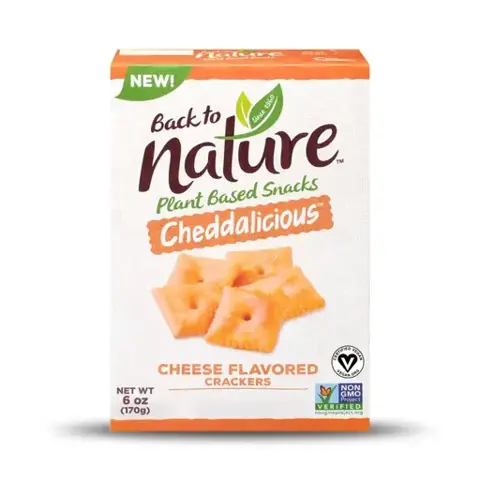



Back To Nature Cheezy Crackers
At a glance
Summary
This product contains multiple processed ingredients, including canola oil and palm oil, which are associated with potential health concerns such as inflammation and environmental issues. The presence of refined flour and cane sugar further contributes to its processed nature, limiting its nutritional value. Despite some natural flavorings, the overall ingredient list reflects a high level of processing, which impacts the healthiness of the product.
Key ingredients 15
Canola OilVery Bad
Canola oil is a highly processed seed oil with a high omega-6 fatty acid content, which can promote inflammation. It is often extracted using chemical solvents, which may leave residues. Its high smoke point makes it popular for cooking, but health concerns outweigh benefits.
Risks
High omega-6 content may promote inflammation when consumed in excess.
Enriched Wheat FlourBad
Refined grain flour stripped of bran and germ.
Risks
May lead to blood sugar spikes and lacks the fiber of whole grains.
Benefits
Contains added nutrients such as iron and B vitamins, which are beneficial for health.
Palm OilBad
Palm oil is a saturated fat often criticized for its environmental impact and potential health risks. It is commonly used in processed foods for its stability and texture. While it is less inflammatory than seed oils, its saturated fat content is a concern.
Risks
High saturated fat content may contribute to heart disease if consumed in excess.
Benefits
Provides stability and texture in processed foods, but lacks significant health benefits.
Sunflower LecithinBad
Sunflower lecithin is an emulsifier used to improve texture and shelf life in processed foods. It is less processed than soy lecithin but still lacks nutritional benefits. It is often used in small amounts, minimizing its impact.
Risks
May cause digestive issues in sensitive individuals.
Benefits
Improves texture and shelf life in processed foods, but lacks significant health benefits.
Yeast ExtractBad
Concentrated glutamate source — MSG-adjacent flavor enhancer.
Risks
May cause sensitivity in individuals sensitive to glutamates.
Benefits
Enhances flavor without added MSG, providing umami taste.
Cane SugarBad
Cane sugar is a refined sugar that contributes to sweetness but offers no nutritional benefits. It is associated with increased risk of obesity, diabetes, and dental issues. Its high glycemic index can lead to blood sugar spikes.
Risks
May contribute to obesity, diabetes, and dental issues when consumed in excess.
Unbleached Wheat FlourNeutral
Unbleached wheat flour is a common base for baked goods, providing structure and texture. It is less processed than bleached flour but still lacks significant nutritional benefits. It primarily offers carbohydrates with minimal fiber and protein.
Risks
May contribute to blood sugar spikes due to its high carbohydrate content.
Benefits
Provides energy through carbohydrates, though it lacks significant nutritional benefits.
Corn StarchNeutral
Corn starch is a refined carbohydrate used as a thickening agent in foods. It is highly processed and lacks significant nutritional value. It provides texture and stability in processed foods.
Risks
May contribute to blood sugar spikes due to its high glycemic index.
Seasoning BlendNeutral
The seasoning blend includes cheddar cheese, salt, whey, buttermilk, and onion powder, providing flavor to the product. While it adds taste, it also contributes to sodium and fat content. The natural cheese components offer some protein and calcium.
Risks
High sodium content may contribute to hypertension if consumed in excess.
Benefits
Provides flavor and some protein and calcium from cheese components.
LeaveningNeutral
Leavening agents like baking soda and monocalcium phosphate are used to help baked goods rise. They are generally recognized as safe and have no significant nutritional impact. They are essential for texture in baked products.
Benefits
Essential for texture and volume in baked goods.
SaltNeutral
Salt is used to enhance flavor and preserve food. While necessary for bodily functions, excessive intake can lead to hypertension. It is a common ingredient in processed foods for flavor enhancement.
Risks
Excessive intake may lead to hypertension and cardiovascular issues.
Benefits
Essential for bodily functions and enhances flavor in foods.
Annatto ExtractNeutral
Annatto extract is a natural coloring agent derived from the seeds of the achiote tree. It is used to impart a yellow or orange color to foods. It is generally considered safe and has minimal nutritional impact.
Risks
May cause allergic reactions in sensitive individuals.
Benefits
Provides natural coloring without synthetic dyes.
Lactic AcidNeutral
Lactic acid is used as a preservative and flavoring agent in foods. It is naturally occurring and generally recognized as safe. It helps maintain acidity and flavor in processed foods.
Benefits
Helps preserve food and maintain flavor.
Onion PowderNeutral
Onion powder is a dehydrated form of onion used for flavoring. It retains some of the nutritional benefits of fresh onions, such as antioxidants. It is commonly used in seasoning blends for its strong flavor.
Benefits
Provides flavor and some antioxidants from onions.
Garlic PowderGood
Beneficial ingredient — whole-food or functional value in this product class.
Benefits
Provides flavor and some antimicrobial benefits from garlic.
Processing
Processed Foods
Get the full breakdown in the Scout appTake Scout shopping
Scan any product to see lab results, healthy alternatives, and your personalized analysis.
Download on theApp Store GET IT ONGoogle PlayAmazon pricing & content
Amazon price as of . Product prices and availability are accurate as of the date/time indicated and are subject to change. Any price and availability information displayed on Amazon.com at the time of purchase will apply to the purchase of this product.
CERTAIN CONTENT THAT APPEARS ON THIS SITE COMES FROM AMAZON. THIS CONTENT IS PROVIDED “AS IS” AND IS SUBJECT TO CHANGE OR REMOVAL AT ANY TIME.