
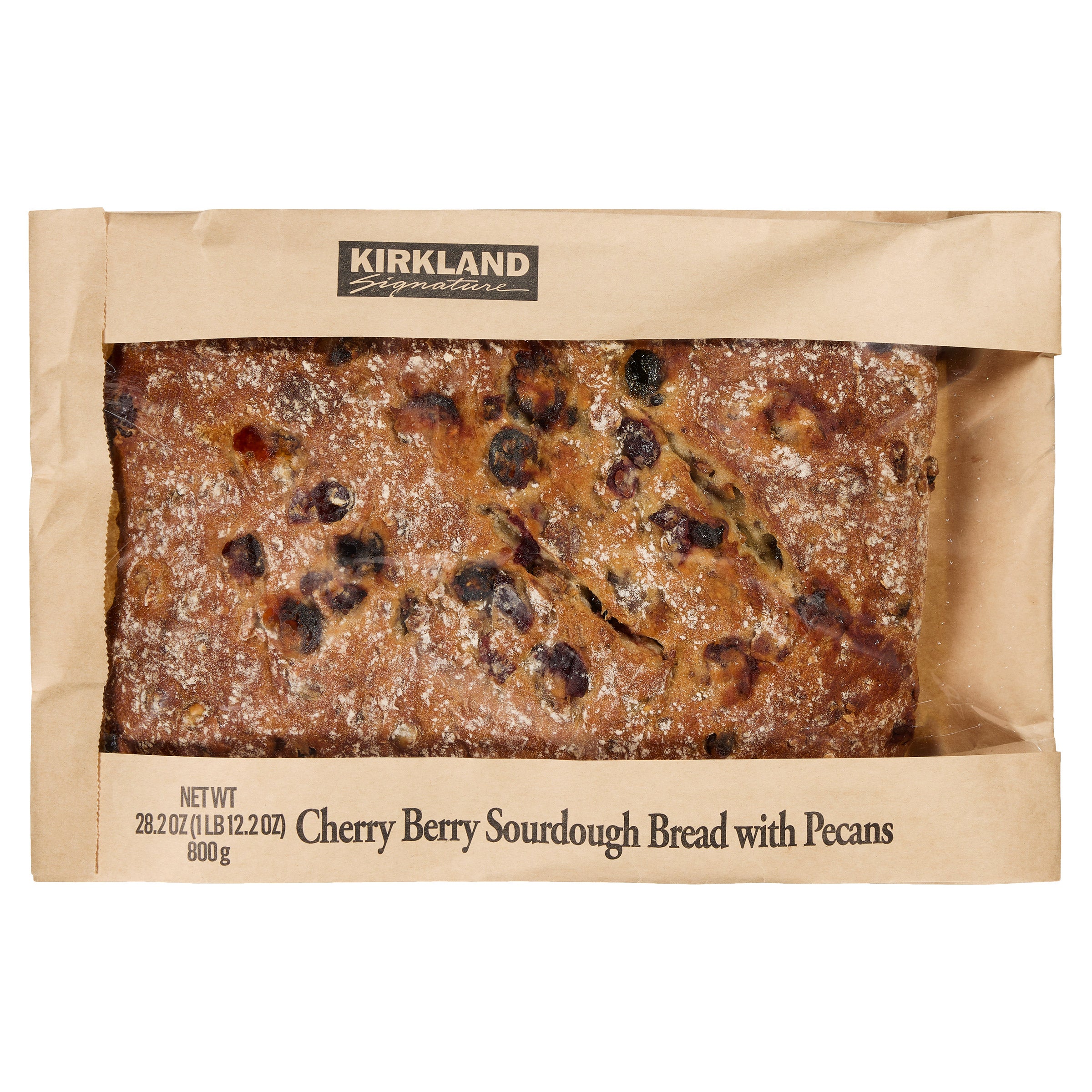





Cherry Berry Sourdough Bread with Pecans
Kirkland SignatureAnalysis updated September 2026 · How Scout scores
Near you
Kirkland Signature is carried at Costco stores. Find one within 25 miles.
At a glance
Summary
This bread contains several beneficial ingredients such as cherries, pecans, and chia seeds, which contribute antioxidants, healthy fats, and fiber. However, the presence of enriched flour and refined sugar detracts from its nutritional value, and the use of sunflower oil, which is high in omega-6 fatty acids, raises concerns about inflammation. The product is moderately processed, which limits its overall health score.
Key ingredients 22
CherriesGood
Cherries are rich in antioxidants and vitamins, contributing to overall health. They provide natural sweetness and beneficial phytonutrients. Their inclusion adds flavor and nutritional value to the bread.
Benefits
Rich in antioxidants and vitamins, supporting overall health and providing natural sweetness.
PecansGood
Pecans are a good source of healthy fats, fiber, and essential nutrients. They contribute to heart health and provide a rich, nutty flavor. Their inclusion enhances the nutritional profile of the bread.
Risks
Allergy risk for individuals sensitive to tree nuts.
Benefits
Rich in healthy fats, fiber, and essential nutrients, supporting heart health.
CranberriesGood
Cranberries are high in antioxidants and vitamin C, supporting immune health. They add a tart flavor and natural sweetness to the bread. Their inclusion enhances the nutritional value of the product.
Benefits
High in antioxidants and vitamin C, supporting immune health and adding natural sweetness.
BlueberriesGood
Blueberries are rich in antioxidants and vitamins, promoting overall health. They provide natural sweetness and enhance the flavor profile of the bread. Their inclusion adds nutritional benefits and appeal.
Benefits
Rich in antioxidants and vitamins, promoting overall health and providing natural sweetness.
Sour cultureGood
Sour culture is used in sourdough fermentation, enhancing flavor and digestibility. It contributes to the development of beneficial bacteria and enzymes. This process can improve nutrient absorption and gut health.
Benefits
Enhances flavor and digestibility, contributing to gut health and nutrient absorption.
Chia seedsGood
Chia seeds are a rich source of omega-3 fatty acids, fiber, and protein. They contribute to heart health and provide a nutritional boost. Their inclusion adds texture and nutritional value to the bread.
Benefits
Rich in omega-3 fatty acids, fiber, and protein, supporting heart health.
Cracked wheatGood
Cracked wheat is a whole grain that provides fiber and essential nutrients. It supports digestive health and adds texture to the bread. Its inclusion enhances the nutritional profile of the product.
Benefits
Provides fiber and essential nutrients, supporting digestive health.
Oat flakesGood
Oat flakes are a good source of fiber and beta-glucans, supporting heart health. They add texture and nutritional value to the bread. Their inclusion contributes to a balanced diet.
Benefits
Rich in fiber and beta-glucans, supporting heart health and adding texture.
Sunflower seedsGood
Sunflower seeds are rich in healthy fats, protein, and essential nutrients. They support heart health and provide a nutty flavor. Their inclusion enhances the nutritional profile of the bread.
Risks
Allergy risk for individuals sensitive to seeds.
Benefits
Rich in healthy fats, protein, and essential nutrients, supporting heart health.
Brown flaxGood
Brown flax is high in omega-3 fatty acids and fiber, promoting heart and digestive health. It adds nutritional value and texture to the bread. Its inclusion supports a balanced diet.
Benefits
High in omega-3 fatty acids and fiber, promoting heart and digestive health.
Pumpkin seedsGood
Pumpkin seeds are rich in healthy fats, protein, and essential nutrients. They support heart health and provide a nutty flavor. Their inclusion enhances the nutritional profile of the bread.
Risks
Allergy risk for individuals sensitive to seeds.
Benefits
Rich in healthy fats, protein, and essential nutrients, supporting heart health.
Ascorbic acidGood
Vitamin C — beneficial even when serving as a preservative.
Benefits
Improves dough quality and acts as an antioxidant.
WaterNeutral
Water is a neutral ingredient used as a solvent and to provide moisture. It does not contribute any significant nutritional value. It is essential for the dough formation in bread making.
See more about Water →Wheat glutenNeutral
Wheat gluten is added to improve the texture and elasticity of the bread. It is a protein that helps in dough formation. While it enhances texture, it may not be suitable for those with gluten intolerance.
Risks
Not suitable for individuals with gluten intolerance or celiac disease.
Benefits
Improves texture and elasticity of the bread.
SaltNeutral
Salt is used to enhance flavor and preserve the bread. It is a necessary ingredient in baking but should be consumed in moderation. Excessive intake can lead to health issues.
Risks
Excessive intake may lead to high blood pressure and other health issues.
Benefits
Enhances flavor and acts as a preservative in bread.
YeastNeutral
Yeast is used in bread making to leaven the dough and develop flavor. It is a natural ingredient essential for fermentation. It does not provide significant nutritional benefits.
Benefits
Essential for leavening and flavor development in bread.
SemolinaNeutral
Semolina is a type of flour made from durum wheat, used for texture and flavor. It provides carbohydrates and some protein. It is less nutritious compared to whole grain alternatives.
Benefits
Provides carbohydrates and some protein, enhancing texture and flavor.
EnzymesNeutral
Enzymes are used in bread making to improve texture and shelf life. They are naturally occurring proteins that aid in dough development. They do not provide significant nutritional benefits.
Benefits
Improves texture and shelf life of bread.
Enriched flourBad
Enriched flour is refined and lacks the fiber and nutrients found in whole grains. It is often fortified with synthetic vitamins and minerals to replace those lost during processing. This ingredient is less beneficial compared to whole grain alternatives.
Risks
May contribute to blood sugar spikes and lacks the nutritional benefits of whole grains.
Benefits
Provides a source of carbohydrates and some fortified nutrients, but overall benefits are limited.
SugarBad
Refined sugar is associated with increased risk of obesity and metabolic disorders. It provides empty calories without essential nutrients. Excessive consumption can lead to health issues such as insulin resistance.
Risks
High intake may lead to weight gain, insulin resistance, and other metabolic issues.
Benefits
Provides quick energy but lacks essential nutrients.
High oleic sunflower oilVery Bad
Heavily flagged ingredient class under Scout's doctrine.
Benefits
Provides a stable cooking oil option with reduced inflammatory potential.
Sunflower oilVery Bad
Sunflower oil is high in omega-6 fatty acids, which can promote inflammation when consumed in excess. It is a refined oil often used for its neutral flavor and high smoke point. Its high omega-6 content is a concern for health.
Risks
High omega-6 content may promote inflammation when consumed in excess.
Benefits
Provides a neutral flavor and high smoke point for cooking, but benefits are limited.
Processing
Processed Foods
Get the full breakdown in the Scout appTake Scout shopping
Scan any product to see lab results, healthy alternatives, and your personalized analysis.
Download on theApp Store GET IT ONGoogle Play