








At a glance
Summary
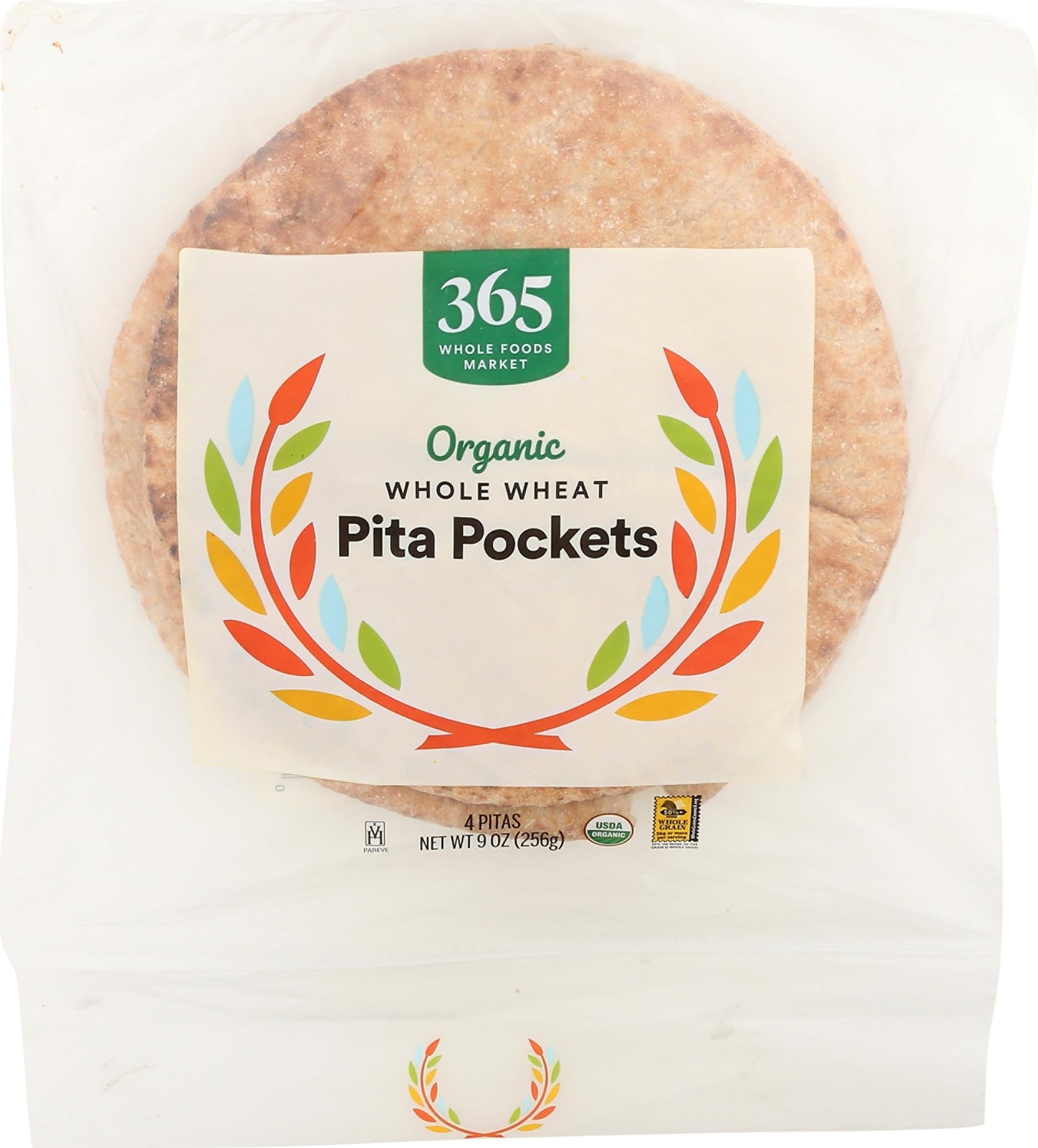
This whole wheat pita bread contains beneficial ingredients like whole wheat flour and yeast, which provide fiber and nutrients. However, the presence of expeller pressed canola oil, a seed oil, and cane sugar, a refined sweetener, detracts from its healthfulness. The product is moderately processed, which limits its score despite the use of some quality ingredients.
Key ingredients 9
Whole wheat flourGood
Whole wheat flour is a whole grain ingredient that retains all parts of the grain, providing fiber and essential nutrients. It is less processed compared to refined flour, maintaining more of its natural vitamins and minerals. This contributes to better digestive health and sustained energy levels.
Benefits
Rich in dietary fiber, which supports digestive health and helps maintain stable blood sugar levels.
Sea saltGood
Sea salt is a minimally processed salt that contains trace minerals. It is used to enhance flavor and as a preservative in bread. Unlike refined table salt, it retains natural minerals that can be beneficial in small amounts.
Risks
Excessive consumption can contribute to high blood pressure.
Benefits
Contains trace minerals and enhances flavor without the additives found in refined salt.
WaterNeutral
Water is a neutral ingredient used as a solvent and to provide moisture in the bread. It does not contribute any calories or nutrients but is essential for the dough formation. Its presence is necessary for the baking process.
See more about Water →Cultured wheat flourNeutral
Cultured wheat flour is treated with natural fermentation to enhance flavor and shelf life. It is similar to regular wheat flour but may have improved digestibility due to fermentation. It does not significantly differ in nutritional content from regular wheat flour.
Benefits
May improve digestibility and flavor due to natural fermentation.
YeastNeutral
Baker's/nutritional yeast in standard use — benign.
Benefits
Enhances texture and flavor, and may improve nutrient bioavailability through fermentation.
Microbial enzymesNeutral
Microbial enzymes are used to improve dough handling and bread texture. They are derived from natural sources and help in the breakdown of starches and proteins. These enzymes are generally recognized as safe and do not remain active in the final product.
Benefits
Improve dough handling and texture without remaining active in the final product.
Wheat flourBad
Refined grain flour stripped of bran and germ.
Risks
May contribute to blood sugar spikes due to its refined nature.
Benefits
Provides structure and texture to baked goods due to its gluten content.
Cane sugarBad
Cane sugar is a refined sweetener that can contribute to increased calorie intake without providing essential nutrients. Excessive consumption of refined sugars is linked to various health issues, including obesity and metabolic disorders. It is used to enhance flavor but should be consumed in moderation.
Risks
High intake can lead to weight gain, insulin resistance, and increased risk of chronic diseases.
Benefits
Provides sweetness and enhances flavor, but offers no significant nutritional benefits.
Expeller pressed canola oilVery Bad
Canola oil is a seed oil high in omega-6 fatty acids, which can promote inflammation when consumed in excess. Although expeller pressing is a mechanical extraction method, the oil still undergoes refining processes. It is considered a low-quality fat compared to healthier alternatives like olive oil.
Risks
High omega-6 content may promote inflammation when consumed in excess.
Processing
Processed Foods
Get the full breakdown in the Scout appTake Scout shopping
Scan any product to see lab results, healthy alternatives, and your personalized analysis.
Download on theApp Store GET IT ONGoogle Play