
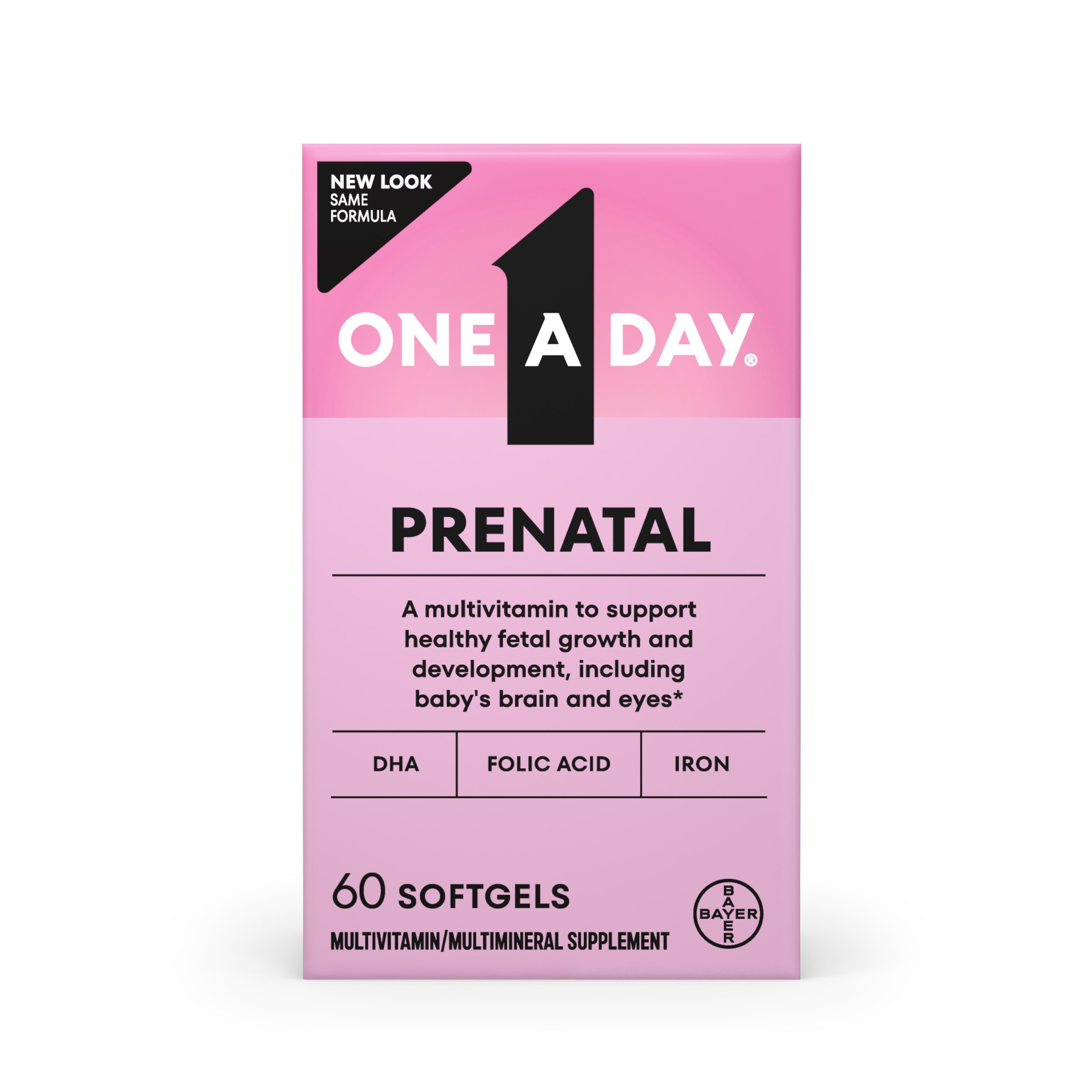

One-A-Day Women's Multivitamin Prenatal 1
Analysis updated September 2026 · How Scout scores
At a glance
Summary
This prenatal multivitamin contains beneficial ingredients such as Omega-3 Fish Oil, Calcium Ascorbate, and Biotin, which support heart, bone, and skin health. However, the presence of artificial colors and soy lecithin, which may cause allergic reactions and provide minimal nutritional benefits, slightly detracts from its overall quality. The formulation is generally well-rounded, but these additives prevent it from achieving a higher score.
Key ingredients 26
Omega-3 Fish OilVery Good
Omega-3 Fish Oil is a high-quality source of essential fatty acids that support heart and brain health. It is derived from fish, providing EPA and DHA, which are crucial for reducing inflammation and promoting cognitive function. The oil is typically processed to remove contaminants, ensuring safety and efficacy.
Risks
Potential risks include contamination with heavy metals if not properly purified.
Benefits
Rich in EPA and DHA, which are beneficial for cardiovascular and neurological health.
Calcium AscorbateVery Good
Calcium Ascorbate is a buffered form of Vitamin C that is gentle on the stomach and provides both calcium and ascorbic acid. It enhances immune function and collagen synthesis while also contributing to bone health. This form is less acidic, making it suitable for those with sensitive stomachs.
Benefits
Provides Vitamin C and calcium, supporting immune health and bone strength.
CyanocobalaminVery Good
Cyanocobalamin is a synthetic form of Vitamin B12 used in supplements to support nerve function and red blood cell production. It is effective in preventing and treating Vitamin B12 deficiency. It is water-soluble and generally safe at recommended doses.
Benefits
Supports nerve function and red blood cell production, preventing B12 deficiency.
d-Alpha-TocopherolVery Good
d-Alpha-Tocopherol is a natural form of Vitamin E that acts as an antioxidant, protecting cells from oxidative damage. It is derived from natural sources and supports immune function and skin health. It is more bioavailable than synthetic forms of Vitamin E.
Benefits
Acts as an antioxidant, supporting immune function and skin health.
D-Calcium PantothenateVery Good
D-Calcium Pantothenate is a form of Vitamin B5 used in supplements to support energy metabolism and the synthesis of coenzyme A. It is essential for the breakdown of carbohydrates, proteins, and fats. It is water-soluble and generally safe at recommended doses.
Benefits
Supports energy metabolism and the synthesis of coenzyme A.
Potassium IodideVery Good
Potassium Iodide is a source of iodine used in supplements to support thyroid function and prevent iodine deficiency. It is essential for the production of thyroid hormones, which regulate metabolism. It is generally safe at recommended doses.
Risks
Excessive intake may lead to thyroid dysfunction.
Benefits
Supports thyroid function and prevents iodine deficiency.
Thiamine MononitrateVery Good
Thiamine Mononitrate is a form of Vitamin B1 used in supplements to support energy metabolism and nerve function. It is essential for the conversion of carbohydrates into energy. It is water-soluble and generally safe at recommended doses.
Benefits
Supports energy metabolism and nerve function.
Magnesium OxideGood
Magnesium Oxide is a common form of magnesium used in supplements to support muscle and nerve function. It is an effective source of magnesium, though it has lower bioavailability compared to other forms. It is often used to prevent or treat magnesium deficiencies.
Risks
High doses may cause gastrointestinal discomfort or diarrhea.
Benefits
Provides essential magnesium for muscle and nerve function.
Beta-CaroteneGood
Beta-Carotene is a precursor to Vitamin A and acts as an antioxidant, supporting vision and immune health. It is derived from natural sources and is converted to Vitamin A in the body as needed. It helps protect cells from oxidative damage.
Risks
Excessive intake may lead to carotenemia, a harmless condition causing yellowing of the skin.
Benefits
Supports vision and immune health as a precursor to Vitamin A.
BiotinGood
Biotin is a B-vitamin that supports healthy hair, skin, and nails. It plays a crucial role in energy metabolism and is essential for the synthesis of fatty acids and amino acids. It is water-soluble and generally safe at recommended doses.
Benefits
Supports healthy hair, skin, and nails, and aids in energy metabolism.
Carbonyl IronGood
Carbonyl Iron is a pure form of iron used in supplements to prevent or treat iron deficiency anemia. It is well-tolerated and has a high bioavailability compared to other forms of iron. It is essential for the production of hemoglobin and red blood cells.
Risks
Excessive intake can lead to iron overload and toxicity.
Benefits
Supports the production of hemoglobin and red blood cells, preventing anemia.
NiacinamideGood
Niacinamide is a form of Vitamin B3 used in supplements to support skin health and energy metabolism. It is effective in improving skin barrier function and reducing inflammation. It is water-soluble and generally safe at recommended doses.
Benefits
Supports skin health and energy metabolism.
Pyridoxine HydrochlorideGood
Pyridoxine Hydrochloride is a form of Vitamin B6 used in supplements to support brain health and neurotransmitter synthesis. It is essential for amino acid metabolism and the production of serotonin and dopamine. It is water-soluble and generally safe at recommended doses.
Benefits
Supports brain health and neurotransmitter synthesis.
Retinyl PalmitateGood
Retinyl Palmitate is a form of Vitamin A used in supplements to support vision and immune health. It is a stable form of Vitamin A that is easily absorbed and utilized by the body. It is essential for maintaining healthy skin and mucous membranes.
Risks
Excessive intake may lead to Vitamin A toxicity.
Benefits
Supports vision and immune health, maintaining healthy skin and mucous membranes.
RiboflavinGood
Riboflavin is a B-vitamin used in supplements to support energy production and antioxidant function. It is essential for the metabolism of carbohydrates, fats, and proteins. It is water-soluble and generally safe at recommended doses.
Benefits
Supports energy production and antioxidant function.
Vitamin D3Good
Vitamin D3 is a form of Vitamin D used in supplements to support bone health and immune function. It is more effective than Vitamin D2 in raising blood levels of Vitamin D. It is essential for calcium absorption and bone mineralization.
Risks
Excessive intake may lead to hypercalcemia and associated health issues.
Benefits
Supports bone health and immune function, enhancing calcium absorption.
Zinc OxideGood
Zinc Oxide is a source of zinc used in supplements to support immune function and wound healing. It is a stable form of zinc, though it has lower bioavailability compared to other forms. It is essential for numerous enzymatic reactions in the body.
Risks
High doses may interfere with copper absorption and lead to deficiencies.
Benefits
Supports immune function and wound healing, essential for enzymatic reactions.
Calcium CarbonateNeutral
Standard formulation ingredient — neither beneficial nor harmful at typical use.
Risks
Excessive intake may lead to kidney stones or impaired absorption of other minerals.
Benefits
Provides essential calcium for maintaining strong bones and teeth.
GelatinNeutral
Gelatin is used as a gelling agent in supplements, derived from animal collagen. It is generally considered safe and is used to encapsulate vitamins and minerals. It does not contribute significant nutritional value but aids in the delivery of active ingredients.
Benefits
Facilitates the encapsulation and delivery of active ingredients in supplements.
GlycerinNeutral
Glycerin is a humectant used to maintain moisture in supplements. It is derived from plant or animal sources and is generally recognized as safe. It does not provide nutritional benefits but helps maintain the stability of the product.
Benefits
Helps maintain moisture and stability in the supplement formulation.
Yellow BeeswaxNeutral
Yellow Beeswax is used as a glazing agent and stabilizer in supplements. It is a natural product derived from bees and is generally considered safe. It does not provide nutritional benefits but aids in the structural integrity of the supplement.
Benefits
Helps maintain the structural integrity and stability of the supplement.
Cupric OxideNeutral
Cupric Oxide is a source of copper used in supplements to support various enzymatic processes. It is a stable form of copper, though its bioavailability is lower compared to other forms. It is essential for iron metabolism and the formation of connective tissue.
Benefits
Supports enzymatic processes and iron metabolism.
Folic AcidNeutral
Standard formulation ingredient — neither beneficial nor harmful at typical use.
Risks
Excessive intake may mask Vitamin B12 deficiency symptoms.
Benefits
Supports fetal development and prevents neural tube defects.
Purified WaterNeutral
Purified Water is used as a solvent and carrier in supplements. It is free from impurities and contaminants, ensuring the safety and stability of the product. It does not provide nutritional benefits but is essential for the formulation of liquid supplements.
Benefits
Ensures the safety and stability of the supplement formulation.
ColorBad
The use of artificial colors in supplements can be concerning due to potential allergic reactions and health risks. These colors are often synthetic and may not provide any nutritional benefits. The specific type of colorant used is not disclosed, which can be problematic for sensitive individuals.
Risks
Potential allergic reactions and health concerns associated with synthetic dyes.
Soy LecithinBad
Soy Lecithin is used as an emulsifier in supplements, derived from soybeans. It is a processed ingredient that may contain traces of soy allergens. While it aids in the stability of the product, it does not provide significant nutritional benefits.
Risks
May contain traces of soy allergens, posing a risk to individuals with soy allergies.
Benefits
Aids in the stability and emulsification of the supplement.
Processing
Processed Foods
Get the full breakdown in the Scout appTake Scout shopping
Scan any product to see lab results, healthy alternatives, and your personalized analysis.
Download on theApp Store GET IT ONGoogle Play