
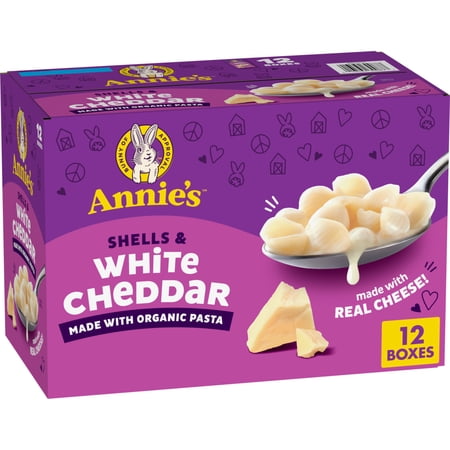



Annie's Organic Shells & White Cheddar Macaroni & Cheese 12 Pack
Analysis updated August 2026 · How Scout scores
At a glance
Summary
This product contains organic ingredients like wheat flour and dried cheddar cheese, which are beneficial for providing carbohydrates, protein, and calcium. However, it is classified as ultra-processed due to the inclusion of sodium phosphate, a synthetic additive used as an emulsifier and preservative. The processing level limits the score despite the presence of organic components.
Key ingredients 7
Organic pasta (organic wheat flour)Neutral
This ingredient is made from organic wheat flour, which is a common carbohydrate source and generally considered neutral in terms of health impact.
Dried cheddar cheese (cultured pasteurized milk, salt, non-animal enzymes)Neutral
Cheddar cheese provides flavor and calcium but is processed, making it neutral in overall health impact.
WheyNeutral
Whey is a protein derived from milk, contributing to nutritional value without significant health concerns.
See more about Whey →ButterNeutral
Butter adds flavor and fat to the product but is considered neutral in terms of health impact.
See more about Butter →Nonfat milkNeutral
Nonfat milk provides protein and calcium with reduced fat content, maintaining a neutral health profile.
See more about Nonfat milk →SaltNeutral
Salt enhances flavor but is used in moderation, making it neutral in overall health considerations.
See more about Salt →Sodium phosphateBad
Processed additive flagged under Scout's ingredient doctrine.
See more about Sodium phosphate →Processing
Ultra-Processed Foods
Get the full breakdown in the Scout appTake Scout shopping
Scan any product to see lab results, healthy alternatives, and your personalized analysis.
Download on theApp Store GET IT ONGoogle PlayAmazon pricing & content
Amazon price as of . Product prices and availability are accurate as of the date/time indicated and are subject to change. Any price and availability information displayed on Amazon.com at the time of purchase will apply to the purchase of this product.
CERTAIN CONTENT THAT APPEARS ON THIS SITE COMES FROM AMAZON. THIS CONTENT IS PROVIDED “AS IS” AND IS SUBJECT TO CHANGE OR REMOVAL AT ANY TIME.