
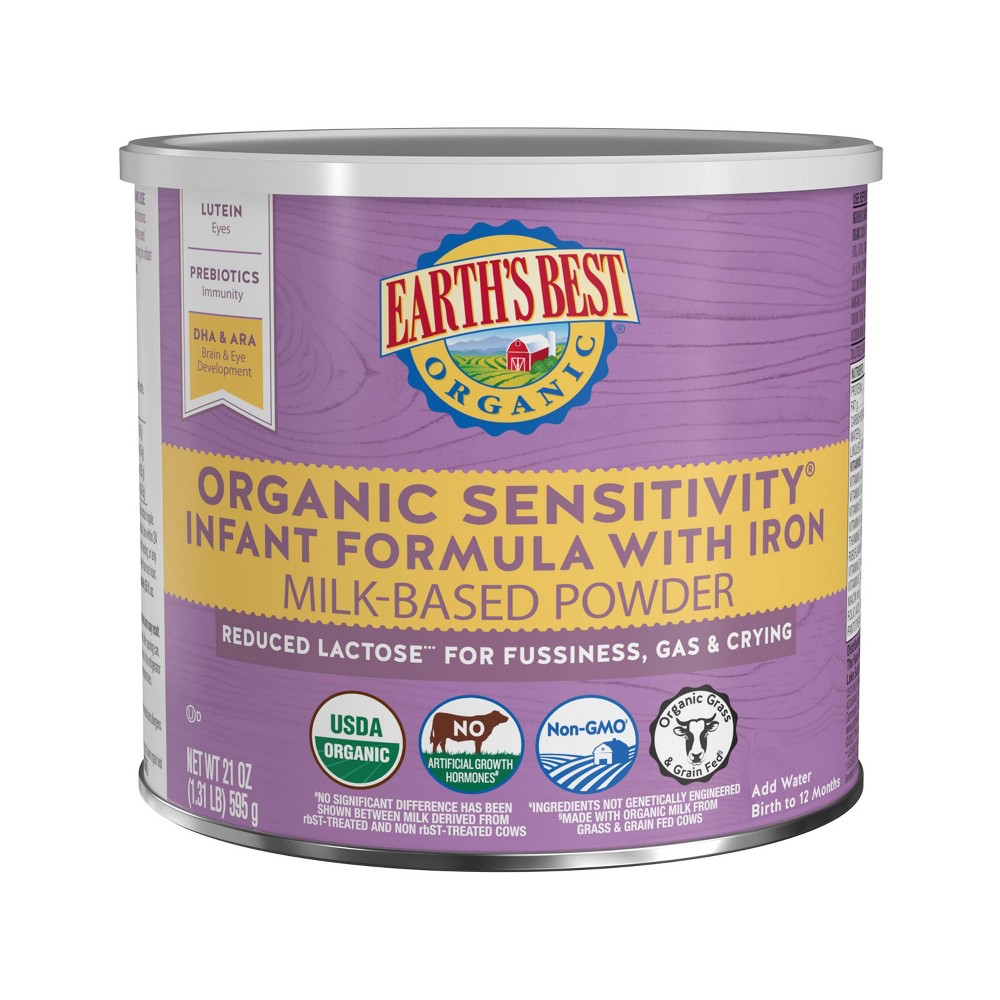


Earth's Best Organic Sensitivity Powder Infant Formula - 21oz: Gas, Brain & Eye Development, Immune Support
Analysis updated August 2026 · How Scout scores
At a glance
Summary
This infant formula contains beneficial ingredients such as organic whey protein concentrate and hydrolysate, which support muscle growth and are easier to digest. It also includes oils rich in essential fatty acids like DHA and arachidonic acid, crucial for brain and eye development. However, the presence of palm oil, which is high in saturated fats, and soy lecithin, which may be a concern for those with soy allergies, slightly detracts from its overall formulation quality.
Key ingredients 39
Organic Whey Protein ConcentrateGood
Whey protein concentrate is a high-quality protein source with a complete amino acid profile. Being organic, it is free from synthetic additives and hormones. It supports muscle growth and repair.
Benefits
Rich in essential amino acids, supporting growth and development in infants.
Organic Whey Protein Concentrate HydrolysateGood
Hydrolyzed whey protein is pre-digested, making it easier to absorb and less likely to cause allergies. It is organic, ensuring minimal exposure to harmful chemicals. It is beneficial for infants with sensitive digestive systems.
Benefits
Easily digestible protein source, ideal for infants with sensitive stomachs.
Organic Coconut OilGood
Coconut oil is rich in medium-chain triglycerides (MCTs), which are easily absorbed and provide quick energy. Being organic, it is free from harmful pesticides. It supports brain development and energy metabolism.
Benefits
Provides MCTs that support brain development and energy metabolism.
Mortierella Alpina OilGood
Mortierella alpina oil is a source of arachidonic acid, an omega-6 fatty acid important for brain development. It is commonly used in infant formulas to mimic breast milk composition. It supports cognitive and visual development.
Benefits
Supports cognitive and visual development in infants.
Schizochytrium Sp. OilGood
Schizochytrium sp. oil is a rich source of DHA, an omega-3 fatty acid crucial for brain and eye development. It is a sustainable alternative to fish oil. It enhances cognitive function and visual acuity.
Benefits
Rich in DHA, supporting brain and eye development in infants.
Calcium PhosphateGood
Calcium phosphate provides essential calcium and phosphorus for bone health. It is a common mineral supplement in infant formulas. It supports the development of strong bones and teeth.
Benefits
Supports the development of strong bones and teeth in infants.
Beta-CaroteneGood
Beta-carotene is a precursor to vitamin A and acts as an antioxidant. It is important for vision and immune health. It provides a natural source of vitamin A without the risk of toxicity.
Benefits
Acts as an antioxidant and supports vision and immune health.
Vitamin D3Good
Vitamin D3 is crucial for calcium absorption and bone health. It is often added to infant formulas to ensure adequate intake. It supports immune function and bone development.
Benefits
Supports calcium absorption, bone health, and immune function.
Vitamin E (Mixed Tocopherol)Good
Vitamin E is an antioxidant that protects cells from oxidative damage. Mixed tocopherols provide a balanced form of vitamin E. It supports immune function and skin health.
Benefits
Protects cells from oxidative damage and supports immune function.
Vitamin K (Phytonadione)Good
Vitamin K is essential for blood clotting and bone health. Phytonadione is a stable form used in supplements. It ensures proper blood coagulation and supports bone development.
Benefits
Essential for blood clotting and bone health.
Vitamin C (Ascorbic Acid)Good
Vitamin C is an antioxidant that supports immune function and collagen synthesis. Ascorbic acid is a stable form used in supplements. It enhances iron absorption and supports overall health.
Benefits
Supports immune function and enhances iron absorption.
Thiamine HydrochlorideGood
Thiamine hydrochloride is a form of vitamin B1 essential for energy metabolism. It is added to ensure adequate intake in infants. It supports nervous system function and energy production.
Benefits
Essential for energy metabolism and nervous system function.
RiboflavinGood
Riboflavin, or vitamin B2, is important for energy production and cellular function. It is added to ensure adequate intake in infants. It supports growth and development.
Benefits
Supports energy production and cellular function.
Pyridoxine HydrochlorideGood
Pyridoxine hydrochloride is a form of vitamin B6 important for brain development and function. It is added to ensure adequate intake in infants. It supports neurotransmitter synthesis and cognitive development.
Benefits
Supports brain development and neurotransmitter synthesis.
Vitamin B12Good
Vitamin B12 is important for red blood cell formation and neurological function. It is added to ensure adequate intake in infants. It supports energy production and cognitive development.
Benefits
Supports red blood cell formation and neurological function.
BiotinGood
Biotin is a B-vitamin important for energy metabolism and skin health. It is added to ensure adequate intake in infants. It supports healthy hair, skin, and nails.
Benefits
Supports energy metabolism and skin health.
Ascorbic AcidGood
Ascorbic acid is a form of vitamin C that supports immune function and collagen synthesis. It is added to ensure adequate intake in infants. It enhances iron absorption and supports overall health.
Benefits
Supports immune function and enhances iron absorption.
Choline ChlorideGood
Choline chloride is important for brain development and liver function. It is added to ensure adequate intake in infants. It supports cognitive development and memory.
Benefits
Supports brain development and cognitive function.
InositolGood
Inositol is important for cell membrane health and nerve function. It is added to ensure adequate intake in infants. It supports brain development and mood regulation.
Benefits
Supports cell membrane health and nerve function.
Ferrous SulfateGood
Ferrous sulfate is a form of iron essential for red blood cell production. It is added to ensure adequate intake in infants. It supports oxygen transport and energy production.
Benefits
Supports red blood cell production and oxygen transport.
Zinc SulfateGood
Zinc sulfate is a form of zinc important for immune function and growth. It is added to ensure adequate intake in infants. It supports wound healing and DNA synthesis.
Benefits
Supports immune function and growth.
NucleotidesGood
Nucleotides are important for DNA synthesis and immune function. They are added to mimic the composition of breast milk. They support growth and development in infants.
Benefits
Supports DNA synthesis and immune function.
Organic Glucose Syrup SolidsNeutral
Organic glucose syrup solids provide a source of carbohydrates for energy. Being organic, they are less likely to contain harmful residues. However, they are a simple sugar and should be consumed in moderation.
Risks
Excessive consumption of simple sugars can lead to health issues such as obesity and dental cavities.
Benefits
Provides a quick source of energy, especially important for infants with high energy needs.
Organic High Oleic Safflower Or Sunflower OilNeutral
High oleic oils are low in linoleic acid and have a healthier fatty acid profile. They are organic, reducing exposure to harmful chemicals. These oils are used for their stability and mild flavor.
Benefits
Provides monounsaturated fats that are beneficial for heart health.
Sodium CitrateNeutral
Sodium citrate is used as an acidity regulator and stabilizer in formulas. It is generally recognized as safe when used in appropriate amounts. It helps maintain the pH balance of the formula.
Benefits
Helps maintain the pH balance of the formula, ensuring stability.
Vitamin A PalmitateNeutral
Standard formulation ingredient — neither beneficial nor harmful at typical use.
Risks
Excessive intake can lead to toxicity, but this is unlikely in controlled formula amounts.
Benefits
Essential for vision, immune function, and healthy skin.
Folic AcidNeutral
Standard formulation ingredient — neither beneficial nor harmful at typical use.
Benefits
Essential for DNA synthesis and neural tube development.
Calcium ChlorideNeutral
Calcium chloride is used to provide calcium, essential for bone health. It is a common mineral supplement in infant formulas. It supports the development of strong bones and teeth.
Benefits
Supports the development of strong bones and teeth in infants.
Calcium HydroxideNeutral
Calcium hydroxide is used to provide calcium, essential for bone health. It is a common mineral supplement in infant formulas. It supports the development of strong bones and teeth.
Benefits
Supports the development of strong bones and teeth in infants.
Calcium CarbonateNeutral
Calcium carbonate is used to provide calcium, essential for bone health. It is a common mineral supplement in infant formulas. It supports the development of strong bones and teeth.
Benefits
Supports the development of strong bones and teeth in infants.
Magnesium ChlorideNeutral
Magnesium chloride is used to provide magnesium, important for muscle and nerve function. It is a common mineral supplement in infant formulas. It supports energy production and bone health.
Benefits
Supports muscle and nerve function, and energy production.
Potassium BicarbonateNeutral
Potassium bicarbonate is used to provide potassium, important for fluid balance and nerve function. It is a common mineral supplement in infant formulas. It supports heart health and muscle function.
Benefits
Supports fluid balance and nerve function.
Potassium ChlorideNeutral
Potassium chloride is used to provide potassium, important for fluid balance and nerve function. It is a common mineral supplement in infant formulas. It supports heart health and muscle function.
Benefits
Supports fluid balance and nerve function.
Potassium PhosphateNeutral
Potassium phosphate is used to provide potassium and phosphorus, important for energy production and bone health. It is a common mineral supplement in infant formulas. It supports cellular function and bone development.
Benefits
Supports energy production and bone health.
Sodium SeleniteNeutral
Sodium selenite is a form of selenium important for antioxidant defense and thyroid function. It is added to ensure adequate intake in infants. It supports immune function and metabolism.
Benefits
Supports antioxidant defense and thyroid function.
Cupric SulfateNeutral
Cupric sulfate is a form of copper important for iron metabolism and neurological function. It is added to ensure adequate intake in infants. It supports immune function and bone health.
Benefits
Supports iron metabolism and neurological function.
Manganese SulfateNeutral
Manganese sulfate is a form of manganese important for bone formation and metabolism. It is added to ensure adequate intake in infants. It supports enzyme function and bone health.
Benefits
Supports bone formation and enzyme function.
Organic Palm Oil Or Palm OleinBad
Palm oil is high in saturated fats, which can raise cholesterol levels. The environmental impact of palm oil production is also a concern. However, it is a common ingredient in infant formulas for its fatty acid profile.
Risks
High saturated fat content may contribute to cardiovascular issues if consumed in excess.
Benefits
Provides essential fatty acids necessary for infant growth and development.
Organic Soy LecithinBad
Soy lecithin is used as an emulsifier to improve texture and stability. Being organic, it is free from GMOs and synthetic additives. However, it may be a concern for those with soy allergies.
Risks
May cause allergic reactions in individuals sensitive to soy.
Benefits
Improves texture and stability of the formula.
Processing
Ultra-Processed Foods
Get the full breakdown in the Scout appTake Scout shopping
Scan any product to see lab results, healthy alternatives, and your personalized analysis.
Download on theApp Store GET IT ONGoogle PlayAmazon pricing & content
Amazon price as of . Product prices and availability are accurate as of the date/time indicated and are subject to change. Any price and availability information displayed on Amazon.com at the time of purchase will apply to the purchase of this product.
CERTAIN CONTENT THAT APPEARS ON THIS SITE COMES FROM AMAZON. THIS CONTENT IS PROVIDED “AS IS” AND IS SUBJECT TO CHANGE OR REMOVAL AT ANY TIME.