
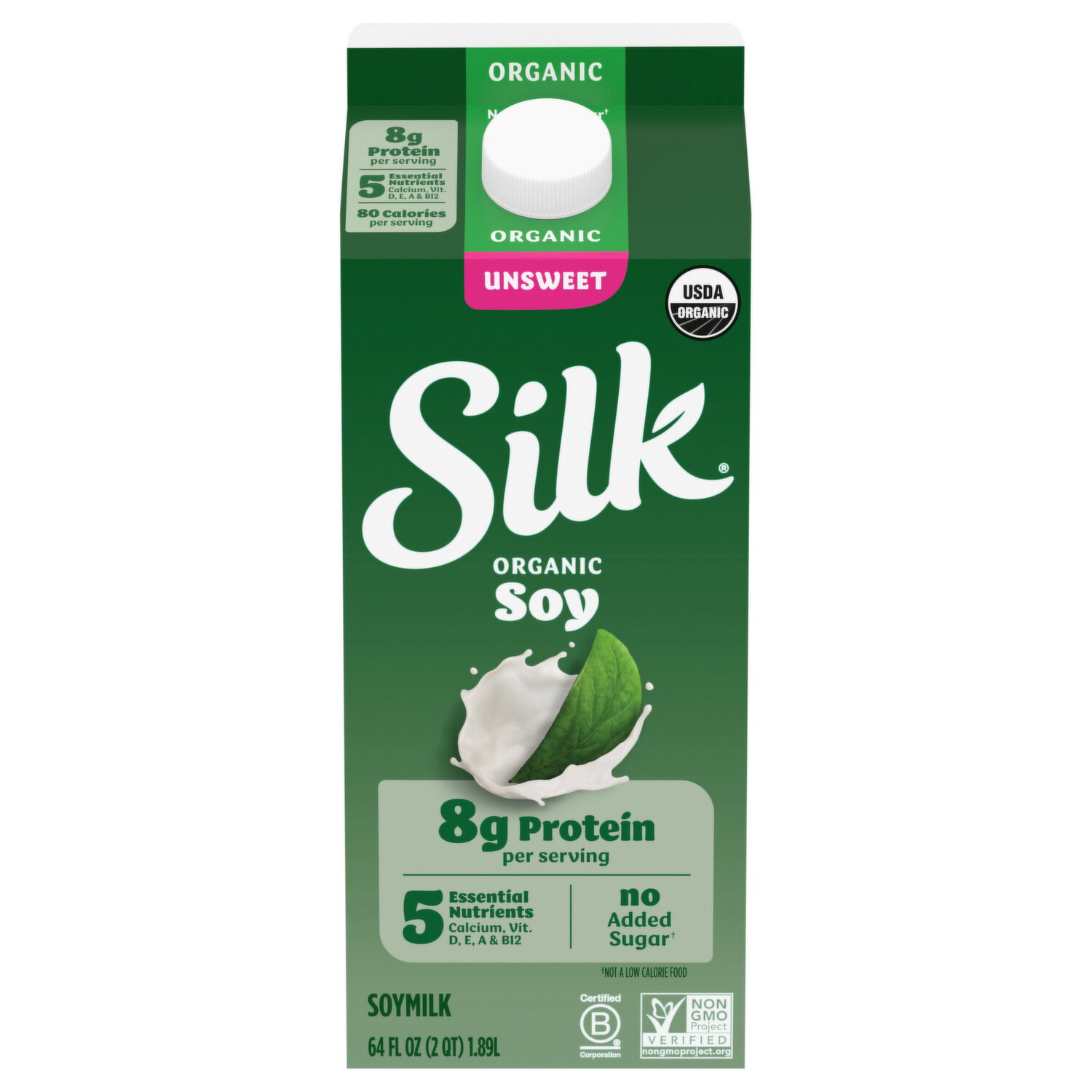




Silk Organic Soymilk
Analysis updated June 2026 · How Scout scores
At a glance
Summary
This organic soymilk is fortified with beneficial vitamins and minerals, enhancing its nutritional profile. However, it contains carrageenan, which is controversial due to potential digestive issues, and natural flavors, which lack transparency. Despite its organic certification and minimal additives, the product is considered ultra-processed, which limits its overall score.
Key ingredients 10
Whole Organic SoybeansGood
Whole organic soybeans are a source of plant-based protein and essential nutrients. Being organic, they are grown without synthetic pesticides or fertilizers, which enhances their nutritional profile. They also contain isoflavones, which may have health benefits.
Risks
Some individuals may have soy allergies or concerns about phytoestrogens affecting hormone levels.
Benefits
Rich in protein, fiber, and isoflavones, which may support heart health and bone density.
Sea SaltGood
Unrefined sea salt — a minimally processed, natural source of sodium and essential trace minerals, and a legitimate whole-food seasoning. Treated as a positive ingredient.
Risks
Excessive sodium intake can lead to hypertension and cardiovascular issues.
Benefits
Provides essential minerals like magnesium and calcium in small amounts.
Vitamin D2Good
Vitamin D2 is added to enhance the nutritional profile, supporting bone health and calcium absorption. It is a plant-derived form of vitamin D, suitable for vegan products. Its fortification helps prevent deficiencies, especially in non-dairy consumers.
Risks
Overconsumption can lead to hypercalcemia, though this is rare with typical dietary intake.
Benefits
Supports bone health and immune function, especially important in regions with limited sunlight exposure.
Riboflavin (B2)Good
Riboflavin, or vitamin B2, is essential for energy production and cellular function. It is water-soluble and often added to fortified foods to prevent deficiencies. Its inclusion in soymilk enhances its nutritional value, particularly for those on plant-based diets.
Benefits
Supports energy metabolism and is crucial for maintaining healthy skin and eyes.
Vitamin B12Good
Vitamin B12 is crucial for nerve function and the production of DNA and red blood cells. It is typically found in animal products, so its fortification in plant-based milks is important for vegans. Its inclusion helps prevent deficiencies in those who do not consume animal products.
Benefits
Essential for neurological function and the formation of red blood cells, preventing anemia.
Filtered WaterNeutral
Filtered water is used as a base for many beverages, providing hydration without additional calories or nutrients. It is a neutral ingredient with no significant health impacts. The quality of water can affect the overall taste and purity of the product.
See more about Filtered Water →Calcium CarbonateNeutral
Standard formulation ingredient — neither beneficial nor harmful at typical use.
Risks
Excessive intake can lead to kidney stones or impaired absorption of other minerals.
Benefits
Provides a significant source of calcium, essential for bone and dental health.
Vitamin A PalmitateNeutral
Standard formulation ingredient — neither beneficial nor harmful at typical use.
Risks
Excessive intake can lead to hypervitaminosis A, causing toxicity.
Benefits
Essential for maintaining healthy vision, skin, and immune function.
CarrageenanBad
Carrageenan is used as a thickener and stabilizer in food products. It is derived from red seaweed but has been associated with digestive issues in some individuals. Its use in processed foods is controversial due to potential inflammatory effects.
Risks
May cause digestive discomfort and has been linked to inflammation in some studies.
Natural FlavorBad
Natural flavors are added to enhance taste but lack transparency in their composition. They can contain a variety of compounds, some of which may not be disclosed. This lack of clarity can be concerning for consumers seeking clean labels.
Risks
Potential allergens or undisclosed additives may be present, posing risks to sensitive individuals.
Processing
Ultra-Processed Foods
Get the full breakdown in the Scout appTake Scout shopping
Scan any product to see lab results, healthy alternatives, and your personalized analysis.
Download on theApp Store GET IT ONGoogle PlayAmazon pricing & content
Amazon price as of . Product prices and availability are accurate as of the date/time indicated and are subject to change. Any price and availability information displayed on Amazon.com at the time of purchase will apply to the purchase of this product.
CERTAIN CONTENT THAT APPEARS ON THIS SITE COMES FROM AMAZON. THIS CONTENT IS PROVIDED “AS IS” AND IS SUBJECT TO CHANGE OR REMOVAL AT ANY TIME.