
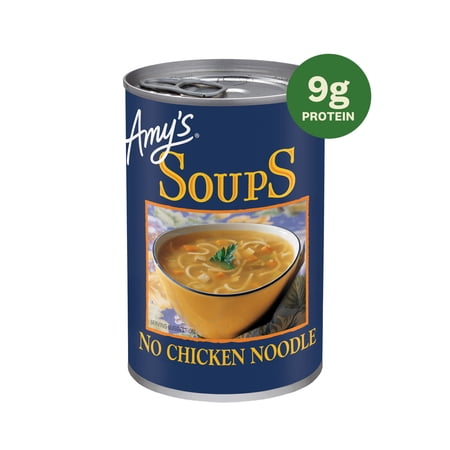


Amy's No Chicken Noodle Soup
Analysis updated August 2026 · How Scout scores
At a glance
Summary
This soup contains several organic ingredients like onions, carrots, celery, and tofu, which contribute positively to its nutritional profile. However, the presence of hydrolyzed corn and soy protein, a processed ingredient that may contain MSG, raises concerns. Additionally, the product is classified as ultra-processed, which limits its potential health score despite the organic components.
Key ingredients 12
Organic onionsGood
Organic onions are a good source of vitamins and antioxidants. Being organic, they are free from synthetic pesticides and fertilizers. They add flavor and nutritional value to the soup.
Benefits
Rich in antioxidants and vitamin C, supporting immune health and reducing inflammation.
Organic carrotsGood
Organic carrots provide beta-carotene, fiber, and vitamins. The organic certification ensures they are grown without harmful chemicals. They contribute to the soup's nutritional profile and color.
Benefits
High in beta-carotene, which is converted to vitamin A, supporting vision and immune function.
Organic celeryGood
Organic celery is low in calories and provides fiber and vitamins. Its organic nature means it's grown without synthetic chemicals. It adds a crisp texture and nutrients to the soup.
Benefits
Contains antioxidants and fiber, which support digestive health and reduce inflammation.
Organic tofuGood
Organic tofu is a plant-based protein source made from soybeans. It is organic, ensuring no GMO soybeans or synthetic chemicals are used. It provides essential amino acids and is a versatile protein option.
Risks
Potential allergen for individuals sensitive to soy.
Benefits
Rich in protein and contains all essential amino acids, supporting muscle health and repair.
Organic leeksGood
Organic leeks are a good source of vitamins and minerals. Being organic, they are free from synthetic pesticides. They add flavor and nutrients to the soup.
Benefits
Rich in vitamins A, C, and K, supporting immune function and bone health.
Organic parsleyGood
Organic parsley is a herb rich in vitamins and antioxidants. Its organic status ensures no synthetic chemicals are used. It enhances flavor and adds nutritional value to the soup.
Benefits
High in vitamin K and antioxidants, supporting bone health and reducing oxidative stress.
SpicesGood
Whole-food seasonings, antioxidant-bearing.
Benefits
Adds flavor and may provide antioxidants depending on the specific spices used.
Filtered waterNeutral
Filtered water is a neutral ingredient used as a base for the soup. It provides no nutritional value but is essential for consistency. It is free from contaminants due to filtration.
See more about Filtered water →Organic noodlesNeutral
Organic noodles are made from semolina flour and water. They are organic, ensuring no synthetic additives. They provide carbohydrates for energy but have limited nutritional benefits.
Benefits
Provides carbohydrates, which are a primary energy source.
Organic high oleic safflower and/or sunflower oilNeutral
High oleic safflower and/or sunflower oil is bred to be low in linoleic acid. It is organic, reducing exposure to pesticides. It is a neutral oil used for cooking and flavor.
Benefits
Contains monounsaturated fats, which are beneficial for heart health.
Hydrolyzed corn and soy proteinBad
Hydrolyzed corn and soy protein is a processed ingredient used to enhance flavor. It may contain MSG, which can cause sensitivity in some individuals. It is less desirable due to its processed nature and potential health concerns.
Risks
May contain MSG, which can cause headaches and other symptoms in sensitive individuals.
Benefits
Provides umami flavor and some protein content.
Yeast extractBad
Concentrated glutamate source — MSG-adjacent flavor enhancer.
Risks
May contain glutamates, which can cause sensitivity in some individuals.
Benefits
Enhances flavor and provides some B vitamins.
Processing
Ultra-Processed Foods
Get the full breakdown in the Scout appTake Scout shopping
Scan any product to see lab results, healthy alternatives, and your personalized analysis.
Download on theApp Store GET IT ONGoogle PlayAmazon pricing & content
Amazon price as of . Product prices and availability are accurate as of the date/time indicated and are subject to change. Any price and availability information displayed on Amazon.com at the time of purchase will apply to the purchase of this product.
CERTAIN CONTENT THAT APPEARS ON THIS SITE COMES FROM AMAZON. THIS CONTENT IS PROVIDED “AS IS” AND IS SUBJECT TO CHANGE OR REMOVAL AT ANY TIME.