
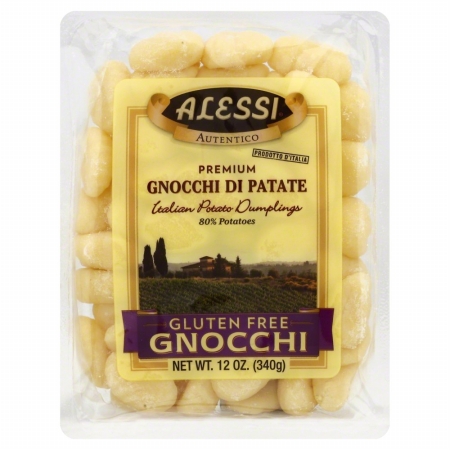



PREMIUM GNOCCHI DI PATATE ITALIAN POTATO DUMPLINGS, GLUTEN FREE GNOCCHI
Analysis updated August 2026 · How Scout scores
At a glance
Summary
This gluten-free gnocchi is made primarily from rehydrated potatoes, which are a natural and minimally processed ingredient, contributing positively to its nutritional profile. However, the product is processed and contains sorbic acid, a synthetic preservative, which detracts from its overall healthiness. The presence of multiple starches and the use of preservatives indicate a moderate level of processing, limiting its score.
Key ingredients 9
Rehydrated potatoesGood
Rehydrated potatoes are a natural source of carbohydrates and provide essential nutrients like vitamin C and potassium. They are minimally processed, retaining most of their nutritional value. Compared to refined starches, they offer more fiber and micronutrients.
Benefits
Provides carbohydrates for energy and contains essential nutrients like vitamin C and potassium.
TurmericGood
Beneficial ingredient — whole-food or functional value in this product class.
Benefits
Contains curcumin, which has anti-inflammatory and antioxidant properties.
Corn flourNeutral
Corn flour is a gluten-free flour alternative that provides carbohydrates. It is a refined product, lacking significant fiber or protein. While it is a common ingredient in gluten-free products, it does not offer substantial nutritional benefits.
Benefits
Offers a gluten-free alternative for those with celiac disease or gluten sensitivity.
Potato starchNeutral
Potato starch is a refined carbohydrate used as a thickener and binder in foods. It is highly processed and lacks fiber and protein. While it serves a functional purpose in food products, it does not provide significant nutritional benefits.
Benefits
Provides a gluten-free thickening agent for food products.
Corn starchNeutral
Corn starch is a refined carbohydrate used for thickening and stabilizing foods. It is highly processed and does not contain fiber or protein. While it is useful in food preparation, it lacks nutritional value.
Benefits
Acts as a gluten-free thickening agent in various recipes.
Rice flourNeutral
Rice flour is a gluten-free flour alternative that provides carbohydrates. It is a refined product with limited fiber and protein content. While it is suitable for gluten-free diets, it does not offer substantial nutritional benefits.
Benefits
Provides a gluten-free option for baking and cooking.
SaltNeutral
Salt is used to enhance flavor and preserve food. It is a refined product and does not provide additional nutrients beyond sodium. While necessary in small amounts, excessive consumption can lead to health issues.
Risks
High sodium intake can contribute to hypertension and cardiovascular diseases.
Benefits
Enhances flavor and acts as a preservative in food products.
Lactic acidNeutral
Lactic acid is a naturally occurring acid used as a preservative and flavoring agent. It is generally recognized as safe and is used to maintain the acidity of foods. It does not provide significant nutritional benefits.
Benefits
Helps preserve food and maintain its acidity.
Sorbic acidBad
Sorbic acid is a synthetic preservative used to prevent mold and yeast growth. It is effective in extending shelf life but is a processed additive. Some individuals may experience allergic reactions or sensitivities.
Risks
May cause allergic reactions or sensitivities in some individuals.
Benefits
Prevents spoilage by inhibiting mold and yeast growth, extending product shelf life.
Processing
Processed Foods
Get the full breakdown in the Scout appTake Scout shopping
Scan any product to see lab results, healthy alternatives, and your personalized analysis.
Download on theApp Store GET IT ONGoogle Play