
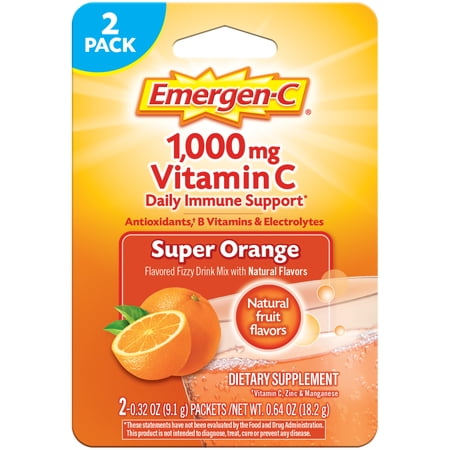


Emergen-C 1000Mg Vitamin C Powder for Immune Support Super Orange - 2 Ct
Analysis updated August 2026 · How Scout scores
At a glance
Summary
This product contains beneficial vitamins and amino acids like Vitamin C, B vitamins, and glycine, which support immune function and energy metabolism. However, it includes maltodextrin as a filler, which is a concern when used in significant amounts, and the presence of fructose contributes to a high sugar content. The formulation is moderately processed with several additives, which impacts its overall healthiness.
Key ingredients 17
Vitamin CVery Good
Vitamin C is a vital nutrient that supports immune function and acts as a powerful antioxidant. It is essential for collagen synthesis and wound healing. Regular intake can reduce the duration of colds and improve skin health.
Benefits
Boosts immune function and provides antioxidant protection.
Beta-CaroteneGood
Beta-carotene is a precursor to vitamin A and acts as an antioxidant. It is naturally found in colorful fruits and vegetables. It supports eye health and boosts the immune system.
Benefits
Supports vision health and provides antioxidant benefits.
GlycineGood
Glycine is an amino acid that supports protein synthesis and has calming effects on the brain. It is naturally found in high-protein foods. It may improve sleep quality and cognitive function.
Benefits
Supports neurotransmitter function and may improve sleep quality.
L-Aspartic AcidGood
L-aspartic acid is an amino acid involved in energy production and neurotransmitter synthesis. It is naturally present in protein-rich foods. It supports athletic performance and muscle recovery.
Benefits
Enhances energy production and supports muscle function.
Vitamin B1Good
Vitamin B1, also known as thiamine, is essential for energy metabolism and nerve function. It is found in whole grains and meats. It helps convert carbohydrates into energy and supports nervous system health.
Benefits
Supports energy production and nerve function.
RiboflavinGood
Riboflavin, or vitamin B2, is crucial for energy production and cellular function. It is found in dairy products and green vegetables. It helps maintain healthy skin and eyes.
Benefits
Supports energy metabolism and maintains healthy skin.
NiacinGood
Niacin, or vitamin B3, is important for DNA repair and energy production. It is present in meats and fish. It supports cardiovascular health and reduces cholesterol levels.
Risks
High doses may cause flushing and liver damage.
Benefits
Supports heart health and improves cholesterol levels.
Vitamin B6Good
Vitamin B6 is essential for amino acid metabolism and neurotransmitter synthesis. It is found in poultry and fish. It supports brain health and reduces symptoms of depression.
Benefits
Supports brain function and mood regulation.
Pantothenic AcidGood
Pantothenic acid, or vitamin B5, is vital for synthesizing coenzyme A and energy production. It is found in eggs and avocados. It supports adrenal function and reduces stress.
Benefits
Supports energy metabolism and stress reduction.
CalciumGood
Calcium is a mineral essential for bone health and muscle function. It is abundant in dairy products and leafy greens. It supports bone density and reduces the risk of osteoporosis.
Risks
Excessive intake may lead to kidney stones.
Benefits
Supports strong bones and teeth.
PhosphorusGood
Phosphorus is a mineral important for bone health and energy production. It is found in meat and dairy products. It supports the formation of bones and teeth.
Risks
Excessive intake may affect calcium absorption.
Benefits
Supports bone health and energy metabolism.
PotassiumGood
Potassium is an essential mineral that regulates fluid balance and muscle contractions. It is found in bananas and potatoes. It supports heart health and reduces blood pressure.
Risks
Excessive intake may lead to hyperkalemia.
Benefits
Supports cardiovascular health and fluid balance.
Citric AcidNeutral
Citric acid is a natural preservative and flavor enhancer found in citrus fruits. It is used to add a sour taste and preserve the freshness of the product. It is generally recognized as safe when used in food products.
Risks
Excessive consumption may cause tooth enamel erosion.
Benefits
Acts as a preservative and enhances the flavor profile of the product.
Malic AcidNeutral
Malic acid is an organic compound that adds tartness to foods and beverages. It is naturally found in apples and other fruits. It is considered safe and is often used to enhance flavor.
Risks
High doses may cause digestive discomfort.
Benefits
Enhances flavor and may improve energy production in the body.
AcaciaNeutral
Acacia, also known as gum arabic, is a natural gum used as a stabilizer and thickener. It is derived from the sap of acacia trees and is considered safe for consumption. It is often used to improve the texture of food products.
Risks
May cause mild digestive issues in sensitive individuals.
Benefits
Provides dietary fiber and acts as a stabilizer in the product.
FructoseBad
Processed additive flagged under Scout's ingredient doctrine.
Risks
Excessive consumption of fructose can lead to metabolic issues and increased risk of obesity.
Benefits
Provides a quick source of energy and enhances the flavor of the product.
MaltodextrinBad
Processed additive flagged under Scout's ingredient doctrine.
Risks
May cause spikes in blood sugar levels, especially in individuals with diabetes.
Benefits
Improves the texture and stability of the product.
Processing
Processed Foods
Get the full breakdown in the Scout appTake Scout shopping
Scan any product to see lab results, healthy alternatives, and your personalized analysis.
Download on theApp Store GET IT ONGoogle PlayAmazon pricing & content
Amazon price as of . Product prices and availability are accurate as of the date/time indicated and are subject to change. Any price and availability information displayed on Amazon.com at the time of purchase will apply to the purchase of this product.
CERTAIN CONTENT THAT APPEARS ON THIS SITE COMES FROM AMAZON. THIS CONTENT IS PROVIDED “AS IS” AND IS SUBJECT TO CHANGE OR REMOVAL AT ANY TIME.