
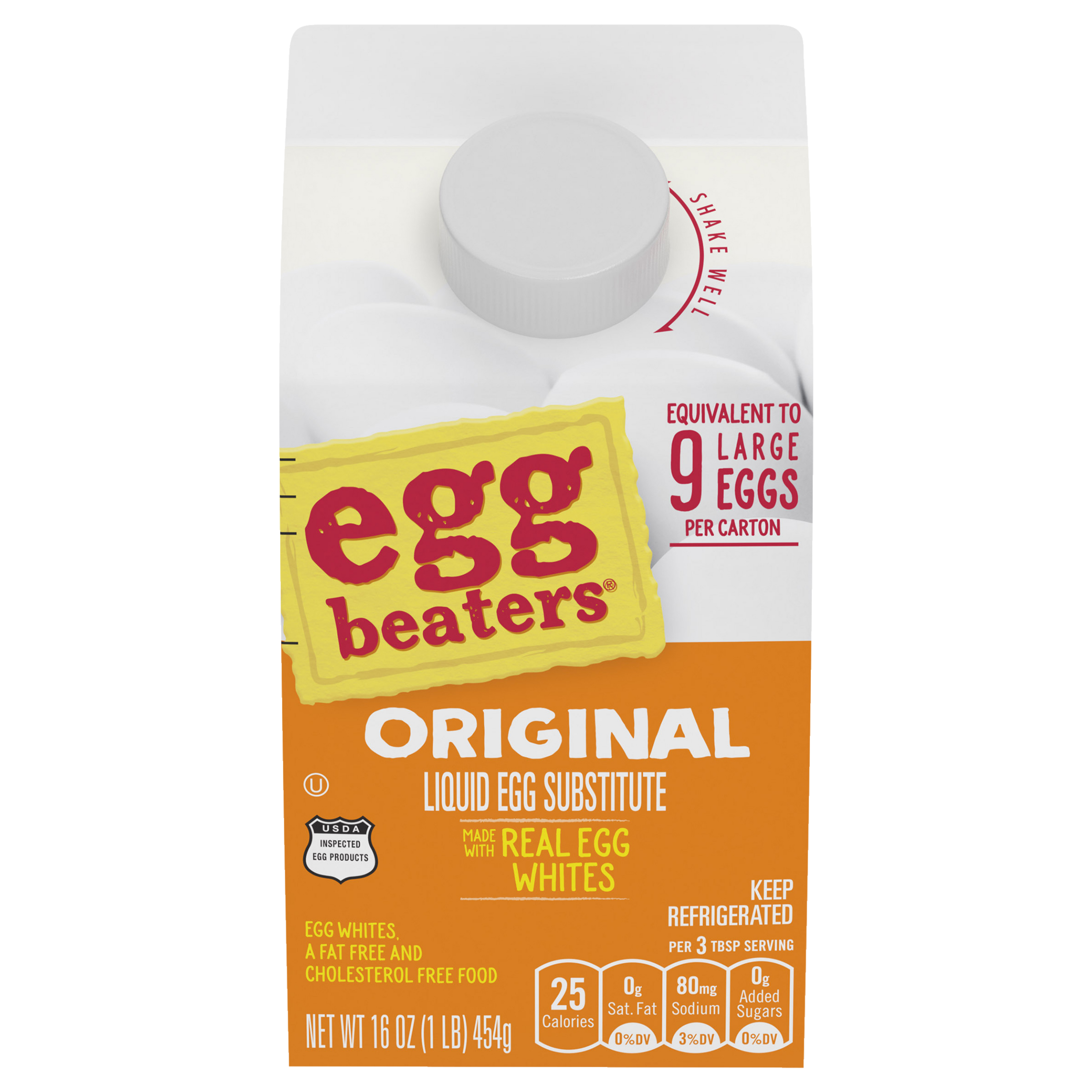



Egg Beaters Original Liquid Egg Substitute
Analysis updated August 2026 · How Scout scores
At a glance
Summary
This product is ultra-processed, which limits its potential health score. It contains additives like xanthan gum and guar gum, which are used to improve texture but can cause digestive issues in sensitive individuals. While it provides a source of protein, the presence of multiple additives and the processing level reduce its overall healthiness compared to whole eggs.
Key ingredients 17
Egg whitesVery Good
Minimally processed whole-food ingredient.
Benefits
Provides a low-calorie source of protein that supports muscle maintenance and repair.
Beta caroteneGood
Beneficial ingredient — whole-food or functional value in this product class.
Benefits
Can be converted into vitamin A, supporting vision and immune function, though typically in small amounts in food coloring.
RiboflavinGood
Essential B vitamin — beneficial micronutrient.
Benefits
Supports energy production and cellular function, contributing to overall health.
Pyridoxine hydrochlorideGood
Beneficial ingredient — whole-food or functional value in this product class.
Benefits
Supports protein metabolism and cognitive development, contributing to overall health.
Vitamin B12Good
Beneficial ingredient — whole-food or functional value in this product class.
Benefits
Supports nerve function and red blood cell formation, contributing to overall health.
BiotinGood
Beneficial ingredient — whole-food or functional value in this product class.
Benefits
Supports carbohydrate and fat metabolism, contributing to overall health.
Vitamin D3Good
Beneficial ingredient — whole-food or functional value in this product class.
Benefits
Supports calcium absorption and bone health, contributing to overall health.
Xanthan gumNeutral
Fermentation-derived thickener, well tolerated at food-use levels.
Risks
May cause bloating and gas in some individuals, especially when consumed in large amounts.
Guar gumNeutral
Standard formulation ingredient — neither beneficial nor harmful at typical use.
Risks
May cause digestive discomfort, including gas and bloating, particularly in sensitive individuals.
Calcium sulfateNeutral
Calcium sulfate is used as a firming agent and source of calcium in foods. It is a naturally occurring mineral that is generally recognized as safe. While it can contribute to calcium intake, its primary function in this product is as a stabilizer.
Benefits
Provides a source of calcium, which is essential for bone health, though its contribution in this product is minimal.
Ferric orthophosphateNeutral
Ferric orthophosphate is used as an iron fortification in foods. It is a form of iron that is added to help prevent iron deficiency. While it can help improve iron intake, its bioavailability is lower compared to other forms of iron.
Benefits
Contributes to iron intake, which is important for oxygen transport and energy production.
Alpha tocopherol acetateNeutral
Alpha tocopherol acetate is a form of vitamin E used to fortify foods. It is an antioxidant that helps protect cells from oxidative damage. While beneficial, the amounts used in fortification are typically small.
Benefits
Acts as an antioxidant, supporting cell protection and immune function.
Zinc sulfateNeutral
Zinc sulfate is used to fortify foods with zinc, an essential mineral. It supports immune function and enzyme activity. While beneficial, the amounts used in fortification are typically small.
Benefits
Supports immune function and enzyme activity, contributing to overall health.
Calcium pantothenateNeutral
Calcium pantothenate is a form of vitamin B5 used in food fortification. It is essential for energy metabolism and the synthesis of coenzyme A. While beneficial, the amounts used in fortification are typically small.
Benefits
Supports energy metabolism and the synthesis of coenzyme A, contributing to overall health.
Vitamin A palmitateNeutral
Vitamin A palmitate is a form of vitamin A used to fortify foods. It supports vision, immune function, and skin health. While beneficial, the amounts used in fortification are typically small.
Benefits
Supports vision, immune function, and skin health, contributing to overall health.
Thiamine mononitrateNeutral
Thiamine mononitrate is a form of vitamin B1 used to fortify foods. It is essential for energy metabolism and nerve function. While beneficial, the amounts used in fortification are typically small.
Benefits
Supports energy metabolism and nerve function, contributing to overall health.
Folic acidNeutral
Folic acid is a form of vitamin B9 used to fortify foods. It is essential for DNA synthesis and cell division. While beneficial, the amounts used in fortification are typically small.
Benefits
Supports DNA synthesis and cell division, contributing to overall health.
Processing
Ultra-Processed Foods
Get the full breakdown in the Scout appTake Scout shopping
Scan any product to see lab results, healthy alternatives, and your personalized analysis.
Download on theApp Store GET IT ONGoogle Play