
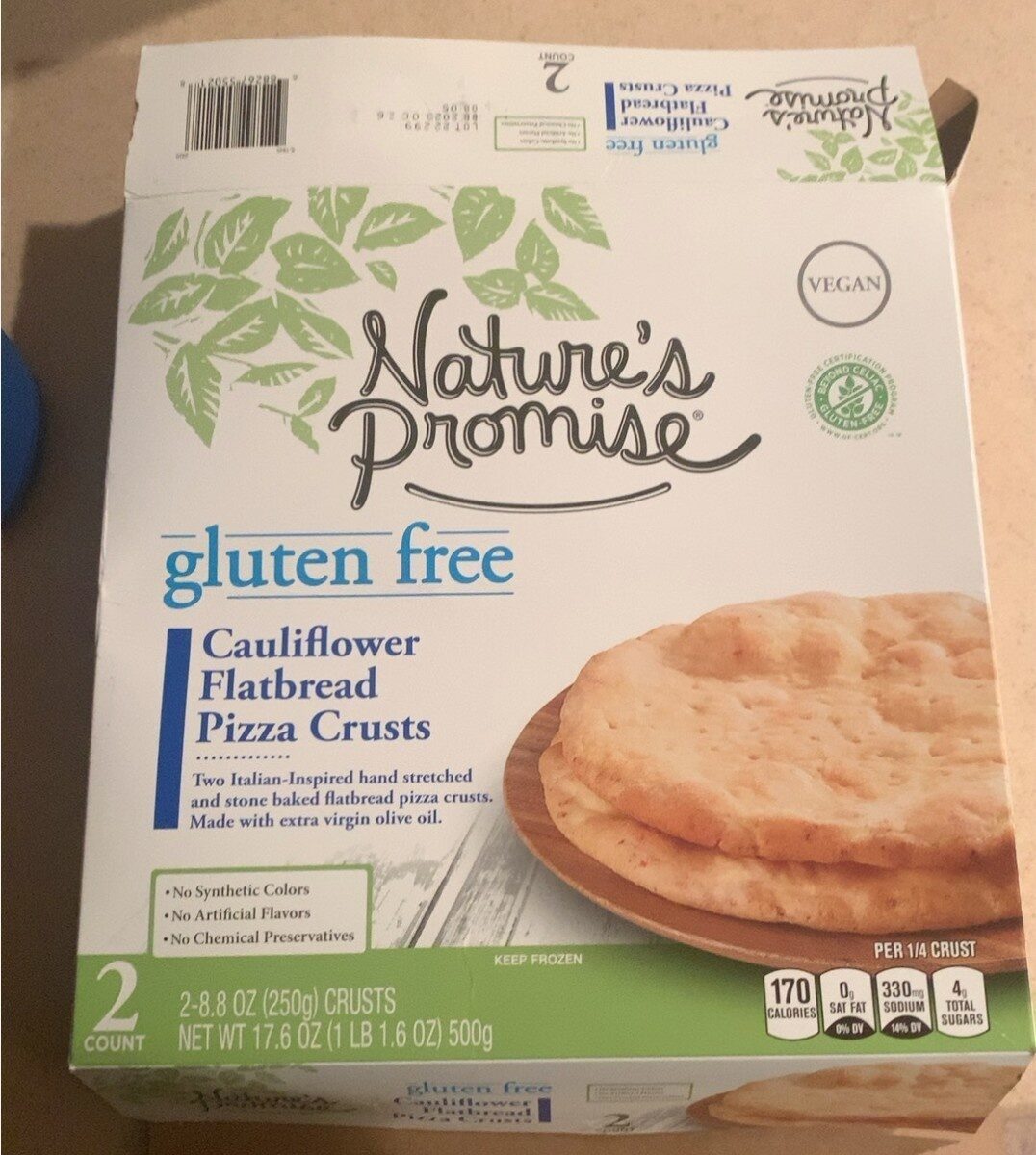


Cauliflower Crust puzza
Analysis updated August 2026 · How Scout scores
At a glance
Summary
This cauliflower crust pizza is ultra-processed, which limits its potential score. While it includes beneficial ingredients like cauliflower, inulin, and extra virgin olive oil, it also contains dextrose and fructose, which are simple sugars that can negatively impact health when consumed in excess. The presence of these sugars and the overall processing level contribute to a moderate score despite some healthy components.
Key ingredients 14
Extra virgin olive oilVery Good
Extra virgin olive oil is a high-quality monounsaturated fat with anti-inflammatory properties. It contains antioxidants that support heart health. Cold-pressed extraction preserves beneficial compounds.
Benefits
Rich in monounsaturated fats that support heart health and provide anti-inflammatory properties. Contains antioxidants like vitamin E and polyphenols that may reduce oxidative stress.
CauliflowerGood
Cauliflower is a nutrient-dense vegetable rich in vitamins C and K. It provides fiber and antioxidants that support overall health. Its inclusion as a primary ingredient in the crust offers a low-calorie alternative to traditional flour.
Benefits
Rich in vitamins and antioxidants, cauliflower supports immune function and may reduce inflammation.
InulinGood
Inulin is a prebiotic fiber that supports gut health. It is derived from chicory root and helps promote beneficial gut bacteria. Its inclusion can aid in digestion and improve overall gut health.
Risks
Excessive intake may cause digestive discomfort in some individuals.
Benefits
Supports digestive health by promoting the growth of beneficial gut bacteria.
Psyllium husk powderGood
Psyllium husk is a soluble fiber that aids in digestion and helps maintain bowel regularity. It is minimally processed and provides significant health benefits. Its use in the crust can enhance fiber content and improve digestive health.
Risks
May cause bloating or gas if consumed in large amounts without adequate water.
Benefits
Promotes digestive health and helps maintain regular bowel movements.
Sea saltGood
Sea salt is a minimally processed source of sodium and trace minerals. It enhances flavor and provides essential electrolytes. Its use in moderation can support hydration and electrolyte balance.
Risks
Excessive sodium intake can lead to high blood pressure and cardiovascular issues.
Benefits
Provides essential minerals and enhances flavor in food products.
Corn starchNeutral
Corn starch is a common thickening agent used in food products. It is highly processed and provides no significant nutritional benefits. It serves primarily as a texture enhancer in the crust.
Risks
Excessive consumption may contribute to high blood sugar levels due to its high glycemic index.
Rice flourNeutral
Rice flour is a gluten-free alternative to wheat flour. It is less processed than some other flours but lacks significant nutritional benefits. It is used to provide structure and texture to gluten-free products.
Risks
May contribute to high blood sugar levels if consumed in large quantities.
Benefits
Provides a gluten-free option for those with celiac disease or gluten intolerance.
Potato starchNeutral
Potato starch is used as a thickening and binding agent in food products. It is highly processed and offers minimal nutritional value. It helps improve the texture of gluten-free baked goods.
Risks
High glycemic index may affect blood sugar levels if consumed in excess.
Hydroxypropyl methyl celluloseNeutral
Hydroxypropyl methyl cellulose is a synthetic emulsifier used to improve texture and stability in food products. It is highly processed and offers no nutritional benefits. It is commonly used in gluten-free baking to mimic the properties of gluten.
WaterNeutral
Water is a fundamental ingredient used to hydrate and bind ingredients. It is essential for the preparation and texture of the crust. It provides no caloric or nutritional value.
Benefits
Essential for hydration and preparation of food products.
YeastNeutral
Yeast is used as a leavening agent to help dough rise. It is a natural ingredient that contributes to the texture and flavor of baked goods. It provides minimal nutritional benefits.
Benefits
Contributes to the leavening and flavor of baked goods.
Brown cane sugarNeutral
Brown cane sugar is a less refined sugar that retains some molasses content. It is used for sweetness and flavor in food products. While it is slightly less processed than white sugar, it still contributes to caloric intake.
Risks
May contribute to weight gain and blood sugar spikes if consumed in excess.
Benefits
Provides a natural source of sweetness with minimal processing.
DextroseBad
Dextrose is a simple sugar derived from corn. It is highly processed and can contribute to increased blood sugar levels. Its use in food products is primarily for sweetness and fermentation.
Risks
May contribute to insulin resistance and weight gain if consumed in excess.
FructoseBad
Fructose is a simple sugar that can contribute to metabolic issues when consumed in excess. It is often used as a sweetener in processed foods. High intake is linked to insulin resistance and fatty liver disease.
Risks
Excessive consumption may lead to metabolic syndrome and liver issues.
Processing
Ultra-Processed Foods
Get the full breakdown in the Scout appTake Scout shopping
Scan any product to see lab results, healthy alternatives, and your personalized analysis.
Download on theApp Store GET IT ONGoogle Play