
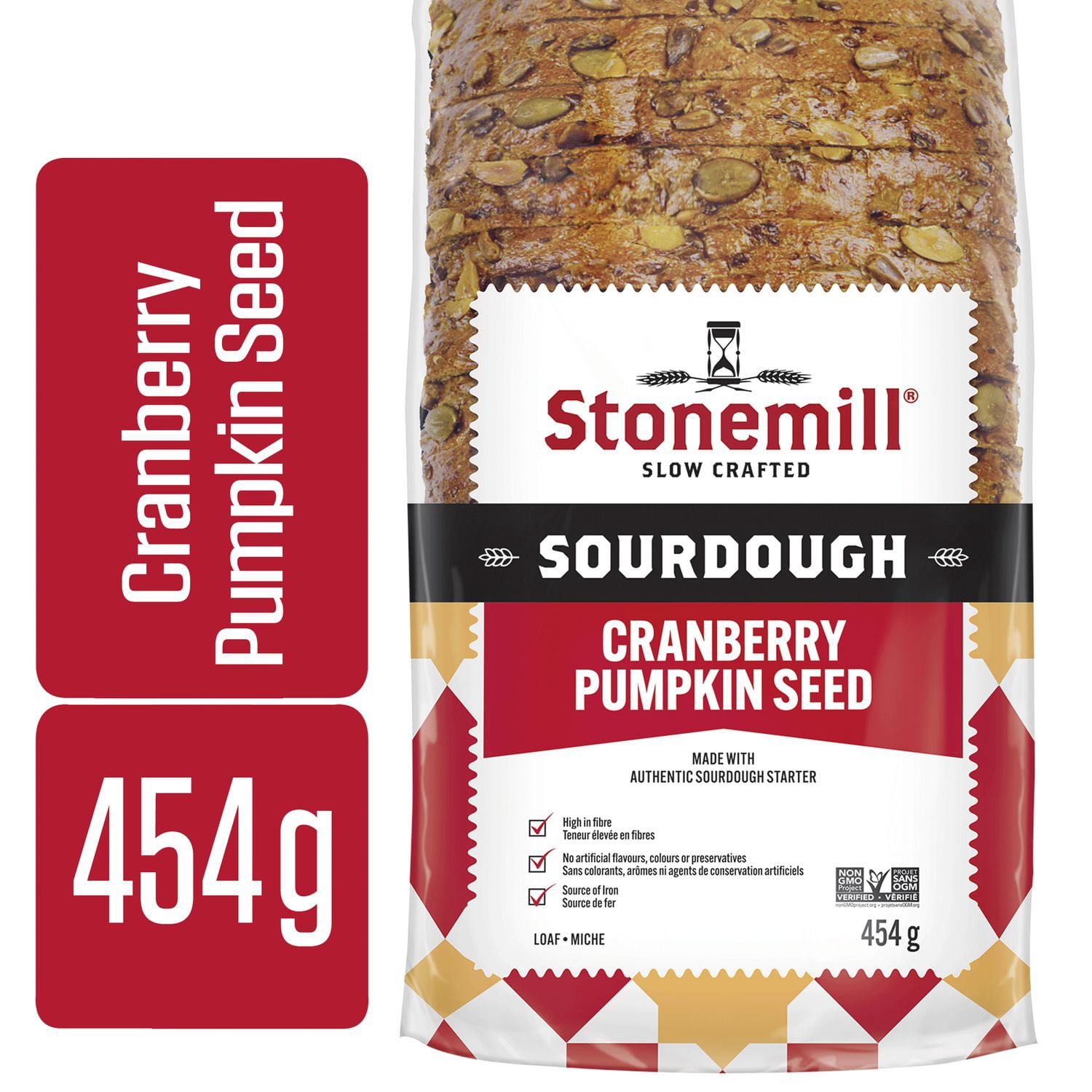
Pumpkinseed Cranberry Loaf
At a glance
Summary
The Pumpkinseed Cranberry Loaf contains beneficial ingredients such as a multigrain blend, sourdough, and seeds, which contribute to its nutritional value and fiber content. However, the presence of canola oil, a refined seed oil, and the use of enriched flour, which is less nutritious than whole grain flour, detract from its overall healthiness. The product is moderately processed, which limits its score despite the inclusion of some whole food ingredients.
Key ingredients 13
Pumpkin seedsVery Good
Pumpkin seeds are a nutrient-dense food rich in healthy fats, protein, and minerals like magnesium and zinc. They support heart health and provide antioxidant benefits. Their inclusion adds texture and nutritional value to the bread.
Benefits
Rich in healthy fats, protein, and minerals, supporting heart health and providing antioxidant benefits.
Multigrain blendGood
The multigrain blend includes whole grains like wheat flakes, rye meal, and flax seeds, which are rich in fiber and nutrients. Whole grains support digestive health and provide sustained energy. The variety of grains offers a diverse nutrient profile.
Benefits
Rich in fiber and nutrients, supporting digestive health and providing sustained energy.
SourdoughGood
Sourdough is made through natural fermentation, which can improve digestibility and nutrient absorption. The fermentation process can also enhance the flavor and texture of the bread. It may have a lower glycemic index compared to regular bread.
Benefits
Improves digestibility and nutrient absorption due to natural fermentation.
Sunflower seedsGood
Sunflower seeds are a good source of healthy fats, protein, and vitamin E. They support cardiovascular health and provide anti-inflammatory benefits. Their inclusion enhances the nutritional profile of the bread.
Benefits
Rich in healthy fats and vitamin E, supporting cardiovascular health and providing anti-inflammatory benefits.
Sea saltGood
Sea salt is a minimally processed source of sodium and trace minerals. It enhances flavor without the additives found in refined table salt. Its natural mineral content can provide additional health benefits.
Risks
Excessive consumption can lead to high blood pressure.
Benefits
Provides trace minerals and enhances flavor naturally.
Enriched flourNeutral
Enriched flour provides essential vitamins and minerals like iron and B vitamins. However, it is a refined carbohydrate with less fiber than whole grain alternatives. The enrichment process adds back some nutrients lost during milling.
Risks
May contribute to blood sugar spikes due to its refined nature.
Benefits
Provides essential nutrients like iron and B vitamins due to enrichment.
WaterNeutral
Water is a fundamental ingredient in bread making, providing moisture and aiding in the activation of yeast. It is a neutral ingredient with no direct nutritional impact. Its quality can affect the texture and rise of the bread.
Benefits
Essential for hydration and dough formation in bread making.
Dehydrated cranberriesNeutral
Dehydrated cranberries add natural sweetness and flavor to the bread. They contain added sugar, which can increase calorie content. The cranberries provide some antioxidants and vitamins.
Risks
Contains added sugar, which can contribute to increased calorie intake.
Benefits
Provides antioxidants and vitamins, adding natural sweetness and flavor.
YeastNeutral
Yeast is essential for leavening bread, contributing to its texture and flavor. It is a natural ingredient with no direct nutritional impact. Its fermentation process can enhance the bread's digestibility.
Benefits
Essential for leavening and contributes to bread's texture and flavor.
Cultured wheat flourNeutral
Cultured wheat flour is used to enhance flavor and shelf life through natural fermentation. It is a minimally processed ingredient with no significant health concerns. Its fermentation process can improve the bread's digestibility.
Benefits
Enhances flavor and shelf life through natural fermentation.
Apple cider vinegarNeutral
Apple cider vinegar is used for its acidity, which can enhance flavor and act as a natural preservative. It is a minimally processed ingredient with no significant health concerns. Its acidity can also aid in digestion.
Benefits
Enhances flavor and acts as a natural preservative.
Enzyme preparationNeutral
Enzyme preparation aids in dough conditioning and improving bread texture. It is a processing aid with no direct nutritional impact. Its use is common in bread making to enhance quality.
Benefits
Improves dough conditioning and bread texture.
Canola oilVery Bad
Canola oil is a refined seed oil high in omega-6 fatty acids, which can promote inflammation. It is heavily processed and often genetically modified. Its use is discouraged due to potential health concerns.
Risks
High omega-6 content may promote inflammation when consumed in excess.
Processing
Processed Foods
Get the full breakdown in the Scout appTake Scout shopping
Scan any product to see lab results, healthy alternatives, and your personalized analysis.
Are you Backerhaus? Fix an error Get the badge Get tested


