
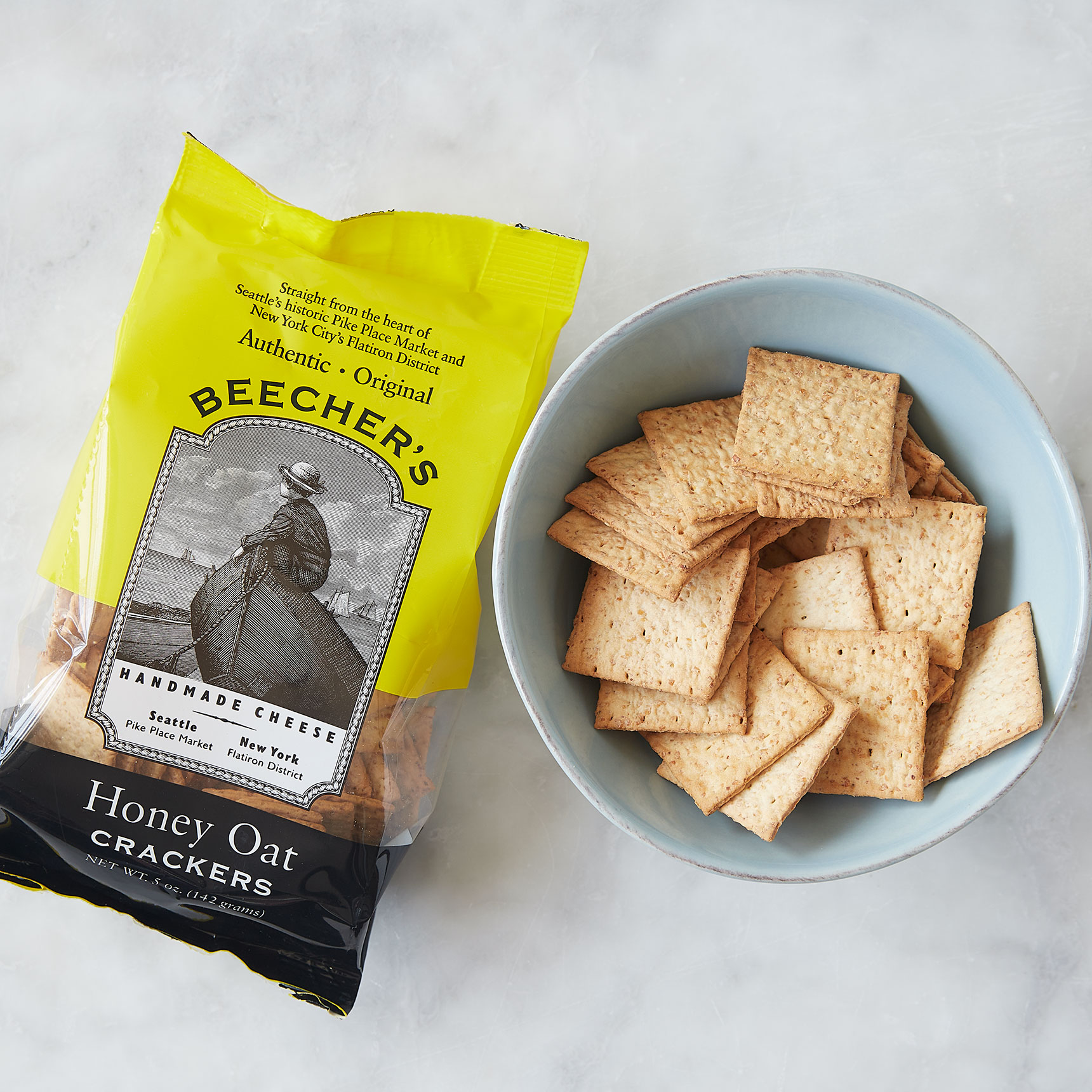


At a glance
Summary
The Honey Oat Crackers contain some beneficial ingredients like oat bran and butter, which provide fiber and healthy fats. However, the presence of refined cane sugar and enriched flour contributes to a higher level of processing and reduces the overall nutritional value. The product's processing level and the inclusion of refined ingredients limit its health score.
Key ingredients 8
Oat branGood
Oat bran is a high-fiber ingredient that supports digestive health. It contains beta-glucans, which can help lower cholesterol levels. As a whole grain component, it adds nutritional value to the product.
Benefits
Rich in soluble fiber, which aids in digestion and may help reduce cholesterol levels.
ButterGood
Butter is a natural source of saturated fats and fat-soluble vitamins. It provides a rich flavor and is less processed than many alternative fats. When sourced from grass-fed cows, it contains beneficial fatty acids like CLA.
Risks
High in saturated fats, which should be consumed in moderation.
Benefits
Contains fat-soluble vitamins and beneficial fatty acids when sourced from grass-fed cows.
HoneyGood
Traditional whole-food sweetener with trace enzymes and antioxidants.
Risks
High sugar content can contribute to health issues if consumed in excess.
Benefits
Contains antioxidants and is less processed than refined sugars.
Sea saltGood
Sea salt is a minimally processed source of sodium and trace minerals. It enhances flavor and provides essential electrolytes. Unlike refined table salt, it retains some natural minerals.
Risks
Excessive sodium intake can lead to hypertension and cardiovascular issues.
Benefits
Provides essential minerals and enhances flavor with minimal processing.
Enriched unbleached flourNeutral
Enriched unbleached flour is a refined carbohydrate that provides energy but lacks fiber. It is often fortified with vitamins and minerals to replace those lost during processing. While it is a common ingredient in baked goods, it does not offer significant nutritional benefits.
Risks
May contribute to blood sugar spikes and lacks the fiber found in whole grains.
Benefits
Provides a source of energy and is often fortified with essential nutrients.
Corn flourNeutral
Corn flour is a refined carbohydrate that provides energy but lacks fiber and protein. It is commonly used in baking and cooking. While it is gluten-free, it does not offer significant nutritional benefits.
Risks
May contribute to blood sugar spikes due to its refined nature.
Benefits
Provides energy and is a gluten-free alternative to wheat flour.
Baking sodaNeutral
Baking soda is a leavening agent used to help baked goods rise. It is chemically simple and generally considered safe in small amounts. It does not contribute significant nutritional value.
Risks
Excessive consumption can lead to alkalosis and electrolyte imbalances.
Benefits
Helps improve texture and volume in baked goods.
Cane sugarBad
Cane sugar is a refined sugar that can contribute to increased blood sugar levels. It is a common sweetener but offers no nutritional benefits beyond calories. Excessive consumption is linked to various health issues, including obesity and diabetes.
Risks
High intake can lead to obesity, diabetes, and other metabolic disorders.
Benefits
Provides quick energy but lacks essential nutrients.
Processing
Processed Foods
Get the full breakdown in the Scout appTake Scout shopping
Scan any product to see lab results, healthy alternatives, and your personalized analysis.
Download on theApp Store GET IT ONGoogle Play