
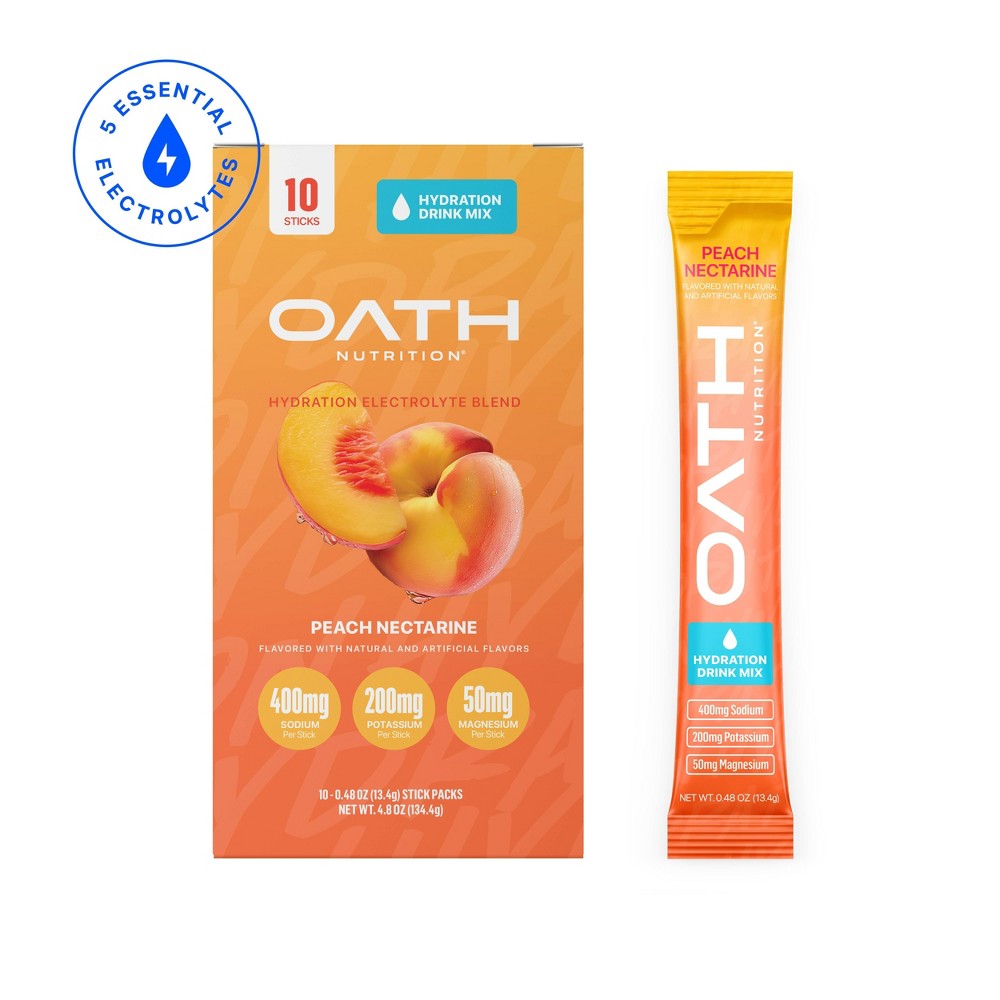


Oath Nutrition Hydration Electrolyte Packets Powdered Electrolyte Drink Mix - Peach Nectarine - 10pk
Analysis updated September 2026 · How Scout scores
At a glance
Summary
This electrolyte product contains beneficial ingredients like magnesium bisglycinate and pink Himalayan salt, which support hydration and electrolyte balance. However, the presence of cane sugar and natural flavors, which are highly processed and lack transparency, detracts from its overall healthiness. The product is moderately processed with a few additives, but it avoids artificial dyes and sweeteners, maintaining a balance between beneficial and less desirable components.
Key ingredients 15
Sodium CitrateGood
Beneficial ingredient — whole-food or functional value in this product class.
Risks
Excessive intake may contribute to sodium overload, affecting blood pressure.
Benefits
Helps regulate acidity and improve the texture of the product.
Magnesium BisglycinateGood
Magnesium bisglycinate is a highly absorbable form of magnesium, an essential mineral for muscle and nerve function. It is chelated with glycine, enhancing its bioavailability and reducing gastrointestinal discomfort. This form of magnesium is beneficial for maintaining electrolyte balance and supporting overall health.
Benefits
Supports muscle and nerve function, and helps maintain electrolyte balance.
Pink Himalayan SaltGood
Pink Himalayan salt is a natural mineral salt containing trace elements and minerals. It is less processed than regular table salt and provides essential electrolytes. Its mineral content can support hydration and electrolyte balance.
Risks
Excessive consumption can lead to high sodium intake, affecting blood pressure.
Benefits
Provides essential electrolytes and trace minerals that support hydration.
Potassium ChlorideGood
Potassium chloride is a source of potassium, an essential electrolyte that helps maintain fluid balance and muscle function. It is often used as a salt substitute and is beneficial for cardiovascular health. Adequate potassium intake is crucial for preventing muscle cramps and maintaining normal blood pressure.
Risks
Excessive intake can lead to hyperkalemia, especially in individuals with kidney issues.
Benefits
Supports cardiovascular health and helps maintain electrolyte balance.
Malic AcidNeutral
Malic acid is a naturally occurring acid found in fruits, used to enhance flavor and acidity in foods. It is generally recognized as safe and is used in small amounts in food products. It can improve the taste profile without significant health concerns.
Benefits
Enhances flavor and acidity, making the product more palatable.
Citric AcidNeutral
Citric acid is a natural acid found in citrus fruits, used as a preservative and flavor enhancer in foods. It is widely used in the food industry and is considered safe in moderate amounts. It helps improve the taste and shelf life of the product.
Benefits
Enhances flavor and acts as a preservative, extending the product's shelf life.
Silicon DioxideNeutral
Silicon dioxide is an anti-caking agent used to prevent clumping in powdered products. It is naturally occurring and considered safe for consumption in small amounts. It ensures the product remains free-flowing and easy to mix.
Benefits
Prevents clumping, ensuring the product remains easy to use.
Calcium SilicateNeutral
Calcium silicate is used as an anti-caking agent in food products. It is effective in absorbing moisture and preventing clumping. It is generally recognized as safe and does not contribute significant nutritional value.
Benefits
Helps maintain the product's texture by preventing clumping.
Calcium CarbonateNeutral
Calcium carbonate is a common form of calcium used as a dietary supplement and food additive. It is used to fortify foods with calcium, supporting bone health. While it is a good source of calcium, its absorption can be less efficient compared to other forms.
Risks
Excessive intake may lead to hypercalcemia or kidney stones.
Benefits
Provides a source of calcium, supporting bone health and preventing deficiencies.
Reb M (Stevia)Neutral
Reb M is a highly purified form of stevia, a natural sweetener derived from the stevia plant. It provides sweetness without calories and is considered safe for consumption. It is a popular alternative to artificial sweeteners, offering a natural option for reducing sugar intake.
Benefits
Offers a calorie-free sweetening option, helping to reduce overall sugar intake.
Turmeric (Color)Neutral
Turmeric is used as a natural coloring agent, providing a yellow hue to foods. It is derived from the turmeric root and is known for its anti-inflammatory properties. However, in this context, it is primarily used for color rather than its health benefits.
Benefits
Provides natural color without artificial dyes, and may offer anti-inflammatory benefits.
Vegetable Juice (Color)Neutral
Vegetable juice is used as a natural coloring agent in food products. It provides color without the use of artificial dyes and is derived from natural sources. While it adds visual appeal, it does not contribute significant nutritional value.
Benefits
Offers natural coloring, enhancing the product's appearance without artificial additives.
Cane SugarBad
Cane sugar is a source of simple carbohydrates that can lead to rapid spikes in blood sugar levels. It is highly processed and contributes to the overall sugar content of the product. Excessive consumption of added sugars is linked to various health issues, including obesity and metabolic syndrome.
Risks
High intake of added sugars can increase the risk of obesity, type 2 diabetes, and heart disease.
MaltodextrinBad
Processed additive flagged under Scout's ingredient doctrine.
Risks
May cause spikes in blood sugar levels and contribute to weight gain if consumed in large amounts.
Benefits
Provides a quick source of energy, which can be beneficial during intense physical activity.
Natural FlavorsBad
Natural flavors are a catch-all term for flavoring agents derived from natural sources. They are highly processed and can contain a variety of chemical compounds. The lack of transparency in their composition raises concerns about potential allergens and additives.
Risks
May contain undisclosed allergens or additives, leading to potential health concerns.
Processing
Ultra-Processed Foods
Get the full breakdown in the Scout appTake Scout shopping
Scan any product to see lab results, healthy alternatives, and your personalized analysis.
Download on theApp Store GET IT ONGoogle Play