
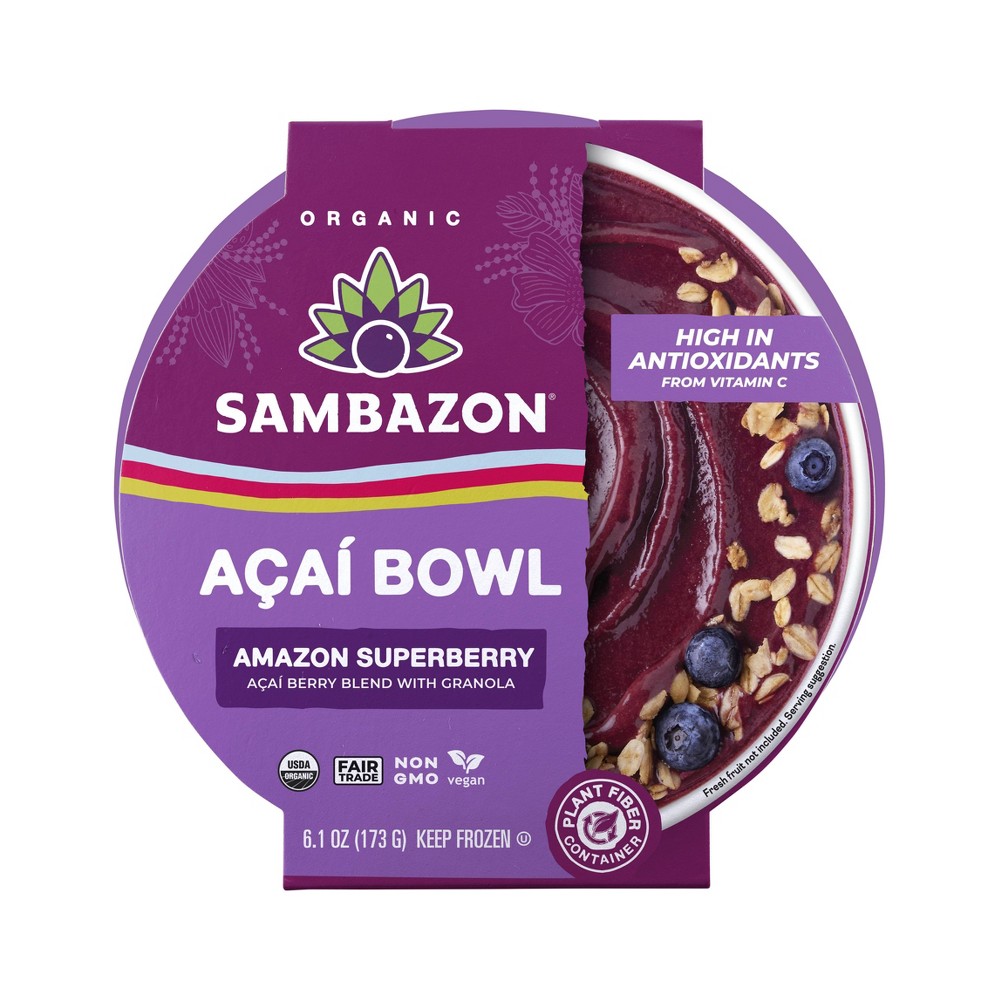


Sambazon Frozen Superberry Acai Bowl - 6.1oz
Analysis updated August 2026 · How Scout scores
At a glance
Summary
This product contains beneficial ingredients like açaí puree, acerola juice, oats, coconut oil, and cashews, which provide antioxidants, healthy fats, and essential nutrients. However, it is ultra-processed and includes refined sugars such as cane syrup and brown sugar, as well as additives like sunflower lecithin and vague 'flavor' components. The presence of these processed ingredients and additives limits its healthiness despite some nutritional benefits.
Key ingredients 16
Açaí PureeVery Good
Açaí puree is rich in antioxidants and healthy fats, supporting heart health and reducing inflammation. It is minimally processed and retains most of its natural nutrients. The fair trade certification indicates ethical sourcing practices.
Benefits
Rich in antioxidants, particularly anthocyanins, which may help reduce oxidative stress and inflammation. Contains healthy fats that support cardiovascular health.
OatsVery Good
Oats are a whole grain rich in fiber and essential nutrients, supporting heart health and digestion. They are minimally processed and provide a source of complex carbohydrates. Oats can help regulate blood sugar levels and provide sustained energy.
Benefits
Rich in dietary fiber, which supports digestive health and may help lower cholesterol levels.
Acerola JuiceGood
Acerola juice is high in vitamin C and antioxidants, supporting immune function and skin health. It is derived from acerola cherries, which are minimally processed to retain nutrients. The juice adds natural flavor and nutritional value to the product.
Benefits
Rich in vitamin C, which supports immune health and acts as an antioxidant.
Coconut OilGood
Coconut oil is a source of medium-chain triglycerides (MCTs) that may support metabolism and energy levels. It is minimally processed and retains beneficial compounds. Coconut oil is a healthier alternative to seed oils.
Risks
High in saturated fats, which should be consumed in moderation.
Benefits
Contains MCTs that may support metabolism and provide quick energy.
CashewsGood
Cashews are a nutrient-dense nut rich in healthy fats, protein, and essential minerals. They are minimally processed and provide a source of plant-based protein. Cashews support heart health and provide beneficial nutrients.
Risks
May cause allergic reactions in individuals with nut allergies.
Benefits
Rich in healthy fats, protein, and minerals like magnesium and zinc, supporting overall health.
Filtered WaterNeutral
Filtered water is used as a base ingredient and does not contribute any significant nutritional value. It is essential for consistency and texture in food products. The filtration process ensures the removal of impurities.
See more about Filtered Water →ErythritolNeutral
Erythritol is a sugar alcohol used as a low-calorie sweetener. It is less likely to cause digestive issues compared to other sugar alcohols. It does not raise blood sugar levels, making it suitable for diabetics.
Risks
Excessive consumption may cause digestive discomfort in sensitive individuals.
Benefits
Provides sweetness without significant calories and does not affect blood sugar levels.
Fruit & Vegetable JuiceNeutral
Fruit and vegetable juice is used for natural coloring and flavoring. It is minimally processed but does not contribute significant nutritional value in small quantities. The juice provides a natural alternative to artificial colors.
Benefits
Provides natural color and flavor without artificial additives.
Citric AcidNeutral
Citric acid is a natural preservative and flavor enhancer derived from citrus fruits. It is widely used in food products to maintain freshness and enhance flavor. The ingredient is generally recognized as safe when used in moderation.
Risks
Excessive consumption may cause dental erosion or digestive discomfort.
Benefits
Helps preserve freshness and enhance flavor without significant nutritional benefits.
Locust Bean GumNeutral
Locust bean gum is a natural thickener derived from carob seeds. It is used to improve texture and stability in food products. The ingredient is generally recognized as safe and minimally processed.
Risks
Excessive consumption may cause digestive discomfort in sensitive individuals.
Benefits
Provides natural thickening properties without significant nutritional benefits.
Guar GumNeutral
Guar gum is a natural thickening agent derived from guar beans. It is used to enhance texture and stability in food products. The ingredient is generally recognized as safe and minimally processed.
Risks
Excessive consumption may cause digestive discomfort in sensitive individuals.
Benefits
Provides natural thickening properties without significant nutritional benefits.
Tapioca SyrupBad
Processed additive flagged under Scout's ingredient doctrine.
Risks
Excessive consumption may contribute to increased blood sugar levels.
Benefits
Provides a natural source of sweetness with a lower glycemic index compared to refined sugars.
Cane SyrupBad
Cane syrup is a refined sugar product that contributes to increased calorie and sugar intake. It is processed and lacks the nutritional benefits of whole cane sugar. Regular consumption can lead to health issues like obesity and diabetes.
Risks
High sugar content may lead to increased risk of obesity, diabetes, and dental issues.
Benefits
Provides quick energy but lacks significant nutritional benefits.
Sunflower LecithinBad
Sunflower lecithin is an emulsifier used to improve texture and consistency. It is processed and may contain residues from extraction methods. While it is less concerning than soy lecithin, it still lacks nutritional benefits.
Risks
May contain residues from processing and extraction methods.
Benefits
Improves texture and consistency in food products.
FlavorBad
The term 'flavor' is vague and can include a variety of artificial or natural additives. It lacks transparency and may include undesirable additives. The lack of specificity makes it difficult to assess health impacts.
Risks
May contain artificial additives or allergens not disclosed on the label.
Brown SugarBad
Brown sugar is a refined sugar product that contributes to increased calorie and sugar intake. It is processed and lacks the nutritional benefits of whole cane sugar. Regular consumption can lead to health issues like obesity and diabetes.
Risks
High sugar content may lead to increased risk of obesity, diabetes, and dental issues.
Benefits
Provides quick energy but lacks significant nutritional benefits.
Processing
Ultra-Processed Foods
Get the full breakdown in the Scout appTake Scout shopping
Scan any product to see lab results, healthy alternatives, and your personalized analysis.
Download on theApp Store GET IT ONGoogle Play