
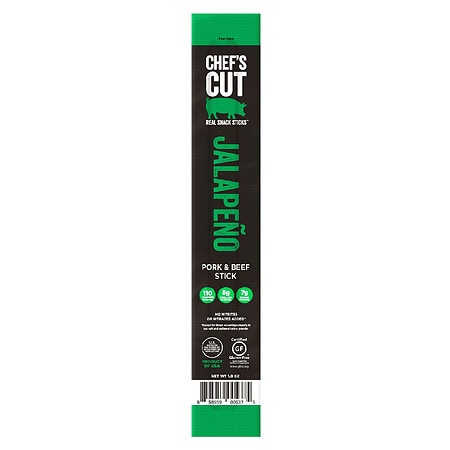



RSJ Ventures Chefs Cut Pork & Beef Stick, 1 oz
Analysis updated September 2026 · How Scout scores
At a glance
Summary
This pork and beef stick contains high-quality protein sources like pork and beef, along with beneficial spices and dehydrated vegetables. However, it includes dextrose, a simple sugar that can contribute to insulin resistance and weight gain. The product is moderately processed, which limits its score despite the presence of mostly clean ingredients.
Key ingredients 11
PorkGood
Pork is a high-quality source of protein and essential nutrients. It provides a rich amino acid profile necessary for muscle maintenance and repair. When sourced from well-raised animals, it can be a nutritious part of the diet.
Risks
Potential risks include high saturated fat content and possible contamination if not properly cooked.
Benefits
Rich in protein and essential vitamins such as B vitamins, which support energy metabolism and brain function.
BeefGood
Beef is a nutrient-dense source of high-quality protein and essential nutrients like iron and zinc. It supports muscle growth and maintenance due to its complete amino acid profile. Grass-fed beef is particularly beneficial due to higher omega-3 fatty acids.
Risks
Excessive consumption may increase the risk of heart disease due to saturated fat content.
Benefits
Provides essential nutrients such as iron, which is crucial for oxygen transport in the blood, and zinc, which supports immune function.
Sea SaltGood
Sea salt is a natural source of sodium and trace minerals. It is less processed than table salt and retains beneficial minerals. It enhances flavor without the need for artificial additives.
Risks
Excessive sodium intake can lead to high blood pressure and cardiovascular issues.
Benefits
Contains trace minerals that can support electrolyte balance and hydration.
Dehydrated VegetablesGood
Dehydrated vegetables like jalapeno pepper and garlic add flavor and nutrients without added calories. They provide vitamins and antioxidants that support overall health. Dehydration preserves these nutrients while extending shelf life.
Benefits
Rich in antioxidants and vitamins that support immune function and reduce inflammation.
Black PepperGood
Black pepper is a spice that enhances flavor and has potential health benefits. It contains piperine, which may improve nutrient absorption. It also has antioxidant properties that can support health.
Benefits
May enhance nutrient absorption and has antioxidant properties that support overall health.
SpicesGood
Whole-food seasonings, antioxidant-bearing.
Benefits
May provide antioxidant benefits and enhance flavor without adding calories.
Encapsulated Citric AcidNeutral
Encapsulated citric acid is used as a preservative and flavor enhancer. It helps maintain product freshness and stability. The encapsulation process allows for controlled release in food products.
Benefits
Helps preserve food and enhance flavor without significant health impacts.
Cultured Celery PowderNeutral
Cultured celery powder is used as a natural preservative due to its nitrate content. It is often used in processed meats as a curing agent. While it is a natural alternative to synthetic nitrates, it still contributes to nitrate intake.
Risks
Excessive nitrate consumption may be linked to health concerns, but the risk is lower with natural sources.
Benefits
Acts as a natural preservative, helping to extend shelf life and maintain product safety.
Jalapeno PowderNeutral
Jalapeno powder adds spice and flavor to foods. It contains capsaicin, which may have metabolism-boosting properties. Used in small amounts, it contributes minimal calories.
Benefits
May boost metabolism and add flavor without significant caloric impact.
Cherry PowderNeutral
Cherry powder is used for flavor and potential antioxidant benefits. It is derived from cherries, which are rich in vitamins and antioxidants. The powder form allows for easy incorporation into foods.
Benefits
Provides antioxidants and vitamins that support overall health.
DextroseBad
Dextrose is a simple sugar that can rapidly increase blood sugar levels. It is often used as a sweetener or preservative in processed foods. Frequent consumption of dextrose can contribute to insulin resistance and weight gain.
Risks
High intake can lead to blood sugar spikes and increased risk of metabolic disorders.
Processing
Processed Foods
Get the full breakdown in the Scout appTake Scout shopping
Scan any product to see lab results, healthy alternatives, and your personalized analysis.
Download on theApp Store GET IT ONGoogle Play