
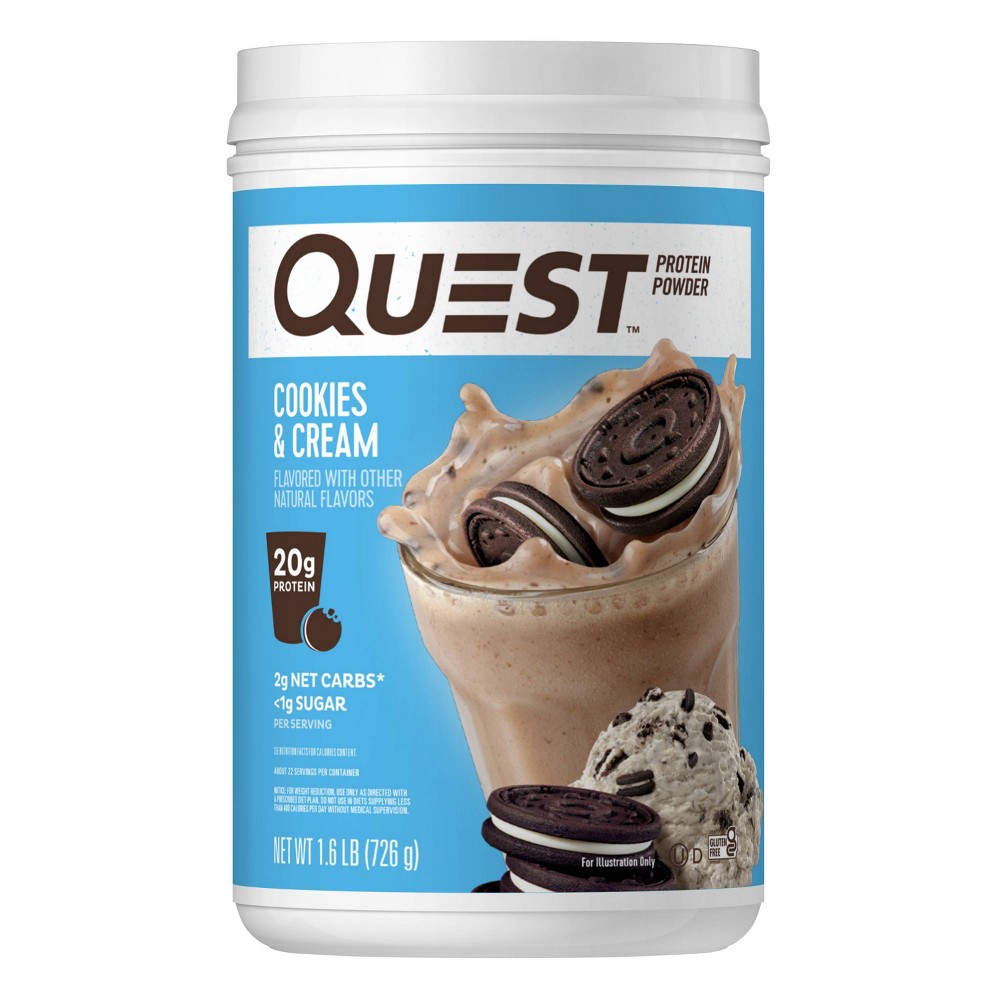



COOKIES & CREAM PROTEIN POWDER
Analysis updated September 2026 · How Scout scores
At a glance
Summary
This protein powder contains a blend of high-quality proteins such as whey protein isolate and micellar casein, which are beneficial for muscle growth and recovery. However, the presence of sucralose, an artificial sweetener, and natural flavors, which lack transparency, slightly detracts from its overall health profile. Additionally, the inclusion of multiple additives, although common in flavored protein powders, contributes to a moderate level of processing.
Key ingredients 18
Whey Protein IsolateVery Good
Whey protein isolate is a high-quality protein source with a complete amino acid profile, supporting muscle growth and recovery. It is processed to remove most fats and lactose, making it suitable for those with lactose intolerance. Compared to other protein sources, it is rapidly absorbed, enhancing its effectiveness post-exercise.
Benefits
Rich in essential amino acids, it supports muscle repair and growth.
Micellar CaseinGood
Micellar casein is a slow-digesting protein that provides a sustained release of amino acids, beneficial for muscle maintenance. It is minimally processed, retaining its natural structure. This makes it ideal for prolonged periods without food, such as overnight.
Benefits
Supports muscle maintenance and recovery over extended periods.
Milk Protein IsolateGood
Milk protein isolate contains both whey and casein proteins, offering a balanced amino acid profile. It is processed to remove lactose and fats, making it suitable for those with lactose intolerance. This combination supports both immediate and sustained muscle protein synthesis.
Benefits
Provides a balanced release of amino acids for muscle growth and recovery.
Coconut OilGood
Beneficial ingredient — whole-food or functional value in this product class.
Risks
High in saturated fats, which may impact heart health if consumed excessively.
Benefits
Contains MCTs that may provide quick energy.
Cocoa ButterGood
Natural traditional fat pressed from cacao.
Risks
High in saturated fats, which may impact heart health if consumed excessively.
Benefits
Provides a smooth texture and flavor.
ErythritolNeutral
Erythritol is a sugar alcohol used as a low-calorie sweetener, providing sweetness without raising blood sugar levels. It is generally well-tolerated and does not cause digestive issues like other sugar alcohols. However, excessive consumption may lead to mild digestive discomfort.
Risks
Excessive consumption may cause mild digestive discomfort.
Benefits
Provides sweetness without calories or blood sugar spikes.
Cocoa Processed With AlkaliNeutral
Cocoa processed with alkali, also known as Dutch-processed cocoa, has a milder flavor and is less acidic. The alkalization process reduces some of the beneficial flavonoids found in natural cocoa. It is primarily used for flavor and does not offer significant nutritional benefits.
Risks
Alkalization reduces beneficial flavonoid content.
Benefits
Provides flavor with a milder taste profile.
Soluble Corn FiberNeutral
Soluble corn fiber is a prebiotic fiber that can aid in digestive health by promoting beneficial gut bacteria. It is processed to enhance its solubility and fiber content. While it supports digestive health, it does not provide significant nutritional value beyond fiber.
Benefits
Supports digestive health by promoting beneficial gut bacteria.
Cellulose GumNeutral
Cellulose gum is a thickening agent derived from plant fibers, used to improve texture and stability. It is generally recognized as safe and does not provide nutritional benefits. It is inert in the digestive system and passes through without being absorbed.
Benefits
Improves texture and stability without being absorbed.
Xanthan GumNeutral
Xanthan gum is a polysaccharide used as a thickening and stabilizing agent in foods. It is produced through fermentation and is generally recognized as safe. It does not provide nutritional benefits but enhances the texture and consistency of products.
Benefits
Enhances texture and consistency without nutritional impact.
SaltNeutral
Salt is used to enhance flavor and preserve food. It is a natural mineral but should be consumed in moderation to avoid health issues like hypertension. It does not provide significant nutritional benefits beyond sodium.
Risks
Excessive consumption may lead to hypertension and other health issues.
Benefits
Enhances flavor and acts as a preservative.
Sodium CaseinateNeutral
Sodium caseinate is a protein derived from casein, used to improve texture and stability in food products. It is processed to enhance solubility and does not provide significant nutritional benefits beyond protein content. It is generally recognized as safe for consumption.
Benefits
Improves texture and provides protein content.
Silicon DioxideNeutral
Silicon dioxide is used as an anti-caking agent to prevent clumping in powdered products. It is naturally occurring and generally recognized as safe. It does not provide nutritional benefits but ensures product consistency.
Benefits
Prevents clumping and ensures product consistency.
Steviol GlycosidesNeutral
Steviol glycosides are natural sweeteners derived from the stevia plant, providing sweetness without calories. They are processed to isolate the sweet compounds and are generally recognized as safe. They do not impact blood sugar levels, making them suitable for diabetics.
Benefits
Provides sweetness without calories or blood sugar impact.
Baking SodaNeutral
Baking soda is used as a leavening agent to improve texture and volume in baked goods. It is a natural compound and is generally recognized as safe. It does not provide nutritional benefits but enhances product texture.
Benefits
Enhances texture and volume in baked goods.
Natural FlavorsBad
Natural flavors are a catch-all term for flavoring agents derived from natural sources but can be highly processed. The lack of transparency about their specific composition raises concerns about potential allergens or additives. They do not provide nutritional benefits and may mask the quality of the product.
Risks
Potential allergens or additives may be present due to lack of transparency.
Sunflower LecithinBad
Sunflower lecithin is an emulsifier used to improve texture and mixability in products. It is derived from sunflower seeds and is less processed than soy lecithin but still involves chemical extraction. While it aids in product stability, it does not offer nutritional benefits.
Risks
Potential for chemical residues from extraction process.
Benefits
Improves texture and mixability in products.
SucraloseBad
Sucralose is an artificial sweetener used to provide sweetness without calories. It is chemically modified to be non-caloric and is much sweeter than sugar. Concerns exist about its potential impact on gut health and insulin response.
Risks
May impact gut health and insulin response with excessive consumption.
Benefits
Provides sweetness without adding calories.
Processing
Ultra-Processed Foods
Get the full breakdown in the Scout appTake Scout shopping
Scan any product to see lab results, healthy alternatives, and your personalized analysis.
Download on theApp Store GET IT ONGoogle Play