
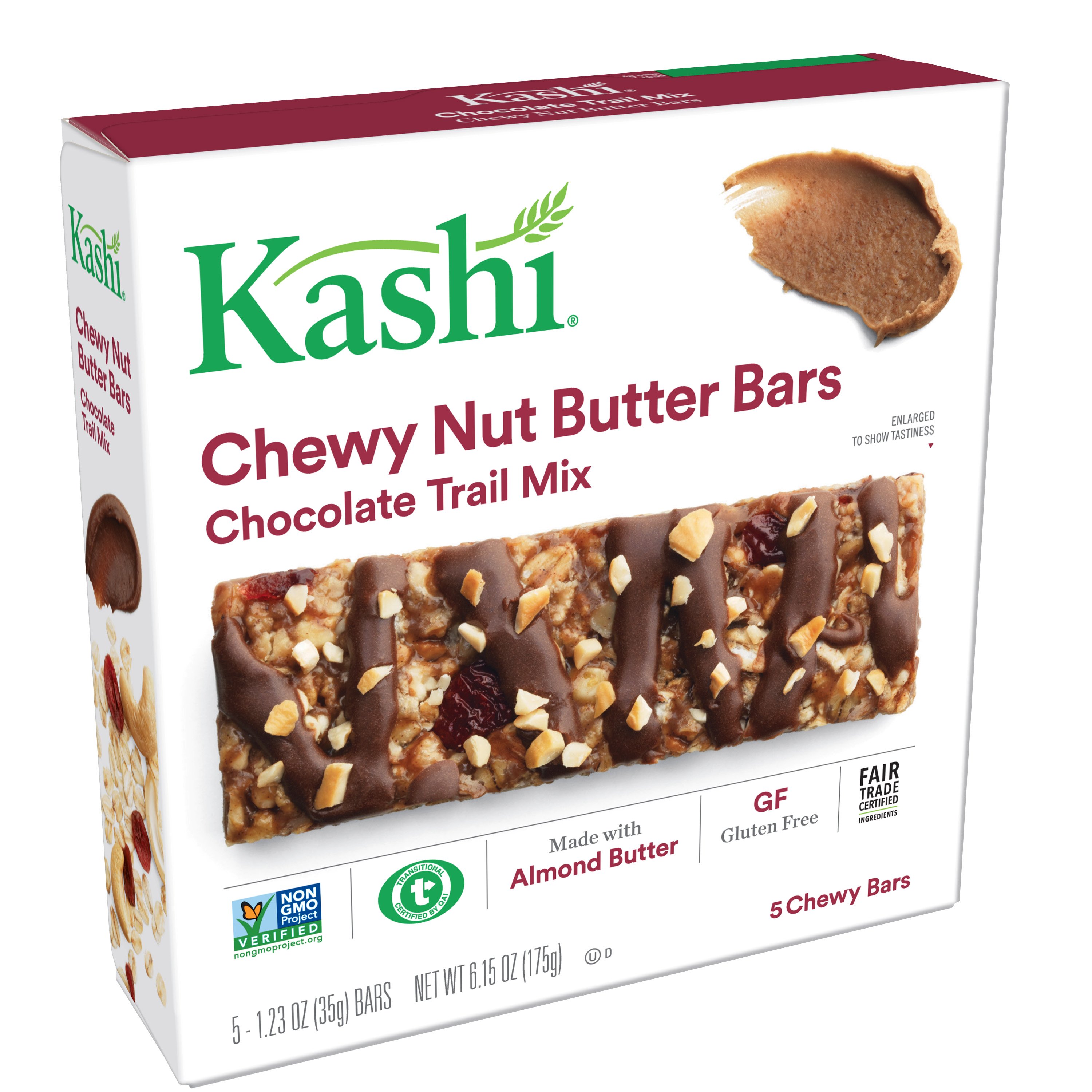



Kashi Chewy Bars Chocolate Trail Mix 1.23oz
Analysis updated May 2026 · How Scout scores
At a glance
Summary
This product contains several beneficial ingredients like whole grain oats, cashews, and almond butter, which are minimally processed and provide essential nutrients. However, it is heavily processed and includes refined ingredients such as cane sugar and palm oil, which are associated with negative health impacts. The presence of natural flavors and the overall high level of processing limit its healthiness despite the organic certification of some components.
Key ingredients 18
Whole Grain OatsVery Good
Whole grain oats are a rich source of dietary fiber and essential nutrients. They are minimally processed, retaining their natural nutritional profile. Organic certification ensures no synthetic pesticides or fertilizers were used.
Benefits
Rich in beta-glucan, which can help lower cholesterol levels and improve heart health.
CashewsGood
Cashews are a good source of healthy fats, protein, and essential minerals. They are minimally processed and provide a creamy texture to foods. Organic certification ensures they are free from synthetic pesticides.
Risks
Potential allergen for individuals with nut allergies.
Benefits
Rich in monounsaturated fats that support heart health and provide essential nutrients like magnesium.
SorghumGood
Sorghum is a whole grain that is high in fiber and antioxidants. It is minimally processed, retaining its nutritional benefits. It is gluten-free, making it suitable for those with gluten sensitivities.
Benefits
Contains antioxidants that may help reduce inflammation and support overall health.
Almond ButterGood
Almond butter is a nutritious spread made from ground almonds. It is minimally processed and provides healthy fats and protein. Organic certification ensures it is free from synthetic pesticides.
Risks
Potential allergen for individuals with nut allergies.
Benefits
Rich in monounsaturated fats and vitamin E, supporting heart health and skin health.
AlmondsGood
Almonds are a nutrient-dense nut rich in healthy fats, protein, and vitamins. They are minimally processed and provide a crunchy texture. Organic certification ensures they are free from synthetic pesticides.
Risks
Potential allergen for individuals with nut allergies.
Benefits
High in vitamin E and magnesium, supporting heart health and bone health.
DatesGood
Dates are a natural sweetener rich in fiber and essential nutrients. They are minimally processed and provide natural sugars. Organic certification ensures they are free from synthetic chemicals.
Risks
High natural sugar content may contribute to calorie intake if consumed in excess.
Benefits
Rich in fiber and antioxidants, supporting digestive health and reducing inflammation.
Coconut OilGood
Coconut oil is a source of medium-chain triglycerides (MCTs) that provide quick energy. It is minimally processed and retains its natural properties. Organic certification ensures it is free from synthetic chemicals.
Risks
High in saturated fats, which should be consumed in moderation.
Benefits
Contains MCTs that may support metabolism and provide quick energy.
CranberriesGood
Cranberries are a fruit rich in antioxidants and vitamins. They are minimally processed and provide natural sweetness. Organic certification ensures they are free from synthetic pesticides.
Risks
High natural sugar content may contribute to calorie intake if consumed in excess.
Benefits
Rich in antioxidants that support urinary tract health and reduce inflammation.
FigsGood
Figs are a fruit rich in fiber and essential nutrients. They are minimally processed and provide natural sweetness. Organic certification ensures they are free from synthetic pesticides.
Risks
High natural sugar content may contribute to calorie intake if consumed in excess.
Benefits
Rich in fiber and antioxidants, supporting digestive health and reducing inflammation.
Oat FiberGood
Oat fiber is a source of dietary fiber that supports digestive health. It is minimally processed and retains its natural properties. Organic certification ensures it is free from synthetic chemicals.
Benefits
Supports digestive health and may help lower cholesterol levels.
Rosemary ExtractGood
Rosemary extract is used as a natural preservative due to its antioxidant properties. It is minimally processed and derived from rosemary leaves. Organic certification ensures it is free from synthetic chemicals.
Benefits
Contains antioxidants that help preserve food freshness and may support health.
Brown Rice SyrupNeutral
Brown rice syrup is a sweetener derived from brown rice. It is less processed than high fructose corn syrup but still contributes to sugar intake. Organic certification indicates no synthetic chemicals were used in its production.
Risks
High glycemic index may cause spikes in blood sugar levels.
Benefits
Provides a mild sweetness with a lower fructose content compared to other sweeteners.
Dried Brown Rice SyrupNeutral
Dried brown rice syrup is a concentrated sweetener from brown rice. It is less processed than refined sugars but still adds to overall sugar intake. Organic certification indicates no synthetic chemicals were used.
Risks
High glycemic index may lead to rapid increases in blood sugar levels.
Benefits
Provides a natural sweetness with a lower fructose content compared to other sweeteners.
ChocolateNeutral
Chocolate provides flavor and contains antioxidants like flavonoids. It is processed to remove cocoa butter and add sugar. Organic certification ensures it is free from synthetic chemicals.
Risks
Contains added sugars and fats, which can contribute to calorie intake.
Benefits
Contains flavonoids that may support heart health and improve mood.
SaltNeutral
Salt is used to enhance flavor and preserve food. It is minimally processed but should be consumed in moderation. Excessive intake can lead to health issues.
Risks
High sodium intake can lead to hypertension and cardiovascular issues.
Benefits
Essential for maintaining fluid balance and nerve function.
Cane SugarBad
Cane sugar is a refined sweetener that contributes to calorie intake without providing essential nutrients. It is processed to remove impurities and molasses. Organic certification ensures it is free from synthetic chemicals.
Risks
High consumption can lead to weight gain and increased risk of metabolic diseases.
Palm OilBad
Palm oil is a saturated fat that is often used in processed foods. It is highly processed and can contribute to deforestation and habitat destruction. Its high saturated fat content can impact heart health negatively.
Risks
High in saturated fats, which can increase cholesterol levels and risk of heart disease.
Natural FlavorsBad
Natural flavors are additives used to enhance taste but lack nutritional value. They are highly processed and can contain multiple chemical compounds. Their vague labeling can mask the presence of allergens or synthetic additives.
Risks
May contain allergens or synthetic additives not disclosed on the label.
Processing
Ultra-Processed Foods
Get the full breakdown in the Scout appTake Scout shopping
Scan any product to see lab results, healthy alternatives, and your personalized analysis.
Download on theApp Store GET IT ONGoogle Play