
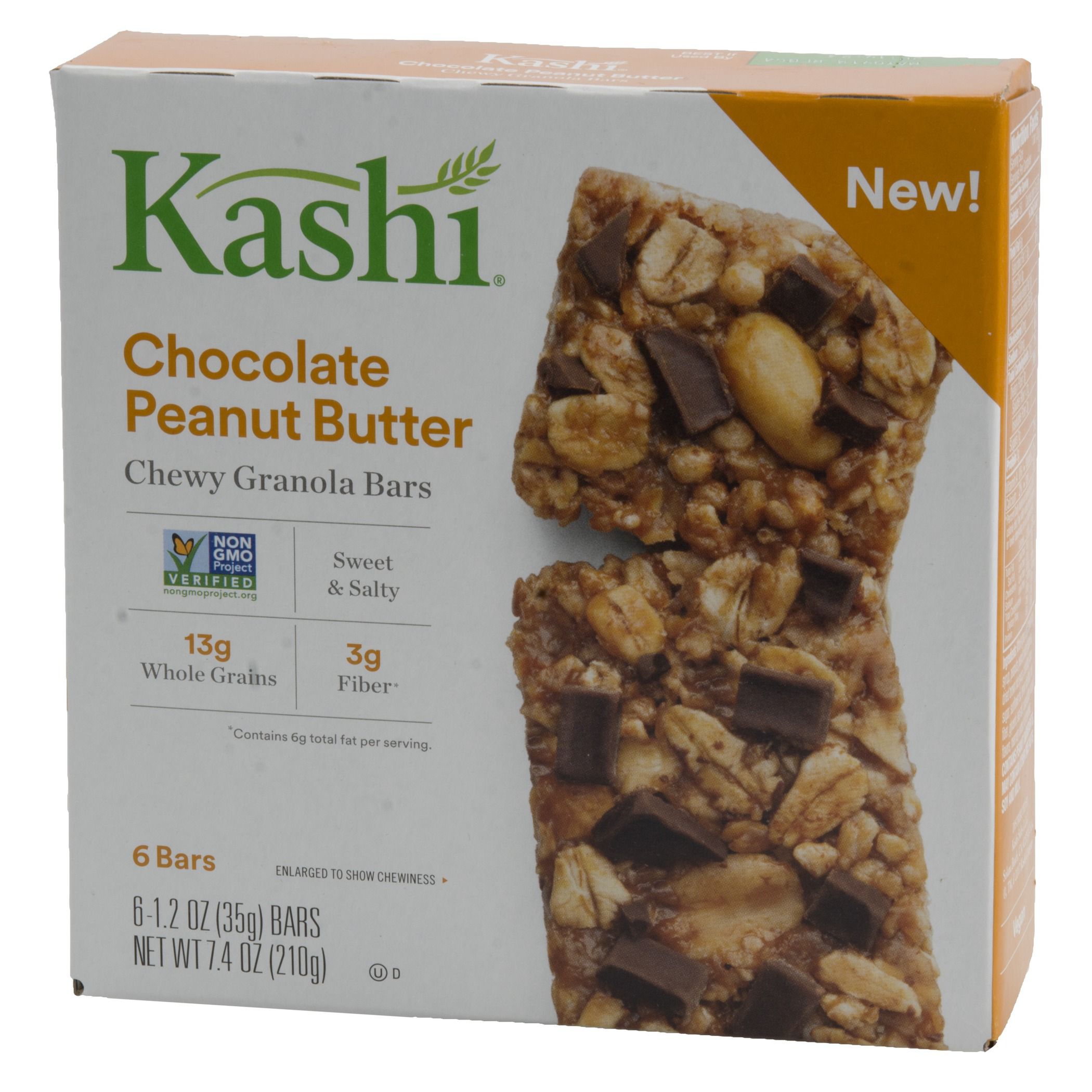

Kashi Chewy Bars Chocolate Peanut Butter 1.2oz
Analysis updated May 2026 · How Scout scores
At a glance
Summary
This product contains beneficial ingredients like whole grain oats and peanuts, which provide fiber and healthy fats. However, it is heavily processed and includes refined ingredients such as cane sugar and sunflower oil, which are associated with negative health impacts. The presence of natural flavors and the overall high level of processing further reduce its healthiness score.
Key ingredients 15
Whole Grain OatsVery Good
Whole grain oats are a nutritious source of complex carbohydrates and fiber. They are minimally processed and retain their natural nutrients. Oats can help regulate blood sugar levels and support heart health.
Benefits
Rich in dietary fiber, which aids digestion and promotes satiety. Contains beta-glucans that may lower cholesterol levels.
PeanutsGood
Peanuts are a good source of plant-based protein and healthy fats. They are minimally processed and provide essential nutrients like magnesium and vitamin E. Peanuts can support heart health when consumed in moderation.
Risks
Potential allergen for some individuals, which can cause severe allergic reactions.
Benefits
Rich in monounsaturated fats and protein, supporting heart health and muscle maintenance.
Peanut ButterGood
Peanut butter is made from ground peanuts and is a source of healthy fats and protein. It is minimally processed when made without added sugars or oils. Peanut butter can be a nutritious addition to a balanced diet.
Risks
Potential allergen for some individuals, which can cause severe allergic reactions.
Benefits
Provides healthy fats and protein, supporting satiety and energy levels.
Brown Rice FlourGood
Beneficial ingredient — whole-food or functional value in this product class.
Benefits
Provides some fiber and nutrients compared to more refined flours.
Oat FiberGood
Oat fiber is a concentrated source of dietary fiber derived from oats. It is minimally processed and helps improve digestive health. Oat fiber can aid in maintaining healthy cholesterol levels.
Benefits
Supports digestive health and may help lower cholesterol levels.
Sea SaltGood
Unrefined sea salt — a minimally processed, natural source of sodium and essential trace minerals, and a legitimate whole-food seasoning. Treated as a positive ingredient.
Risks
Excessive sodium intake can lead to high blood pressure and cardiovascular issues.
Benefits
Provides essential sodium for electrolyte balance.
Cocoa ButterGood
Natural traditional fat pressed from cacao.
Risks
High in calories and fat, which can contribute to weight gain if consumed in excess.
Benefits
Contains healthy fats that may support heart health.
Rosemary ExtractGood
Rosemary extract is a natural antioxidant used to preserve freshness in food products. It is minimally processed and derived from rosemary leaves. The extract can help extend shelf life and maintain product quality.
Benefits
Contains antioxidants that may help reduce oxidative stress and preserve food quality.
Brown Rice SyrupNeutral
Brown rice syrup is a sweetener derived from brown rice. It is less processed than high fructose corn syrup but still contributes to sugar intake. It provides a mild sweetness without fructose.
Risks
High glycemic index may cause rapid spikes in blood sugar levels.
Dried Brown Rice SyrupNeutral
Dried brown rice syrup is a concentrated form of brown rice syrup used as a sweetener. It is less processed than some other sweeteners but still contributes to sugar intake. It offers a mild sweetness without fructose.
Risks
High glycemic index may cause rapid spikes in blood sugar levels.
ChocolateNeutral
Chocolate in this context is likely a processed form containing added sugars and fats. It provides flavor and some antioxidants but can be high in calories. The quality and health impact depend on the cocoa content and processing.
Risks
High in sugar and calories, which can contribute to weight gain if consumed in excess.
Benefits
Contains antioxidants like flavonoids, which may support heart health.
GlycerinNeutral
Glycerin is a sugar alcohol used as a sweetener and humectant in food products. It is less caloric than sugar and provides moisture retention. Glycerin is generally recognized as safe but offers no significant nutritional benefits.
Risks
Excessive consumption may cause digestive discomfort.
Cane SugarBad
Cane sugar is a refined sweetener that contributes to added sugar intake. It is highly processed and offers no nutritional benefits. Excessive consumption can lead to health issues like obesity and diabetes.
Risks
High sugar intake is linked to increased risk of obesity, type 2 diabetes, and dental cavities.
Natural FlavorsBad
Natural flavors are additives used to enhance taste, but their exact composition is often undisclosed. They are highly processed and can contain a variety of chemical compounds. The lack of transparency can be concerning for consumers seeking clean labels.
Risks
Potential for undisclosed allergens and chemical additives.
Sunflower OilVery Bad
Sunflower oil is a seed oil high in omega-6 fatty acids, which can promote inflammation when consumed in excess. It is often refined, which can strip away beneficial nutrients. The high omega-6 content can disrupt the omega-3 to omega-6 balance in the diet.
Risks
High omega-6 content may promote inflammation and is linked to various chronic diseases when consumed in excess.
Processing
Ultra-Processed Foods
Get the full breakdown in the Scout appTake Scout shopping
Scan any product to see lab results, healthy alternatives, and your personalized analysis.
Download on theApp Store GET IT ONGoogle PlayAmazon pricing & content
Amazon price as of . Product prices and availability are accurate as of the date/time indicated and are subject to change. Any price and availability information displayed on Amazon.com at the time of purchase will apply to the purchase of this product.
CERTAIN CONTENT THAT APPEARS ON THIS SITE COMES FROM AMAZON. THIS CONTENT IS PROVIDED “AS IS” AND IS SUBJECT TO CHANGE OR REMOVAL AT ANY TIME.