

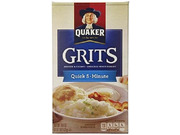



Quaker Instant Grits Super Family Size Regular 36 Ounce Paper Box
Analysis updated May 2026 · How Scout scores
At a glance
Summary
This product contains beneficial fortifications such as calcium carbonate and several B vitamins, which contribute positively to its nutritional profile. However, it is processed and includes BHT, a controversial preservative, which raises health concerns. The presence of additives and the processed nature of the product limit its overall healthiness compared to less processed alternatives.
Key ingredients 10
NiacinGood
Niacin, a B vitamin, is essential for energy metabolism and maintaining healthy skin and nerves. It is often added to foods to prevent deficiencies. It is water-soluble and generally safe in food amounts.
Benefits
Supports energy metabolism and maintains healthy skin and nerves.
Thiamin MononitrateGood
Thiamin mononitrate is a form of vitamin B1, essential for energy metabolism and nerve function. It is added to foods to prevent deficiencies. It is water-soluble and generally safe in food amounts.
Benefits
Supports energy metabolism and nerve function.
RiboflavinGood
Riboflavin, or vitamin B2, is important for energy production and cellular function. It is often added to foods to prevent deficiencies. It is water-soluble and generally safe in food amounts.
Benefits
Supports energy production and cellular function.
Specially Processed Degerminated White Corn GritsNeutral
This ingredient is the primary component of the product, providing carbohydrates and some fiber. The degermination process removes the germ and bran, reducing nutrient density. It is a staple food with minimal processing beyond degermination.
Risks
The removal of the germ and bran reduces the fiber and nutrient content.
Benefits
Provides a source of carbohydrates and energy with some fiber content.
SaltNeutral
Salt is used to enhance flavor and preserve the product. It is a common additive in processed foods. Excessive consumption can lead to health issues such as hypertension.
Risks
High sodium intake is associated with increased risk of hypertension and cardiovascular diseases.
Benefits
Enhances flavor and acts as a preservative.
Calcium CarbonateNeutral
Standard formulation ingredient — neither beneficial nor harmful at typical use.
Benefits
Provides a source of calcium, supporting bone health and preventing deficiency.
Reduced IronNeutral
Standard formulation ingredient — neither beneficial nor harmful at typical use.
Risks
Excessive iron intake can lead to toxicity, but this is rare from food sources.
Benefits
Helps prevent iron deficiency anemia and supports oxygen transport in the body.
Citric AcidNeutral
Citric acid is a natural preservative and flavor enhancer found in citrus fruits. It is widely used in the food industry for its acidic properties. Generally recognized as safe, it can cause tooth enamel erosion if consumed in excess.
Risks
Excessive consumption may lead to tooth enamel erosion.
Benefits
Acts as a natural preservative and enhances flavor.
Folic AcidNeutral
Standard formulation ingredient — neither beneficial nor harmful at typical use.
Benefits
Prevents neural tube defects and supports DNA synthesis and cell division.
BHTBad
BHT is a synthetic antioxidant used to preserve fats and oils in foods. There are concerns about its potential carcinogenic effects and impact on liver health. It is approved for use in small amounts but remains controversial.
Risks
Potential carcinogenic effects and impact on liver health have been suggested in some studies.
Benefits
Helps preserve the freshness of fats and oils in processed foods.
Processing
Processed Foods
Get the full breakdown in the Scout appTake Scout shopping
Scan any product to see lab results, healthy alternatives, and your personalized analysis.
Download on theApp Store GET IT ONGoogle Play