
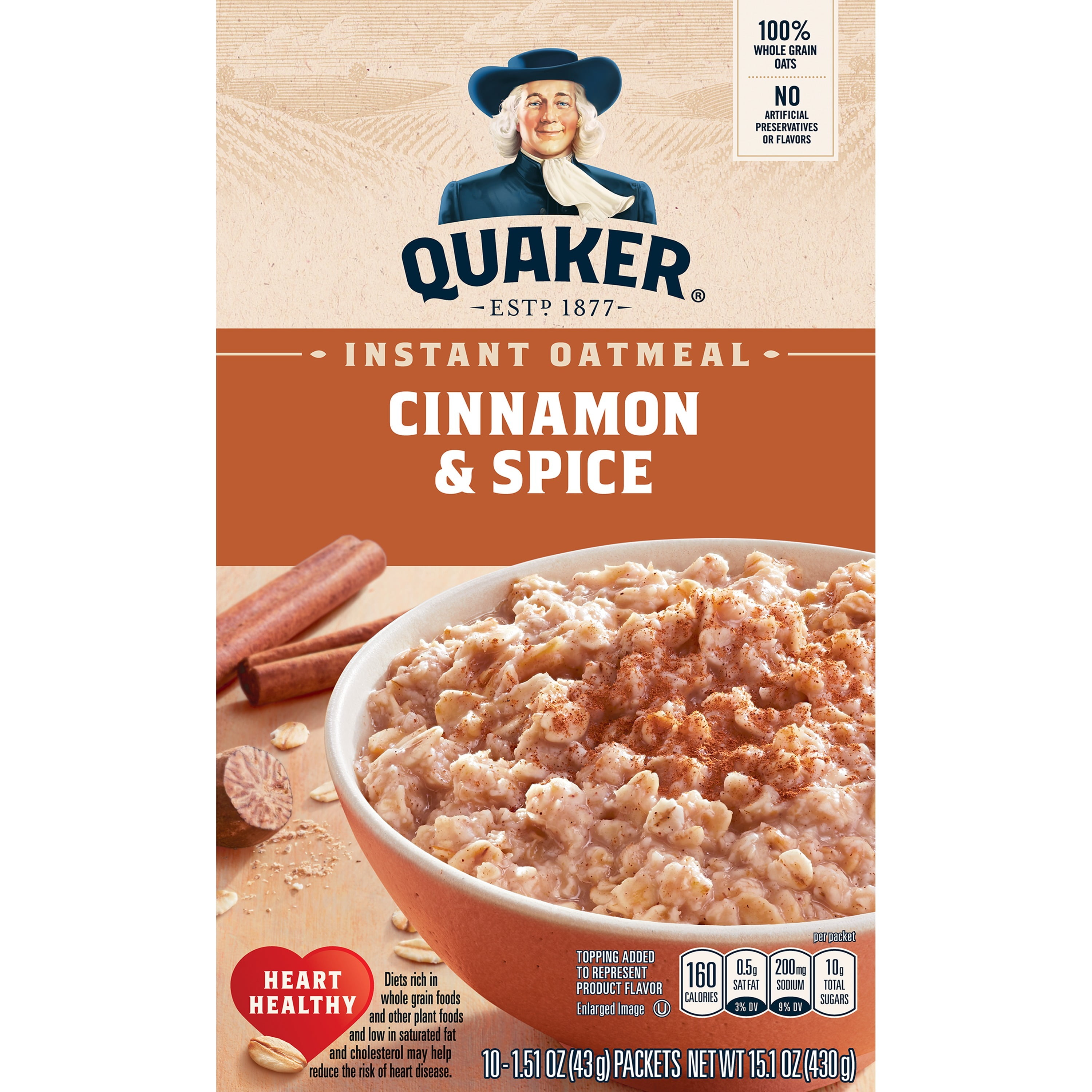




Quaker Cinnamon & Spice Instant Oatmeal(10-1.51 Ounce) 15.1 Ounce 10 Count Paper Pouches
Analysis updated May 2026 · How Scout scores
At a glance
Summary
This product contains beneficial whole grain rolled oats and spices, which contribute to its nutritional value. However, it is heavily processed and includes refined sugar and caramel color, which are less desirable ingredients. The presence of additives and the high level of processing limit its overall healthiness despite some positive aspects.
Key ingredients 14
Whole Grain Rolled OatsVery Good
Whole grain rolled oats are a rich source of dietary fiber and essential nutrients. They provide beta-glucan, which is beneficial for heart health and maintaining stable blood sugar levels. As a minimally processed whole grain, they offer sustained energy and satiety.
Benefits
Rich in fiber and beta-glucan, supporting heart health and stable blood sugar levels. Provides essential nutrients and sustained energy.
Cinnamon And Other SpicesGood
Cinnamon and other spices add flavor and potential health benefits due to their antioxidant properties. Cinnamon may help regulate blood sugar levels and has anti-inflammatory effects. Spices generally enhance the nutritional profile of foods with minimal calories.
Benefits
Provides antioxidants and may help regulate blood sugar levels. Adds flavor with minimal calories.
NiacinamideGood
Vitamin B3 — evidence-backed skin and metabolic benefits.
Benefits
Supports energy metabolism and skin health.
Pyridoxine HydrochlorideGood
Beneficial ingredient — whole-food or functional value in this product class.
Benefits
Supports protein metabolism and cognitive development.
RiboflavinGood
Essential B vitamin — beneficial micronutrient.
Benefits
Supports energy production and cellular function.
SaltNeutral
Salt is used to enhance flavor but excessive intake can lead to health issues. It is important for maintaining fluid balance and nerve function. Moderation is key to avoid potential negative health impacts.
Risks
High intake can lead to hypertension and cardiovascular issues.
Benefits
Essential for fluid balance and nerve function when consumed in moderation.
Calcium CarbonateNeutral
Calcium carbonate is used as a calcium supplement and food additive. It helps fortify foods with calcium, supporting bone health. However, excessive intake can lead to health issues such as kidney stones.
Risks
Excessive intake may lead to kidney stones and hypercalcemia.
Benefits
Supports bone health by providing a source of calcium.
Guar GumNeutral
Guar gum is a thickening agent derived from guar beans. It is used to improve texture and stability in foods. While generally safe, it can cause digestive issues in sensitive individuals.
Risks
May cause digestive issues such as bloating and gas in sensitive individuals.
Benefits
Improves texture and stability in food products.
Reduced IronNeutral
Reduced iron is used to fortify foods with iron, an essential mineral. It helps prevent iron deficiency anemia. However, excessive iron intake can lead to toxicity and health issues.
Risks
Excessive intake can lead to iron toxicity and related health issues.
Benefits
Prevents iron deficiency anemia by providing a source of iron.
Vitamin A PalmitateNeutral
Vitamin A palmitate is a synthetic form of vitamin A used to fortify foods. It supports vision, immune function, and skin health. Overconsumption can lead to toxicity, so moderation is important.
Risks
Overconsumption can lead to vitamin A toxicity.
Benefits
Supports vision, immune function, and skin health.
Thiamin MononitrateNeutral
Thiamin mononitrate is a form of vitamin B1 used to fortify foods. It is essential for energy metabolism and nerve function. Typically consumed in adequate amounts through a balanced diet.
Benefits
Essential for energy metabolism and nerve function.
Folic AcidNeutral
Folic acid is a synthetic form of vitamin B9 used to fortify foods. It is crucial for DNA synthesis and cell division, especially important during pregnancy. Excessive intake can mask vitamin B12 deficiency.
Risks
Excessive intake can mask vitamin B12 deficiency.
Benefits
Crucial for DNA synthesis and cell division, especially during pregnancy.
SugarBad
Refined sugar is a source of empty calories and can contribute to various health issues when consumed in excess. It is associated with increased risk of obesity, type 2 diabetes, and dental cavities. Unlike natural sugars found in whole foods, refined sugar lacks nutritional benefits.
Risks
Excessive consumption can lead to obesity, type 2 diabetes, and dental cavities.
Caramel ColorBad
Caramel color is a food coloring agent that can contain potentially harmful compounds. Some types of caramel color may contain 4-MEI, a compound linked to cancer in animal studies. It is used to enhance the appearance of foods but offers no nutritional benefits.
Risks
May contain 4-MEI, a compound linked to cancer in animal studies.
Processing
Ultra-Processed Foods
Get the full breakdown in the Scout appTake Scout shopping
Scan any product to see lab results, healthy alternatives, and your personalized analysis.
Download on theApp Store GET IT ONGoogle PlayAmazon pricing & content
Amazon price as of . Product prices and availability are accurate as of the date/time indicated and are subject to change. Any price and availability information displayed on Amazon.com at the time of purchase will apply to the purchase of this product.
CERTAIN CONTENT THAT APPEARS ON THIS SITE COMES FROM AMAZON. THIS CONTENT IS PROVIDED “AS IS” AND IS SUBJECT TO CHANGE OR REMOVAL AT ANY TIME.