
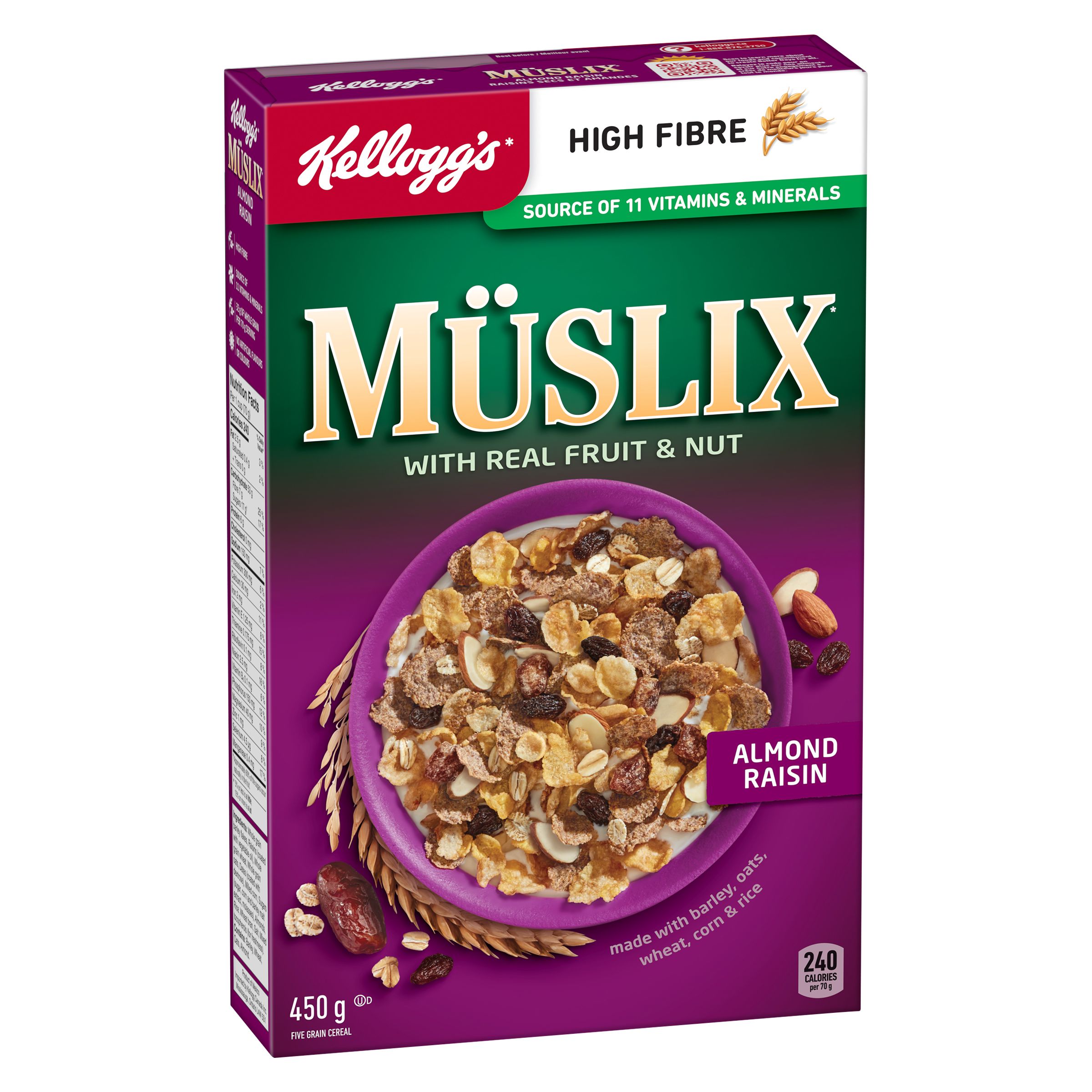



Kellogg's Muslix Cereal 15.3oz
Analysis updated May 2026 · How Scout scores
At a glance
Summary
This cereal contains several beneficial whole food ingredients like rolled barley, whole grain wheat, and almonds, which provide fiber and essential nutrients. However, it is classified as ultra-processed due to the inclusion of added sugars and preservatives like BHT. The presence of refined sugar and the high level of processing limit its overall healthiness despite the presence of some nutritious components.
Key ingredients 16
Whole grain oatsVery Good
Whole grain oats are a source of soluble fiber, particularly beta-glucan, which can help lower cholesterol. They are minimally processed, preserving their nutritional integrity. Oats provide sustained energy and support heart health.
Benefits
Contain beta-glucan, which may help reduce cholesterol levels and improve heart health. Provide a good source of energy and support digestive health.
Rolled barleyGood
Rolled barley is a whole grain that provides dietary fiber and essential nutrients. It is minimally processed, retaining most of its nutritional value. It supports digestive health and provides a steady release of energy.
Benefits
Rich in dietary fiber, which aids in digestion and helps maintain stable blood sugar levels. Contains vitamins and minerals that support overall health.
RaisinsGood
Raisins are dried grapes that provide natural sugars and antioxidants. They are a source of quick energy and contain beneficial compounds like resveratrol. Their natural sweetness can reduce the need for added sugars.
Risks
High in natural sugars, which can contribute to calorie intake if consumed in excess.
Benefits
Provide antioxidants that may support heart health and reduce inflammation. Natural sugars offer a quick energy boost.
Whole grain wheatGood
Whole grain wheat is a nutrient-dense grain that offers fiber, vitamins, and minerals. It is less processed than refined grains, retaining its bran and germ. It supports heart health and aids in digestion.
Risks
Contains gluten, which may cause issues for individuals with celiac disease or gluten sensitivity.
Benefits
Rich in dietary fiber, which supports digestive health and may help lower cholesterol levels. Provides essential nutrients like B vitamins and iron.
DatesGood
Dates are a natural sweetener rich in fiber and essential nutrients. They are minimally processed and provide a healthier alternative to refined sugars. Dates offer antioxidants and support digestive health.
Risks
High in natural sugars, which can contribute to calorie intake if consumed in excess.
Benefits
Provide dietary fiber and antioxidants that support overall health. Natural sweetness can reduce the need for added sugars.
AlmondsGood
Almonds are a nutrient-rich nut providing healthy fats, protein, and fiber. They are minimally processed and offer heart health benefits. Almonds are a good source of vitamin E and magnesium.
Risks
May cause allergic reactions in individuals with nut allergies.
Benefits
Rich in monounsaturated fats that support heart health and provide anti-inflammatory properties. Contain antioxidants and essential nutrients.
Wheat branGood
Wheat bran is the outer layer of the wheat kernel, rich in dietary fiber. It is minimally processed and supports digestive health. Wheat bran can help regulate bowel movements and improve gut health.
Risks
Contains gluten, which may cause issues for individuals with celiac disease or gluten sensitivity.
Benefits
High in dietary fiber, which aids in digestion and supports gut health. Provides essential nutrients like B vitamins.
Milled cornNeutral
Milled corn is a processed form of corn used as a filler or base in many products. It provides carbohydrates but lacks significant nutritional benefits compared to whole grains. It is often used to add texture and bulk to products.
Risks
May contribute to high glycemic load if consumed in large quantities.
Benefits
Provides carbohydrates for energy but lacks significant nutritional benefits.
RiceNeutral
Rice is a staple grain that provides carbohydrates and energy. It is often used as a filler in processed foods. While it offers energy, it lacks the fiber and nutrients found in whole grains.
Risks
May contribute to high glycemic load if consumed in large quantities.
Benefits
Provides carbohydrates for energy but lacks significant nutritional benefits compared to whole grains.
SaltNeutral
Salt is used to enhance flavor and preserve food. It is essential for bodily functions but should be consumed in moderation. Excessive intake can lead to health issues such as hypertension.
Risks
Excessive intake can lead to hypertension and cardiovascular issues.
Benefits
Essential for maintaining fluid balance and nerve function in the body.
Malt extractNeutral
Malt extract is a sweetener derived from malted barley, used to enhance flavor. It provides some vitamins and minerals but is primarily a source of sugar. Often used in small amounts in processed foods.
Risks
May contribute to high glycemic load if consumed in large quantities.
Benefits
Provides some vitamins and minerals but primarily used for flavor enhancement.
MolassesNeutral
Molasses is a byproduct of sugar refining, used as a sweetener. It contains some vitamins and minerals, such as iron and calcium. Often used to add flavor and color to foods.
Risks
High in sugar content, which can contribute to calorie intake if consumed in excess.
Benefits
Contains some vitamins and minerals, providing a slight nutritional benefit compared to refined sugar.
Malt flavorNeutral
Malt flavor is used to enhance the taste of food products. It is derived from malted grains and provides a distinct flavor profile. Often used in small amounts to improve taste.
Benefits
Enhances flavor without significant nutritional impact.
BHT for freshnessNeutral
BHT (butylated hydroxytoluene) is an antioxidant used to preserve freshness in food products. It prevents oxidation and extends shelf life. Used in small amounts, it is generally recognized as safe.
Risks
Some studies suggest potential health concerns with high intake, but it is considered safe in small amounts.
Benefits
Helps preserve freshness and extend shelf life of food products.
SugarBad
Sugar is a refined sweetener that contributes to calorie intake without providing essential nutrients. Excessive consumption can lead to health issues such as obesity and dental problems. It is often added to enhance flavor but can be detrimental to health in large amounts.
Risks
Excessive intake can lead to obesity, diabetes, and dental issues.
DextroseBad
Refined added sugar.
Risks
May contribute to high glycemic load if consumed in large quantities.
Benefits
Provides quick energy but lacks significant nutritional benefits.
Processing
Ultra-Processed Foods
Get the full breakdown in the Scout appTake Scout shopping
Scan any product to see lab results, healthy alternatives, and your personalized analysis.
Download on theApp Store GET IT ONGoogle Play