
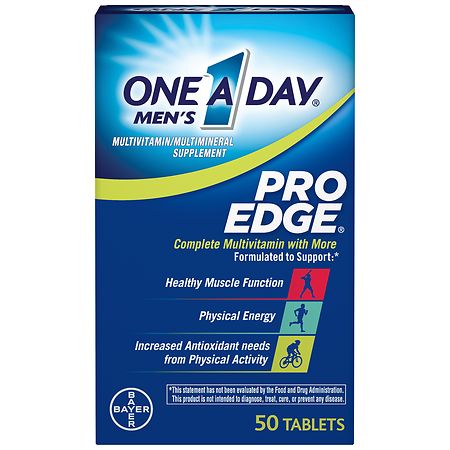

One A Day Men’s Pro Edge Multivitamin Supplement with Vitamin A C D E and Zinc for Immune Health Support and Magnesium for Healthy Muscle Function 50 Count
Analysis updated August 2026 · How Scout scores
At a glance
Summary
This multivitamin contains beneficial ingredients like Vitamin C, Vitamin D3, and Biotin, which support immune health and energy metabolism. However, the presence of artificial dyes such as FD&C Blue 1 and Yellow 5, along with titanium dioxide, raises concerns due to potential health risks associated with synthetic additives. The formulation also includes maltodextrin, which is often used as a filler, impacting the overall ingredient quality.
Key ingredients 34
CholecalciferolVery Good
Cholecalciferol, or Vitamin D3, is crucial for calcium absorption and bone health. It is the preferred form of Vitamin D due to its superior bioavailability. Vitamin D3 supports immune function and helps maintain healthy bones.
Risks
Excessive intake can lead to hypercalcemia, causing nausea and weakness.
Benefits
Enhances calcium absorption and supports bone and immune health.
Ascorbic AcidGood
Ascorbic acid, also known as Vitamin C, is a powerful antioxidant that supports immune function. It is essential for the synthesis of collagen and the repair of tissues. This vitamin is crucial for maintaining a healthy immune system and skin health.
Risks
High doses may cause gastrointestinal upset or kidney stones.
Benefits
Boosts immune function and acts as a potent antioxidant.
DL-Alpha-Tocopheryl AcetateGood
DL-Alpha-Tocopheryl Acetate is a synthetic form of Vitamin E used for its antioxidant properties. It helps protect cells from oxidative damage and supports immune function. This form is stable and commonly used in supplements.
Risks
High doses may interfere with blood clotting and increase the risk of bleeding.
Benefits
Acts as an antioxidant and supports immune health.
Beta-CaroteneGood
Beta-Carotene is a precursor to Vitamin A and acts as an antioxidant. It is important for maintaining healthy vision and skin. As a provitamin, it is converted to Vitamin A in the body as needed.
Risks
Excessive intake may lead to carotenemia, a harmless condition causing yellowing of the skin.
Benefits
Supports vision health and acts as an antioxidant.
BiotinGood
Biotin, also known as Vitamin B7, is essential for energy metabolism and the health of hair, skin, and nails. It plays a key role in the metabolism of carbohydrates, fats, and proteins. Biotin is often included in supplements for its beauty benefits.
Benefits
Supports healthy hair, skin, and nails, and aids in energy metabolism.
CyanocobalaminGood
Cyanocobalamin is a synthetic form of Vitamin B12 used in supplements to support nerve function and red blood cell formation. It is essential for DNA synthesis and neurological health. This form is stable and widely used in dietary supplements.
Benefits
Supports nerve health and red blood cell production.
D-Calcium PantothenateGood
D-Calcium Pantothenate is a form of Vitamin B5 used in supplements to support energy metabolism. It is essential for the synthesis of coenzyme A, which is involved in fatty acid metabolism. This vitamin is important for maintaining healthy skin and energy levels.
Benefits
Supports energy metabolism and healthy skin.
NiacinamideGood
Niacinamide, a form of Vitamin B3, is used in supplements to support energy metabolism and skin health. It is involved in the conversion of food into energy and helps maintain healthy skin. This form of niacin is less likely to cause flushing compared to nicotinic acid.
Benefits
Supports energy metabolism and healthy skin.
PhylloquinoneGood
Phylloquinone, also known as Vitamin K1, is essential for blood clotting and bone health. It is the primary form of Vitamin K found in plants and is used in supplements to support cardiovascular and bone health. This vitamin is crucial for the synthesis of proteins involved in blood coagulation.
Benefits
Supports blood clotting and bone health.
Pyridoxine HydrochlorideGood
Pyridoxine hydrochloride is a form of Vitamin B6 used in supplements to support brain health and metabolism. It is involved in the synthesis of neurotransmitters and the metabolism of amino acids. This vitamin is essential for cognitive function and energy production.
Benefits
Supports brain health and energy metabolism.
RiboflavinGood
Riboflavin, or Vitamin B2, is used in supplements to support energy production and antioxidant function. It is essential for the metabolism of carbohydrates, fats, and proteins. This vitamin helps maintain healthy skin and eyes.
Benefits
Supports energy production and antioxidant function.
Thiamine MononitrateGood
Thiamine mononitrate is a form of Vitamin B1 used in supplements to support energy metabolism and nerve function. It is essential for the conversion of carbohydrates into energy. This vitamin is crucial for maintaining healthy nerves and heart function.
Benefits
Supports energy metabolism and nerve function.
Vitamin A AcetateGood
Vitamin A acetate is a form of Vitamin A used in supplements to support vision and immune health. It is essential for maintaining healthy skin and mucous membranes. This form of Vitamin A is stable and commonly used in dietary supplements.
Risks
Excessive intake can lead to hypervitaminosis A, causing liver damage and other health issues.
Benefits
Supports vision and immune health.
Zinc OxideGood
Zinc oxide is a form of zinc used in supplements to support immune function and wound healing. It is an essential mineral involved in numerous enzymatic reactions. Zinc is crucial for maintaining a healthy immune system and skin health.
Risks
High doses can interfere with copper absorption and cause gastrointestinal issues.
Benefits
Supports immune function and wound healing.
Calcium CarbonateNeutral
Standard formulation ingredient — neither beneficial nor harmful at typical use.
Risks
Excessive intake may lead to kidney stones or impaired absorption of other minerals.
Benefits
Supports bone health and helps maintain strong bones and teeth.
Magnesium OxideNeutral
Magnesium oxide is a common form of magnesium used in supplements for muscle and nerve function. It has a lower bioavailability compared to other forms like magnesium citrate. Despite its lower absorption rate, it is often used due to its high magnesium content per weight.
Risks
May cause gastrointestinal discomfort or diarrhea in some individuals.
Benefits
Supports muscle and nerve function, and helps maintain normal blood pressure.
Microcrystalline CelluloseNeutral
Microcrystalline cellulose is used as a bulking agent and stabilizer in supplements. It is derived from plant fibers and is considered safe for consumption. It does not provide nutritional benefits but aids in the manufacturing process.
See more about Microcrystalline Cellulose →Dicalcium PhosphateNeutral
Dicalcium phosphate is used as a dietary supplement to provide calcium and phosphorus. It is commonly used as a tableting agent in the pharmaceutical industry. While it provides essential minerals, its primary role in supplements is as a filler.
Benefits
Provides calcium and phosphorus, which are essential for bone health.
Chromium ChlorideNeutral
Chromium chloride is a source of chromium, a trace mineral involved in carbohydrate and lipid metabolism. It is used in supplements to support blood sugar regulation. While essential, it is required only in small amounts.
Benefits
Supports normal blood sugar levels and metabolism.
Croscarmellose SodiumNeutral
Croscarmellose sodium is used as a disintegrant in tablets to aid in their dissolution. It is derived from cellulose and is considered safe for consumption. While it does not provide nutritional benefits, it improves the bioavailability of active ingredients.
See more about Croscarmellose Sodium →Folic AcidNeutral
Standard formulation ingredient — neither beneficial nor harmful at typical use.
Benefits
Supports cell division and prevents neural tube defects.
GelatinNeutral
Gelatin is used as a gelling agent in supplements and is derived from animal collagen. It is commonly used in capsules and provides no significant nutritional benefits. Gelatin is generally considered safe for consumption.
See more about Gelatin →Hydroxypropyl MethylcelluloseNeutral
Hydroxypropyl methylcellulose is used as a thickener and emulsifier in supplements. It is derived from cellulose and is considered safe for consumption. While it does not provide nutritional benefits, it aids in the manufacturing process.
See more about Hydroxypropyl Methylcellulose →Manganese SulfateNeutral
Manganese sulfate provides manganese, a trace mineral important for bone formation and metabolism. It is used in supplements to prevent manganese deficiency. Manganese is essential for enzyme function and bone health.
Risks
High doses can lead to manganese toxicity, affecting the nervous system.
Benefits
Supports bone health and enzyme function.
Polyethylene GlycolNeutral
Polyethylene glycol is used as a solvent and plasticizer in supplements. It is a synthetic polymer that is generally recognized as safe for consumption. While it does not provide nutritional benefits, it aids in the manufacturing process.
See more about Polyethylene Glycol →PolyvinylpolypyrrolidoneNeutral
Polyvinylpolypyrrolidone is used as a binder and disintegrant in supplements. It is a synthetic polymer that is considered safe for consumption. While it does not provide nutritional benefits, it improves the stability and dissolution of tablets.
Silicon DioxideNeutral
Silicon dioxide is used as an anti-caking agent in supplements to prevent clumping. It is naturally occurring and considered safe for consumption. While it does not provide nutritional benefits, it aids in the manufacturing process.
See more about Silicon Dioxide →Sodium SeleniteNeutral
Sodium selenite is a form of selenium used in supplements to support antioxidant function and thyroid health. It is an essential trace mineral required in small amounts. Selenium is important for immune function and the prevention of oxidative damage.
Risks
High doses can lead to selenium toxicity, causing gastrointestinal distress and hair loss.
Benefits
Supports antioxidant function and thyroid health.
Stearic AcidNeutral
Stearic acid is used as a lubricant in supplements to aid in the manufacturing process. It is a saturated fatty acid that is generally recognized as safe for consumption. While it does not provide nutritional benefits, it improves the consistency of tablets.
See more about Stearic Acid →MaltodextrinBad
Processed additive flagged under Scout's ingredient doctrine.
Risks
May affect blood sugar levels if consumed in large amounts.
Copper SulfateBad
Processed additive flagged under Scout's ingredient doctrine.
Risks
High doses can lead to copper toxicity, causing liver damage and gastrointestinal distress.
Benefits
Supports iron metabolism and neurological health.
FD&C Blue 1 Aluminum LakeBad
FD&C Blue 1 Aluminum Lake is an artificial dye used to color supplements. It is synthetically produced and has been associated with hyperactivity in children. While approved for use, artificial dyes are often criticized for potential health concerns.
Risks
May cause allergic reactions or hyperactivity in sensitive individuals.
FD&C Yellow 5 (Tartrazine) Aluminum LakeBad
FD&C Yellow 5 Aluminum Lake is an artificial dye used to color supplements. It is synthetically produced and has been linked to hyperactivity and allergic reactions in some individuals. The use of artificial dyes is often discouraged due to potential health concerns.
Risks
May cause allergic reactions or hyperactivity in sensitive individuals.
Titanium DioxideVery Bad
Titanium dioxide is used as a whitening agent in supplements. It is a synthetic compound that has raised health concerns due to its potential to cause respiratory issues when inhaled. While approved for use, its safety as a food additive is debated.
Risks
May cause respiratory issues if inhaled and is under scrutiny for potential health risks.
Processing
Unprocessed or Minimally Processed Foods
Get the full breakdown in the Scout appTake Scout shopping
Scan any product to see lab results, healthy alternatives, and your personalized analysis.
Download on theApp Store GET IT ONGoogle PlayAmazon pricing & content
Amazon price as of . Product prices and availability are accurate as of the date/time indicated and are subject to change. Any price and availability information displayed on Amazon.com at the time of purchase will apply to the purchase of this product.
CERTAIN CONTENT THAT APPEARS ON THIS SITE COMES FROM AMAZON. THIS CONTENT IS PROVIDED “AS IS” AND IS SUBJECT TO CHANGE OR REMOVAL AT ANY TIME.