
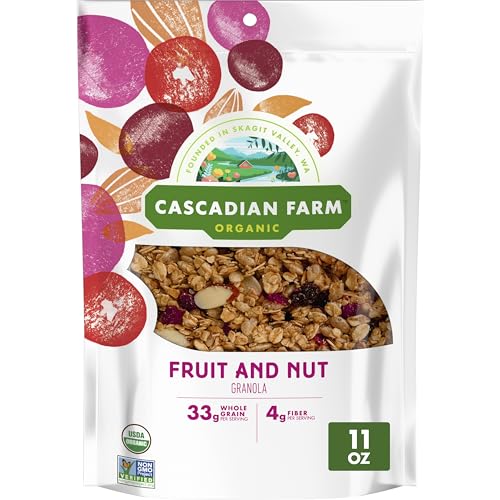


Cascadian Farm Fruit And Nut Granola
Analysis updated June 2026 · How Scout scores
At a glance
Summary
This granola contains beneficial ingredients like whole grain oats, raisins, cranberries, and almonds, which provide fiber, antioxidants, and healthy fats. However, the presence of sunflower oil, a seed oil high in omega-6 fatty acids, and cane sugar, a refined sugar, detracts from its nutritional quality. Additionally, the use of natural flavors and the product's processed nature limit its overall healthfulness.
Key ingredients 10
Whole Grain OatsVery Good
Whole grain oats are a rich source of dietary fiber and essential nutrients. They are minimally processed, retaining most of their natural nutrients. Oats can help lower cholesterol levels and improve heart health.
Benefits
Rich in beta-glucan, a type of soluble fiber that can help reduce cholesterol and improve heart health.
AlmondsVery Good
Almonds are a nutrient-dense nut rich in healthy fats, protein, and fiber. They are minimally processed and provide essential nutrients like vitamin E and magnesium. Almonds can support heart health and provide sustained energy.
Benefits
Rich in monounsaturated fats, protein, and fiber, supporting heart health and providing sustained energy.
RaisinsGood
Raisins are dried grapes that provide natural sugars and antioxidants. They are minimally processed, retaining most of their nutrients. Raisins can contribute to improved digestion and provide a source of quick energy.
Benefits
Rich in natural sugars and antioxidants, supporting energy levels and digestive health.
CranberriesGood
Cranberries are rich in antioxidants and vitamins, particularly vitamin C. They are often dried with added sugar, which can increase calorie content. Cranberries are known for their potential to support urinary tract health.
Risks
Added sugars in dried cranberries can increase calorie content.
Benefits
High in antioxidants and vitamin C, supporting immune and urinary tract health.
Sea SaltGood
Unrefined sea salt — a minimally processed, natural source of sodium and essential trace minerals, and a legitimate whole-food seasoning. Treated as a positive ingredient.
Risks
Excessive sodium intake can lead to high blood pressure and cardiovascular issues.
Benefits
Provides trace minerals and enhances flavor.
RiceNeutral
Rice is a staple carbohydrate source that provides energy. It is typically processed to remove the husk, bran, and germ, which reduces its nutritional content. While it is a good source of energy, it lacks fiber and essential nutrients compared to whole grains.
Benefits
Provides a source of carbohydrates for energy.
MolassesNeutral
Molasses is a byproduct of sugar refining that retains some vitamins and minerals. It is less processed than refined sugar and contains iron, calcium, and potassium. While it provides some nutrients, it is still a sugar and should be consumed in moderation.
Risks
Excessive consumption can contribute to high sugar intake.
Benefits
Contains trace minerals like iron and calcium, offering some nutritional benefits compared to refined sugar.
Cane SugarBad
Cane sugar is a refined sugar that can contribute to increased blood sugar levels. It is processed to remove impurities, resulting in a loss of nutrients. Excessive consumption can lead to health issues such as obesity and diabetes.
Risks
High intake of refined sugars can lead to obesity, insulin resistance, and dental cavities.
Benefits
Provides quick energy but lacks significant nutritional benefits.
Natural FlavorBad
Natural flavors are additives used to enhance taste, often derived from plant or animal sources. They are highly processed and can contain multiple compounds. The lack of transparency in their composition can be concerning for those with allergies or sensitivities.
Risks
Potential allergen risk due to undisclosed ingredients and processing methods.
Benefits
Enhances flavor without adding calories, but lacks nutritional benefits.
Sunflower OilVery Bad
Sunflower oil is a seed oil high in omega-6 fatty acids, which can promote inflammation if consumed in excess. It is often extracted using high heat and chemicals, which can degrade its nutritional quality. The high omega-6 content can disrupt the balance of fatty acids in the diet.
Risks
High omega-6 content may promote inflammation when consumed in excess.
Benefits
Contains vitamin E, which is an antioxidant, but benefits are outweighed by potential risks.
Processing
Processed Foods
Get the full breakdown in the Scout appTake Scout shopping
Scan any product to see lab results, healthy alternatives, and your personalized analysis.
Download on theApp Store GET IT ONGoogle PlayAmazon pricing & content
Amazon price as of . Product prices and availability are accurate as of the date/time indicated and are subject to change. Any price and availability information displayed on Amazon.com at the time of purchase will apply to the purchase of this product.
CERTAIN CONTENT THAT APPEARS ON THIS SITE COMES FROM AMAZON. THIS CONTENT IS PROVIDED “AS IS” AND IS SUBJECT TO CHANGE OR REMOVAL AT ANY TIME.